


Generative Engine Optimization (GEO) is the practice of structuring your content and digital presence so that AI-powered search engines — ChatGPT, Perplexity, Google AI Overviews, Gemini, and Claude — cite your brand when generating answers. Where traditional SEO competes for clicks, GEO — sometimes called GEO SEO — competes for citations. AI search optimization 2026 is not a future concept. It defines who gets found and who gets skipped.
What Is Generative Engine Optimization — and How Is It Different from Traditional SEO?
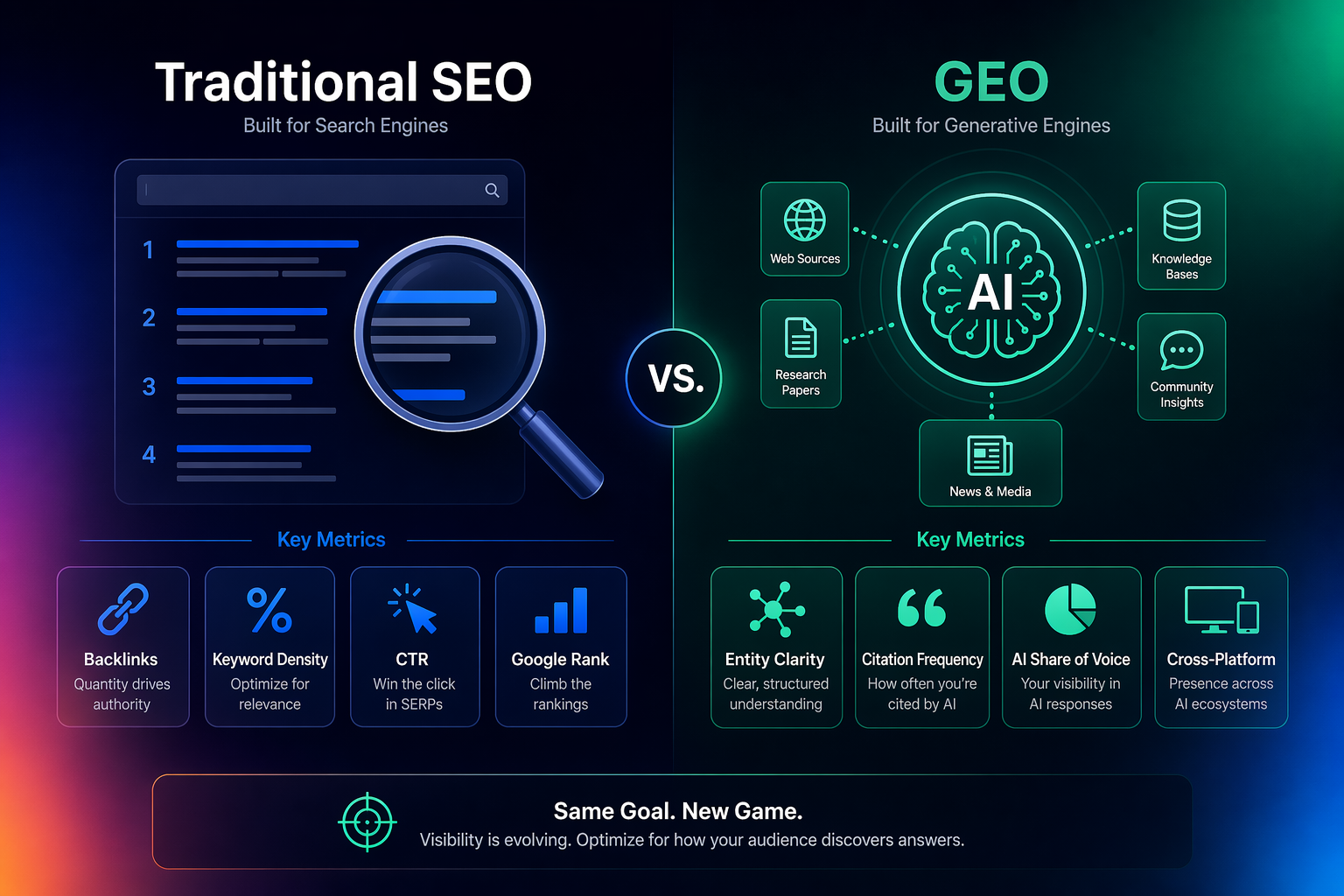
Traditional SEO is built around one outcome: earning a ranked position on a results page so a user clicks through to your site. The signals that drive it — backlinks, keyword density, click-through rate — are well understood and have been refined over two decades.
GEO operates on a different model. AI search platforms do not return a list of links. They synthesize information from multiple sources and deliver a single, sourced answer directly inside the interface. Your goal is not to rank first. It is to become one of the handful of sources the model cites when it constructs that answer.
The optimization inputs reflect that difference:
How does GEO differ from AEO?
Answer Engine Optimization (AEO) is a related but narrower concept. AEO focuses specifically on appearing in direct-answer features — featured snippets, knowledge panels, voice search results — primarily within Google. GEO is broader: it covers the full landscape of AI-generated responses across multiple platforms and models, including those that operate entirely outside Google's ecosystem. Think of AEO as a subset of what GEO addresses.
Why Is Traditional SEO No Longer Enough in 2026?
The shift is quantifiable, not anecdotal.
ChatGPT reached more than 900 million weekly active users by early 2026. Google's AI Overviews now appear on at least 13% of all U.S. desktop searches — up from roughly 6.5% in January 2026 — with coverage accelerating into how-to, research, comparison, and decision-support queries. Perplexity's traffic has grown at an average rate of 44.2% month-over-month.
The consequence for content teams is measurable. Research on Google AI Overviews tracked 3,119 search terms across 42 organizations and found that for queries where AI Overviews appear, organic click-through rate dropped from 1.76% to 0.61% — a 65% decline from the pre-AI baseline. Zero-click search behavior is accelerating in parallel: only 360 out of every 1,000 Google searches currently result in a click to the open web.
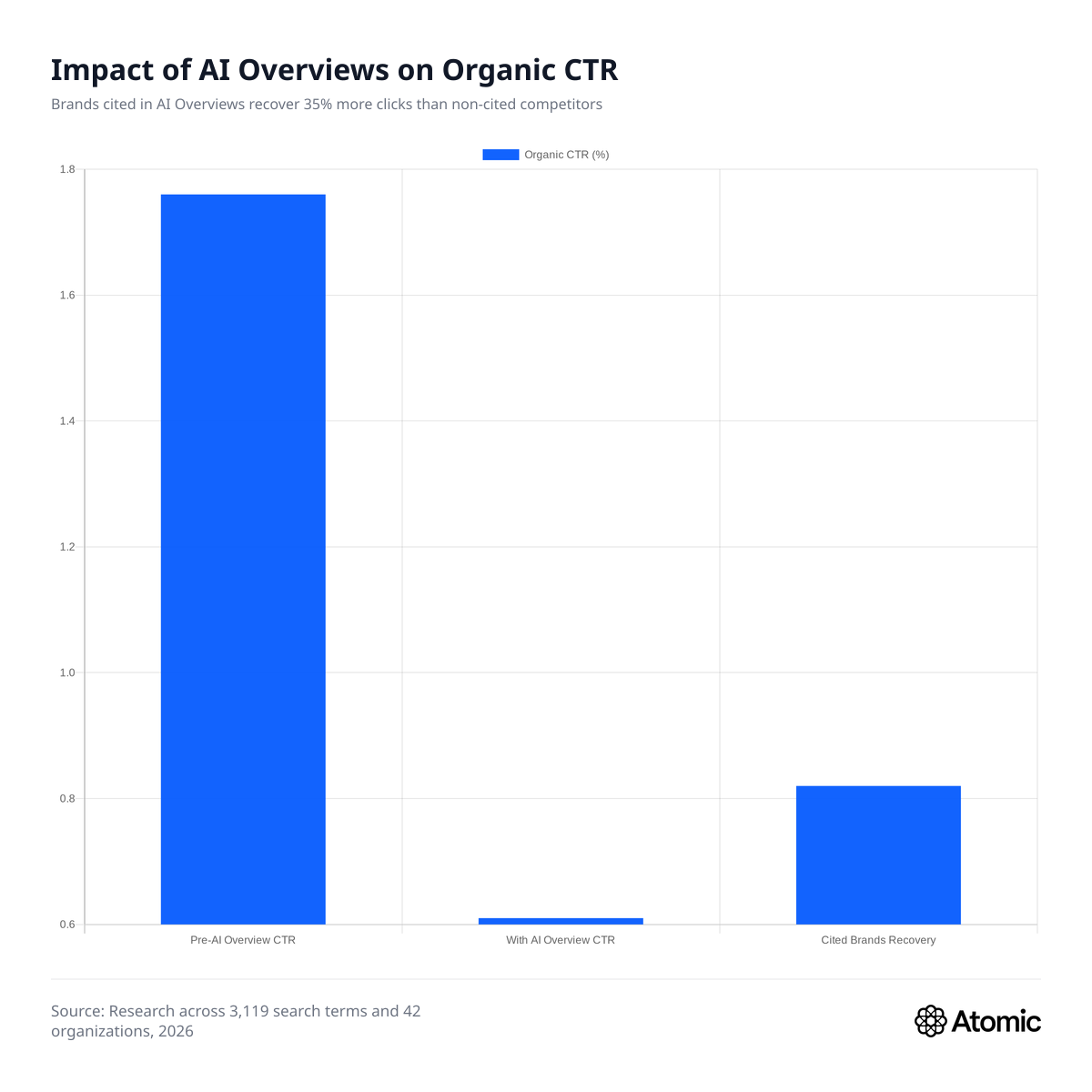
The critical finding from that same research: brands cited inside AI Overviews earn 35% more organic clicks and 91% more paid clicks compared to non-cited competitors targeting the same queries.
That is the new operating dynamic. Traditional SEO without a GEO layer leaves you competing for a shrinking slice of click traffic while missing the citation surface entirely.
Three structural forces are driving this:
- AI-native query behavior. Users increasingly ask questions the way they would speak to a colleague. Platforms like Perplexity and ChatGPT return complete, synthesized answers — no click required.
- Citation-based answers replace ranked lists. Instead of ten blue links, AI engines produce one answer with three to eight sourced citations. If your brand is not among them, you are absent from that moment of discovery.
- Zero-click erosion compounds over time. Each AI Overview expansion, each new ChatGPT feature, and each Perplexity user cohort accelerates the trend. Teams that delay GEO adoption face a compounding deficit.
How Does GEO Actually Work in Practice?
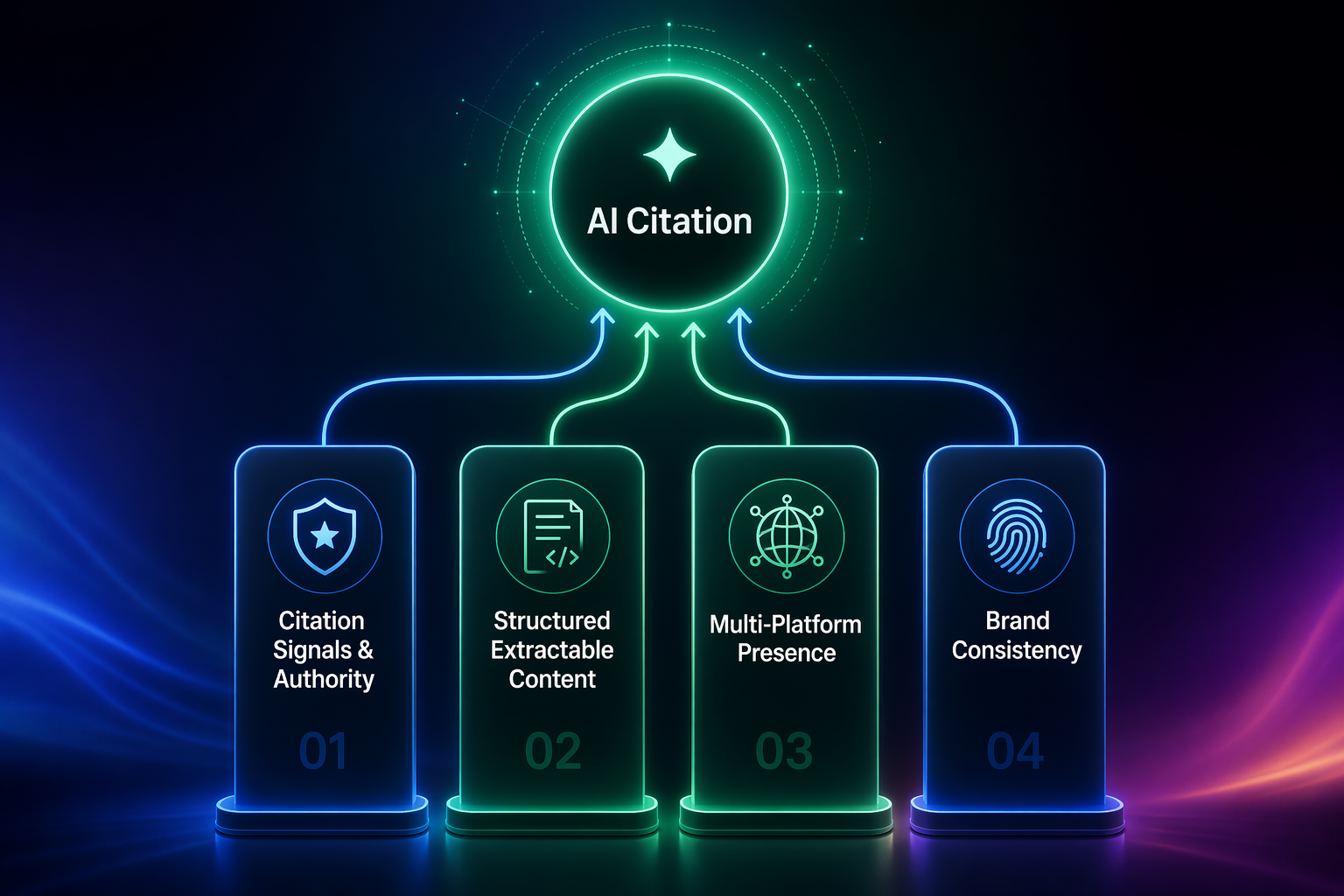
Generative engine optimization is not a single tactic. It is a set of interconnected practices that signal to AI systems: this source is authoritative, structured, and safe to cite.
Citation signals and content authority
AI models assess credibility through signals that overlap with — but go beyond — traditional E-E-A-T. Third-party brand mentions, press coverage, and citations on authoritative external sites all tell a language model that your brand is a recognized entity in a specific domain. Building that signal layer requires:
- Publishing proprietary data and original research that others reference
- Earning press mentions and contributor bylines on credible publications
- Maintaining consistent brand positioning and entity clarity across all platforms
As the Gemini SEO guide on Atomic AGI explains, Gemini relies heavily on Google's entity system — its structured understanding of companies, products, and services. When Gemini evaluates whether to cite your brand, it checks whether it can confidently associate your brand with a specific area of expertise. Vague positioning or inconsistent framing creates ambiguity that works against you.
Structured, extractable content
AI models do not read the way humans do. They extract. Content that is structured for extraction — clear headers, concise definitions, tight paragraph logic, FAQ blocks, comparison tables — consistently outperforms long-form prose in AI citation environments.
Specific practices that support extractability:
- Open each section with a direct answer before elaborating
- Use schema markup (FAQ, HowTo, Article) to signal content type
- Write definitions and explanations that can stand alone, out of context
- Avoid promotional language — it signals low credibility to model evaluation pipelines
For platforms like Perplexity, which runs a retrieval-augmented generation pipeline, structural clarity at the paragraph level directly influences whether your content enters the retrieval pool at all.
Multi-platform presence and crawlability
GEO is not a Google-only discipline. ChatGPT, Perplexity, Gemini, and Claude each operate their own crawlers and use distinct ranking signals. A brand that optimizes exclusively for Google AI Overviews may earn citations there while remaining invisible on ChatGPT — the platform currently sending the most AI referral traffic to websites.
A complete GEO strategy requires:
- Verifying that AI crawlers (GPTBot, PerplexityBot, ClaudeBot) are not accidentally blocked in robots.txt
- Publishing content formats that each platform's retrieval system rewards
- Tracking citation performance separately by platform, since performance does not transfer automatically
Brand consistency across surfaces
AI systems synthesize information from across the web. If your brand is described differently on your own site, on third-party review platforms, on social media, and in press coverage, models receive conflicting signals and either hedge their citations or omit you. Consistent positioning — the same core claims, the same category framing, the same expertise signals — across every surface is one of the highest-leverage GEO investments a team can make.
How Do You Measure GEO Performance?
This is where most teams currently have a gap. Traditional SEO tools — Google Search Console, Semrush, Ahrefs — are built to measure organic rank and click volume. They tell you nothing about your citation share inside AI-generated answers.
GEO requires a different measurement stack. The metrics that matter:
- Citation rate: How often is your brand referenced when AI models answer queries relevant to your category?
- AI share of voice: Across a defined query set, what percentage of AI-generated responses include your brand versus competitors?
- Sentiment framing: When AI models do cite you, is the framing accurate, positive, and aligned with your positioning?
- Platform coverage: Are you cited consistently across ChatGPT, Perplexity, Gemini, and Google AI Overviews — or concentrated on one platform?

The AI Search Visibility tracking tools category has matured significantly in 2026, but most point-solutions measure visibility on a single platform. The more useful framing is cross-platform citation tracking alongside traditional SEO performance — so teams can connect AI citation share to downstream business outcomes, not just report impressions.
How Can Atomic AGI Help You Execute GEO Strategy?
Atomic AGI is built for exactly this measurement challenge. It tracks AI search visibility across ChatGPT, Perplexity, Gemini, Google AI Overviews, and Claude alongside traditional Google analytics — in a single workspace.
Key capabilities relevant to GEO:
- AI search visibility tracking: Real-time citation monitoring across major AI engines, with share of voice and average position data
- Competitor tracking: Monitor how your citation share compares to competitors across specific topics and query sets
- AI search attribution: Connect AI citation exposure to actual traffic, engagement, and conversion events — not just visibility counts
- Technical SEO audit: Includes LLM crawlability checks, so you can identify and fix AI bot blocking before it suppresses your citation potential
- AI search monitoring: 12 practical methods for tracking brand presence across AI platforms, covered in depth in Atomic's resource library
The GEO analytics tools landscape has expanded, but Atomic AGI is one of the few platforms that connects traditional SEO data to AI citation performance in a single view — which matters when you need to make allocation decisions across both channels, not just report on each separately.
Frequently Asked Questions About Generative Engine Optimization
What does GEO stand for?
GEO stands for Generative Engine Optimization. It refers to the practice of optimizing your content and digital presence to earn citations in AI-generated search answers, as opposed to optimizing for ranked positions in traditional search results.
Is GEO replacing SEO?
No. GEO extends SEO rather than replacing it. Google still processes an estimated 16.4 billion searches per day, and traditional organic rankings remain a significant traffic source. The strategic shift is that ranking well in Google no longer automatically translates to AI Overview citations — and vice versa. A complete 2026 search strategy requires both layers.
Which AI platforms should I optimize for first?
Start with Google AI Overviews and ChatGPT. AI Overviews reach the largest search audience by volume. ChatGPT sends the most AI referral traffic to websites. Perplexity is the fastest-growing platform by monthly traffic rate and disproportionately important for research-intent queries. Gemini is essential for brands in Google's entity ecosystem. The relative priority depends on your audience's query behavior — which is why platform-level citation tracking matters.
How long does it take to see GEO results?
Timeline varies, but teams that implement structured content improvements typically begin seeing measurable citation rate changes within 6–12 weeks. Authority-building efforts — press coverage, third-party mentions, entity strengthening — have longer cycles, similar to link-building in traditional SEO. Starting measurement now means you have a baseline to evaluate progress against.
Do backlinks still matter for GEO?
Yes, but indirectly. Backlinks from authoritative sources signal entity credibility, which AI models use when assessing whether to cite a brand. High-quality third-party links remain useful — but the mechanism is different. It is less about passing PageRank and more about establishing that independent sources vouch for your expertise.
What is the difference between GEO and AEO?
AEO (Answer Engine Optimization) is primarily focused on earning direct-answer placements within Google — featured snippets, knowledge panels, voice search. GEO is broader, covering the full AI search landscape including platforms that operate independently of Google. All AEO work supports GEO, but GEO requires additional strategies specific to non-Google AI platforms.
Can small businesses compete with large brands in AI search?
Yes, particularly on specific topics. AI models evaluate source credibility at the topic level, not just domain authority overall. A focused, authoritative content presence on a narrow subject area can earn consistent citations even against larger competitors — provided the content is structured for extraction and the entity signals are clear.
How Do You Start Measuring GEO Performance?
Generative engine optimization is not a future concern. The citation race is already underway. Brands building GEO into their search strategy now are accumulating the authority signals, content structure, and measurement infrastructure that will compound over the next 12–24 months.
The first step is knowing where you stand. Are you being cited in AI-generated answers for your core topics? On which platforms? How does your citation share compare to your closest competitors?
Sign up free for Atomic AGI and get immediate visibility into your AI search performance — across ChatGPT, Perplexity, Gemini, Google AI Overviews, and more. No development required. Setup takes minutes.





