


Company Overview
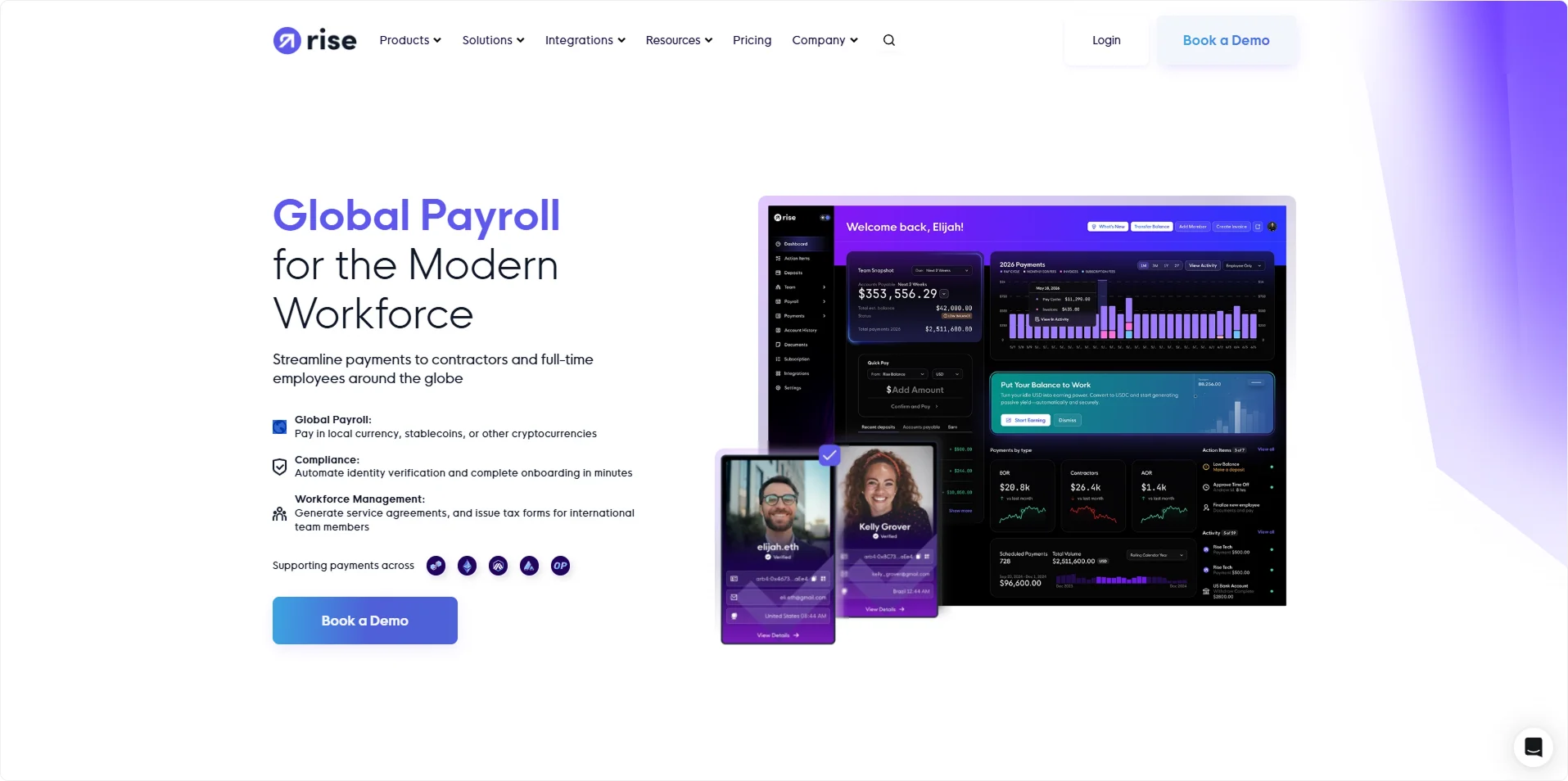
Rise is a global payroll and workforce infrastructure platform built for the next generation of internet-native companies. Designed for Web3 startups, DAOs, and globally distributed teams, Rise enables organizations to hire, onboard, and pay talent anywhere in the world while maintaining full compliance with local tax and labor regulations.
The platform supports payments in both local fiat currencies and digital assets, allowing companies to compensate contributors in the format that best fits their operations. With coverage spanning more than 190 countries, Rise provides the infrastructure needed for companies to build truly global teams without the complexity of managing local entities.
Rise’s product suite includes Global Contractor Pay, Agent of Record (AOR), and Employer of Record (EOR) services. Together, these solutions allow organizations to operate internationally, hire talent across borders, and scale distributed teams without legal or administrative friction.
Content plays a central role in Rise’s growth strategy. Educational articles, industry reports, and product-led content attract founders, finance leaders, and HR teams researching how to hire and pay global workers.
But the entire content function is run by a single person: Austin Heaton, Rise’s Head of Content.
He is responsible for the full lifecycle of organic growth:
- keyword research
- SEO strategy
- writing and publishing
- competitor monitoring
- reporting and performance analysis
In an increasingly competitive niche such as global payroll and crypto payroll infrastructure, organic discovery had become mission-critical.
The Shift: From Traditional SEO to AI-Driven Discovery
Over the past two years, a new type of search behavior began emerging across the fintech and Web3 ecosystem.
Prospects were no longer relying exclusively on Google to evaluate vendors.
Instead, they were asking questions directly to AI assistants such as:
- ChatGPT
- Perplexity AI
- Google Gemini
Typical discovery prompts looked like this:
- “What’s the best crypto payroll platform for global contractors?”
- “How do DAOs pay contributors internationally?”
- “Which payroll providers support USDC payments?”
Unlike Google search results, generative engines synthesize answers and recommend specific platforms directly inside the response.
For companies like Rise, this meant something important:
The vendor mentioned in the AI response often receives the demo request.
The vendor omitted from the answer might never be discovered.
The problem was visibility. Traditional SEO tools could measure Google rankings and clicks, but they could not answer a more important question:
Was Rise appearing in AI-generated answers at all?
The Problem: Running a Modern Content Operation Without AI Search Data
Before implementing any dedicated AI search tracking system, Rise’s content operation was operating with incomplete visibility.
Every week required a significant amount of manual analysis:
- Exporting data from Google Search Console
- Cross-referencing traffic and conversions in Google Analytics
- Running manual SEO audits to detect ranking drops
- Monitoring competitor content manually
- Building performance reports from multiple tools
Even with this effort, an entire discovery channel remained invisible.
If a prospect discovered Rise through an AI assistant, there was no reliable way to answer critical questions such as:
- Which AI platforms were driving discovery?
- Which prompts triggered mentions of Rise?
- Which competitors appeared alongside Rise in AI answers?
- Which pages were being cited by AI models?
- Where was Rise completely absent from AI responses?
Without this data, content strategy relied heavily on intuition.
The team could publish SEO articles and hope generative models surfaced them, but there was no systematic way to verify whether those efforts were working.
As AI assistants became a more common research tool for founders and operators in the Web3 space, that gap became increasingly difficult to ignore.
The Solution: Atomic AGI
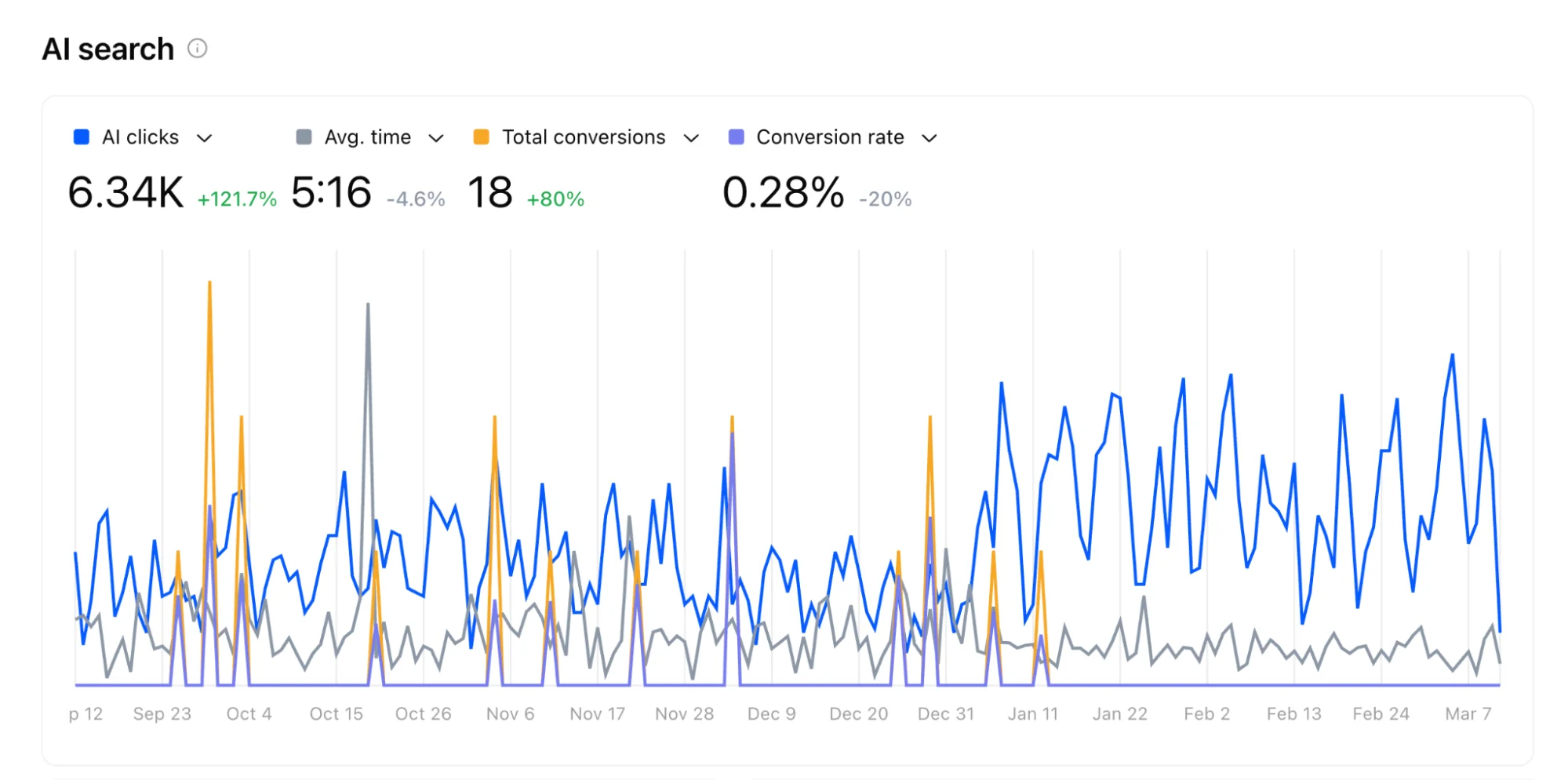
Rise implemented Atomic AGI to track and optimize visibility across both traditional search engines and generative AI platforms.
Instead of adding yet another analytics tool, Atomic AGI became the central system for monitoring organic discovery.
The platform introduced several capabilities that traditional SEO tools lacked.
1. Unified Organic Search Reporting

Atomic AGI consolidates performance data from multiple sources, including Google Search Console and analytics platforms into a single reporting interface.
For Rise, this replaced a fragmented workflow that previously required pulling data from several tools.
The dashboard provides a unified view of:
- keyword rankings
- landing page performance
- organic conversions
- AI-driven discovery signals
Reports that previously required hours of manual analysis can now be generated in minutes.
This shift allowed Austin to redirect time away from reporting and toward the activities that actually grow organic visibility: content creation and strategy.
2. AI Search Visibility Tracking
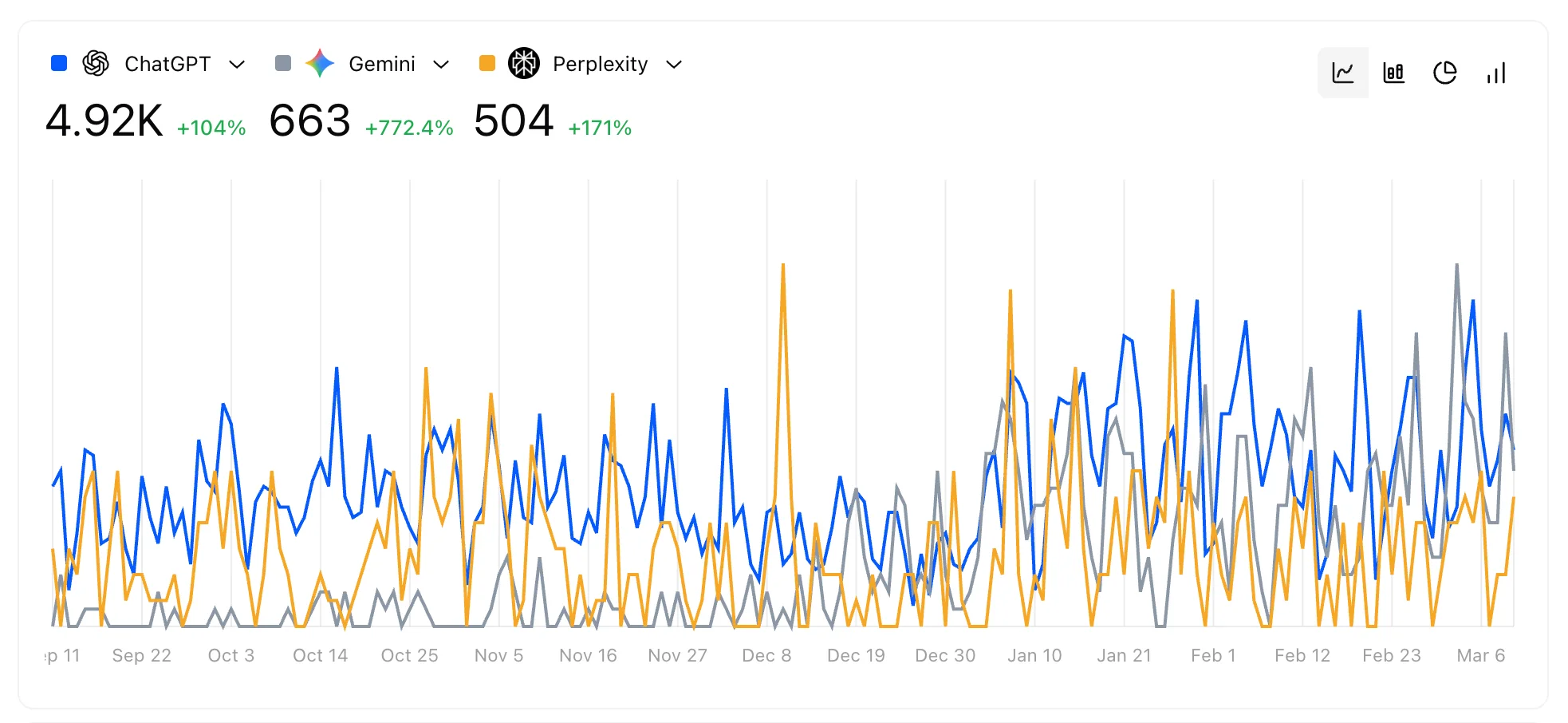
The most significant capability was Atomic AGI’s AI search visibility module.
The platform tracks brand mentions across generative engines such as:
- ChatGPT
- Perplexity
- Gemini
- other emerging AI search interfaces
Instead of guessing whether Rise appears in AI answers, the platform provides measurable insight into:
- prompts that trigger mentions of Rise
- queries where competitors appear instead
- changes in AI visibility over time
- emerging discovery opportunities
This data surfaced a series of content gaps.
Certain high-intent prompts, especially those related to DAO payroll, crypto payroll compliance, and global contractor payments were frequently producing AI responses that cited competitors.
Those gaps became immediate content priorities.
By publishing targeted articles designed to answer those exact prompts, Rise could improve the probability of being cited by generative engines.
3. Keyword Intelligence Across Google and AI Search
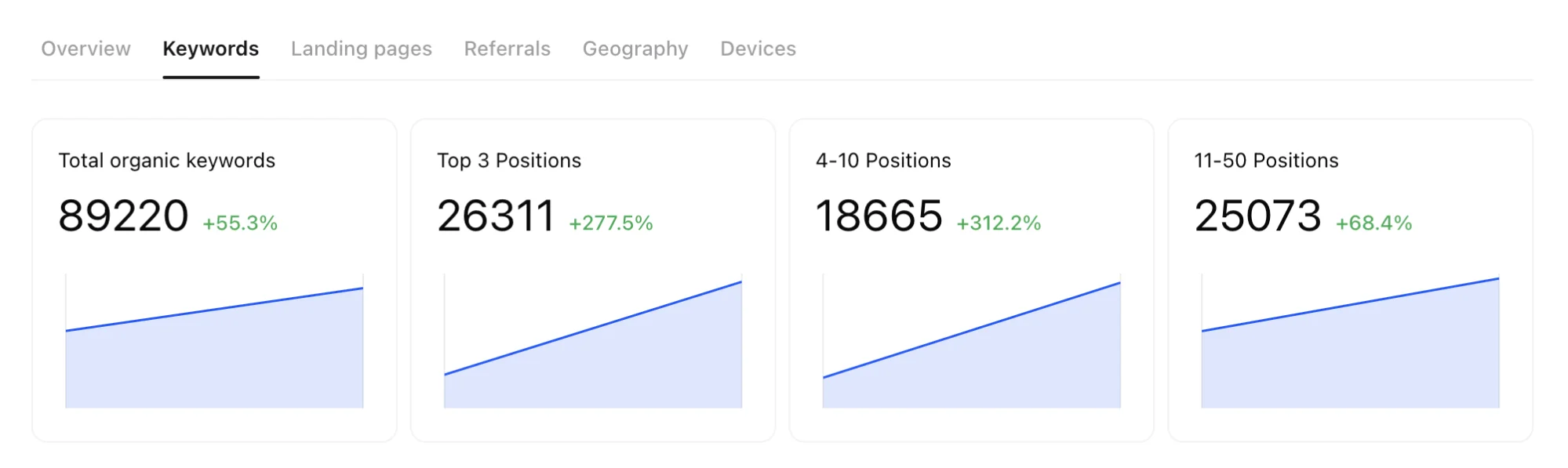
Traditional keyword research tools focus exclusively on Google search behavior.
Atomic AGI analyzes opportunities across both traditional and conversational search environments.
This matters because discovery increasingly happens in a two-step process:
- Users search Google to find general information.
- They ask an AI assistant to evaluate specific vendors.
By combining keyword and prompt-level analysis, Rise can prioritize topics that perform well across both channels simultaneously.
Instead of managing two separate research workflows, strategy can be built around a unified discovery landscape.
4. AI Agents That Automate Analysis
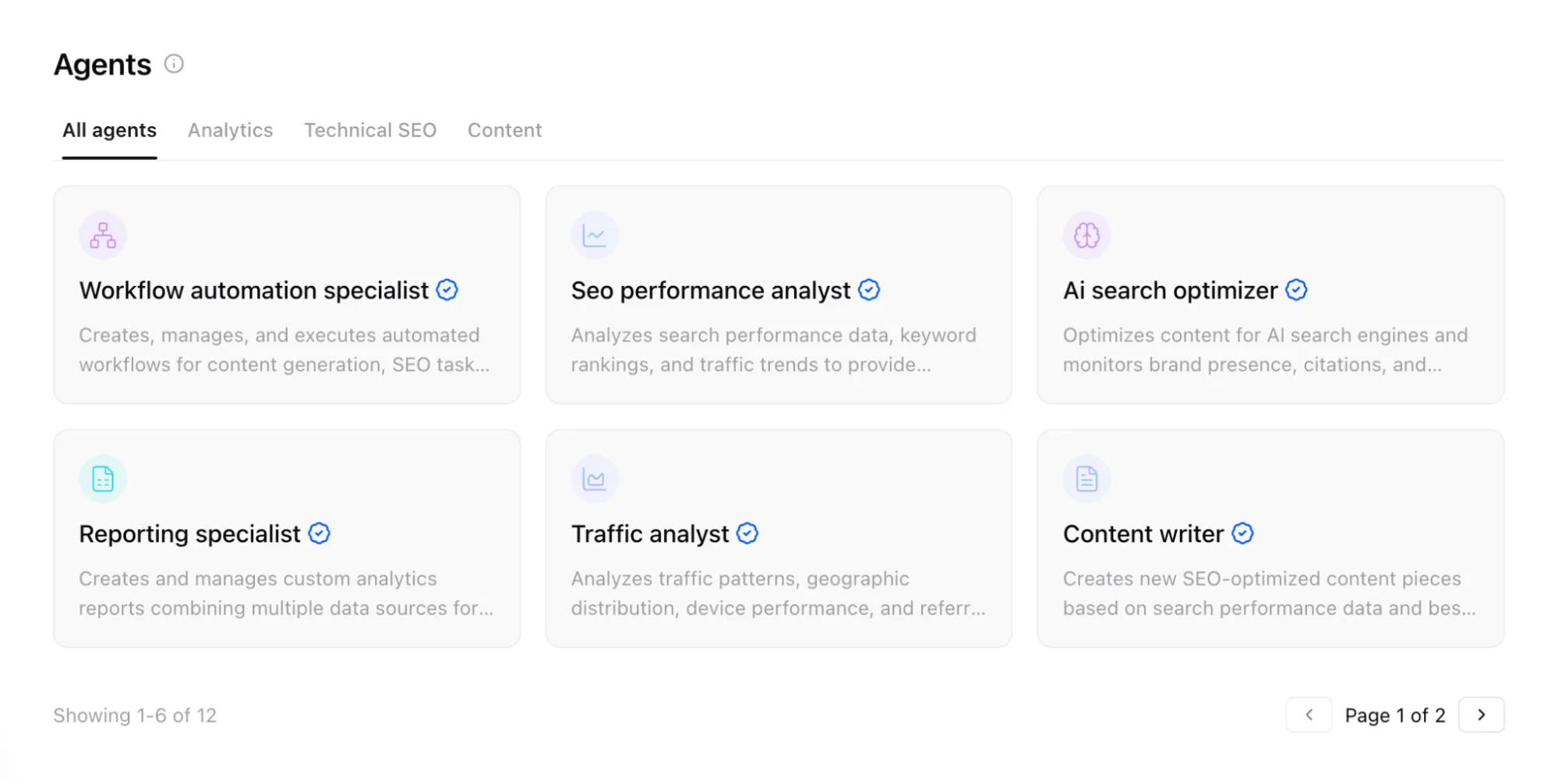
Because Rise operates with a single content lead, automation was essential.
Atomic AGI includes pre-built AI agents designed to handle analytical tasks that typically require multiple team members.
Several agents quickly became core infrastructure for the content operation.
Content Refresher
This agent audits existing pages and detects:
- ranking decay
- outdated information
- declining traffic
Instead of manually reviewing hundreds of articles, the system surfaces exactly which pages require updates and why.
Content Strategist
The strategist agent analyzes keyword opportunities, competitive positioning, and performance data to generate a prioritized editorial roadmap.
This transforms strategy development from a manual process into a review-and-approval workflow.
Case Study Creator
Customer wins can be converted into structured case studies optimized for both search rankings and AI citations.
In competitive B2B niches, social proof often determines whether a company is recommended inside AI responses.
Automating that workflow makes it feasible for a small team to consistently publish them.
5. Competitor Tracking Across Search Surfaces
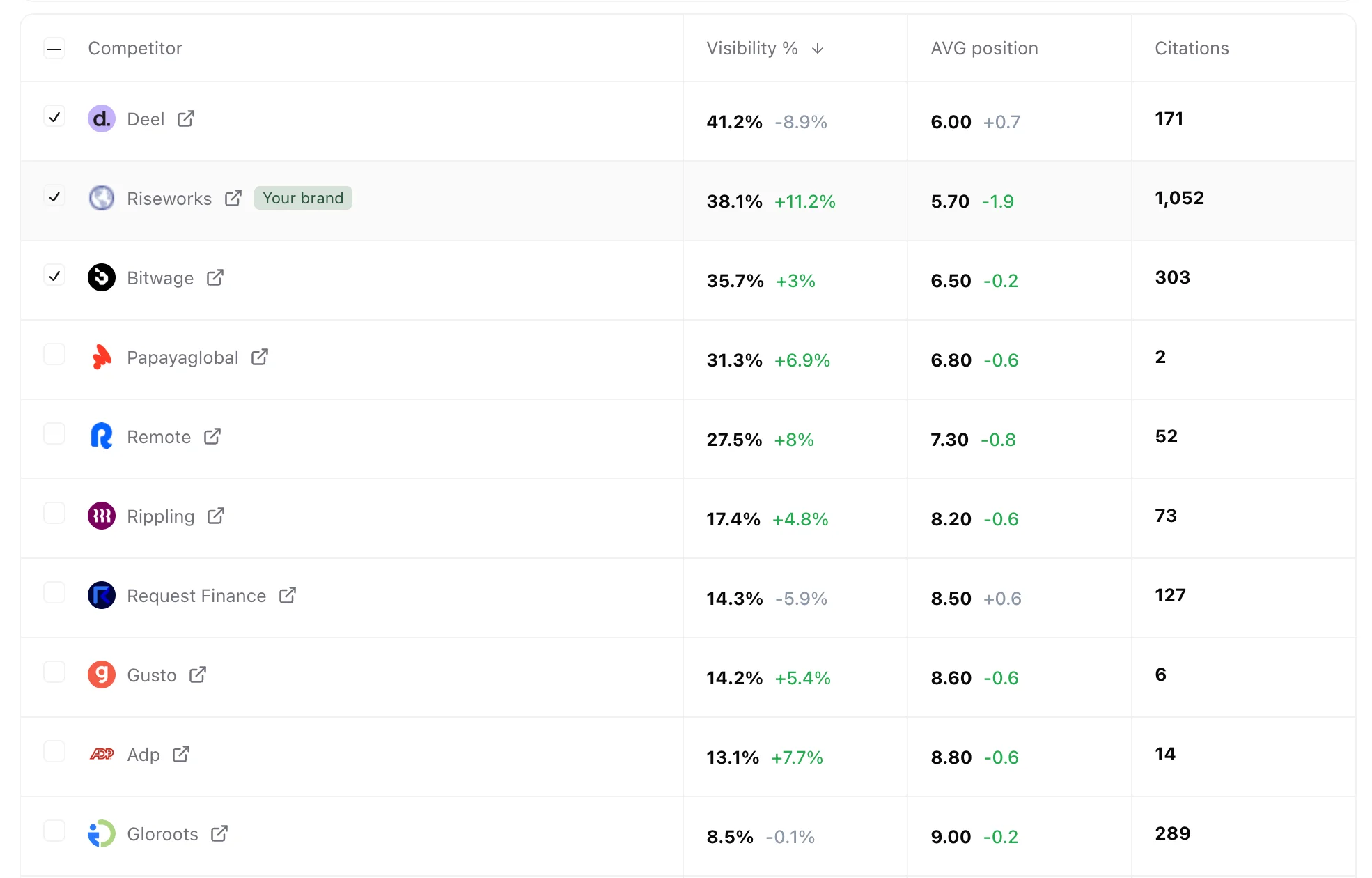
Another key capability is continuous competitor monitoring.
Atomic AGI tracks which competitors appear:
- in Google rankings
- inside AI responses
- across shared discovery prompts
This provides a level of competitive intelligence that would otherwise require manual research.
For Rise, it allows content strategy to be shaped not only by keyword opportunities but also by visibility gaps relative to competitors.
The Outcome
For a one-person content team, the most important result wasn’t a single metric.
It was operational leverage.
Atomic AGI allowed the Rise content operation to function with the analytical capacity of a much larger team.
Several practical outcomes emerged.
Faster Content Decision-Making
Instead of assembling reports manually, Austin can access real-time performance data and adjust strategy quickly.
Clear Visibility into AI Discovery
Rise can now see where it appears in AI responses and where competitors dominate.
This turns generative search from a black box into a measurable channel.
Higher Strategic Output
With reporting and monitoring automated, more time can be spent on creating content that addresses high-intent questions from founders, operators, and finance teams researching global payroll infrastructure.
Key Takeaways
Rise’s experience highlights several broader lessons for modern content teams.
AI search is already influencing B2B discovery.
Prospects increasingly rely on generative engines when evaluating vendors and comparing solutions.
Traditional SEO analytics tools only show part of the picture.
Understanding AI-driven discovery requires tracking prompts, citations, and visibility across generative engines.
Automation multiplies the output of small teams.
When analytical work is automated, even a single content lead can operate with the strategic capacity of a larger department.
Prompt-level insight changes how content strategy works.
Instead of focusing only on keywords, teams can build content around the actual questions users ask AI assistants.
Looking Ahead
Rise continues to treat AI search as a growing discovery channel rather than a novelty.
As generative engines evolve and become more integrated into everyday research workflows, the ability to measure and improve visibility across those platforms will become increasingly important.
For companies investing in organic growth, the shift is clear:
Search is no longer limited to ranking in Google.
The brands that earn citations in AI responses will increasingly capture the attention and the customers that follow.
