


Something fundamental shifted in how people find information online between 2022 and 2026.
ChatGPT reached 900 million weekly active users by December 2025, up from 300 million just twelve months earlier. Perplexity processed 780 million queries in May 2025, a 239% year-over-year increase. Google's AI Overviews now appear in 60% of US queries, double what they were in August 2024.
The punchline? 60% of searches now end without a click, up from 26% in 2022.
That's not a traffic dip. That's a structural collapse of the old model. And it created a problem that traditional analytics simply can't solve.
Marketing managers across B2B SaaS discovered their brands were appearing in ChatGPT recommendations and Perplexity summaries, influencing purchase decisions, and Google Analytics showed absolutely nothing. Zero visibility into how often they were cited, whether the sentiment was positive or negative, or how they stacked up against competitors.
That visibility gap created a new software category almost overnight: Answer Engine Optimization (AEO) tools.
This guide covers everything you need to know: what AEO is, why it matters economically, the 10 best AEO tools ranked with real data, and the exact playbooks for winning featured snippets, AI citations, and voice search.
Why AEO Matters Right Now
Three pressures are converging simultaneously.
First, more answers happen on-SERP. SparkToro's 2024 study estimates only ~360 of every 1,000 US Google searches result in a click to the open web. AI Overviews are accelerating this trend.
Second, AI Overviews suppress CTR; selectively but meaningfully. Ahrefs reports a 58% CTR reduction for position-one content on queries with AI Overviews (as of December 2025). Seer Interactive reports large CTR drops on AIO-present informational queries. The impact varies by query class, but the direction is clear.
Third, AI-referred traffic converts at a dramatically higher rate. This is the counterintuitive opportunity most marketers miss:
Webflow reported LLM traffic converts at 6x the rate of traditional search traffic
Users who click through from an AI answer have already completed competitive research through a conversational AI interaction. They arrive educated, pre-qualified, and ready to act.
The upshot: even if AI search sends less raw traffic than traditional search, the traffic it does send is dramatically more valuable. That's the economic case for AEO investment.
Top 10 AEO Tools Ranked for 2026
Here's a quick comparison:
1. Atomic AGI
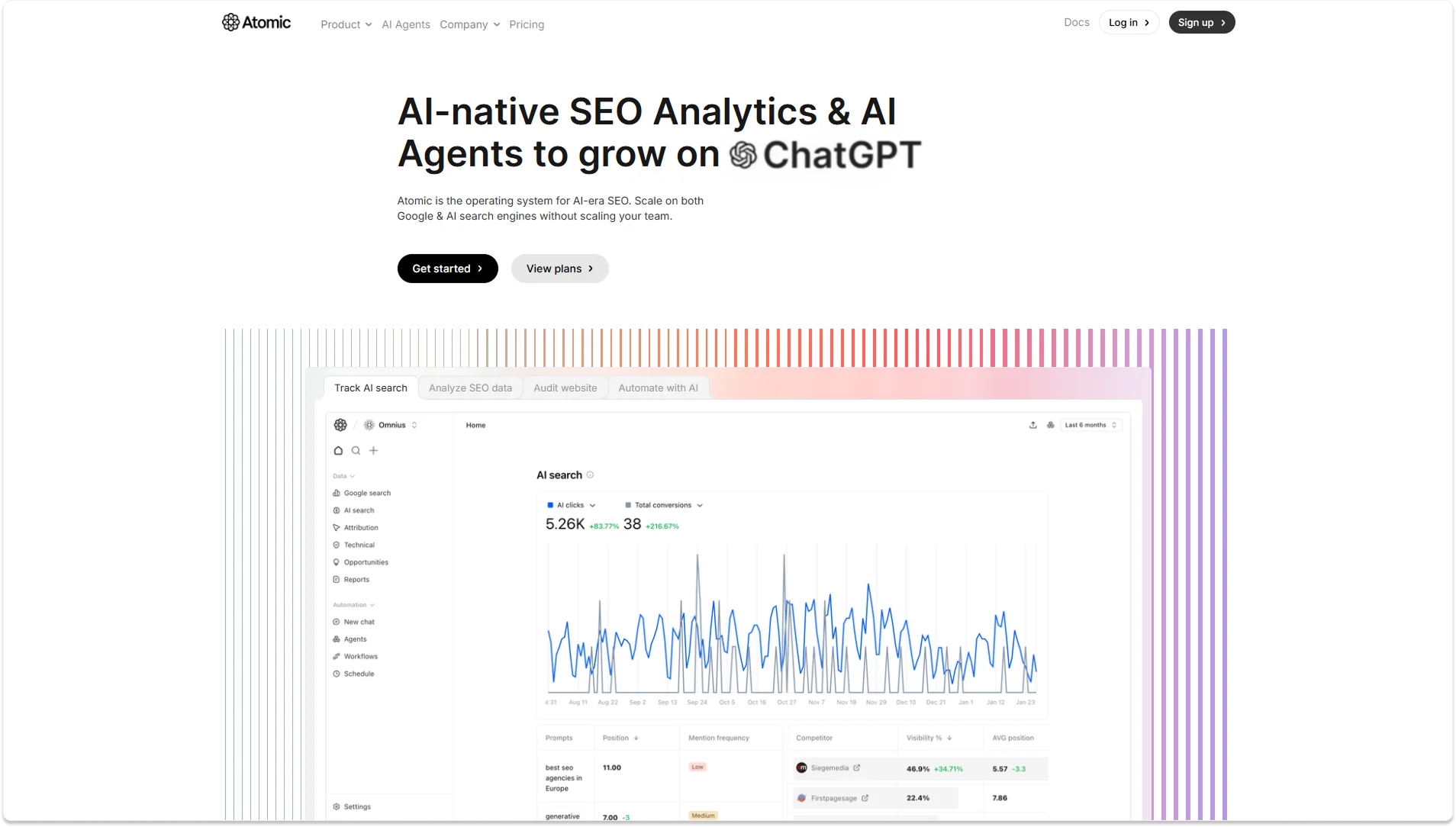
The only platform that functions as a true operating system for AI-era SEO, unifying AI search tracking, traditional SEO analytics, technical auditing, and AI agents in a single dashboard. While competitors force teams to juggle separate tools for rankings, LLM visibility, and technical health, Atomic AGI connects all four layers so growth teams can scale organic performance without scaling headcount.
Key Features
- Tracks brand visibility, citations, sentiment, and prompt performance across 10 AI engines: ChatGPT, Gemini, Claude, Perplexity, DeepSeek, Copilot, Grok, Meta Llama, Qwen, and Mistral
- Full SEO analytics suite pulls data from Google Search Console, GA4, AI Overviews, and AI Mode, connecting traditional search performance directly to LLM citation outcomes
- Deep technical auditing for both Google and AI crawlers covering schema validation, LLM bot permissions, URL indexing, Core Web Vitals, internal link structure, robots.txt compliance, and sitemap errors
- AI Agents automate SEO workflows end-to-end, content refresh, keyword decay monitoring, backlink discovery, SERP analysis, and publishing updates directly to your site
Pros
- The only platform combining AI search tracking, SEO analytics, technical auditing, and workflow automation in one place, teams reclaim ~30 hours/month previously spent on manual data analysis
- Deployed by teams at Accenture, Booking.com, Payoneer, Loom, and Bunq, proven at both SMB and enterprise scale
- Rated 4.9/5 on G2; customers report 240%+ YoY organic traffic growth, 6,000+ clicks from AI engines, and 538 AI mentions in four weeks
Cons
- Breadth of features means a steeper learning curve than single-purpose monitoring tools
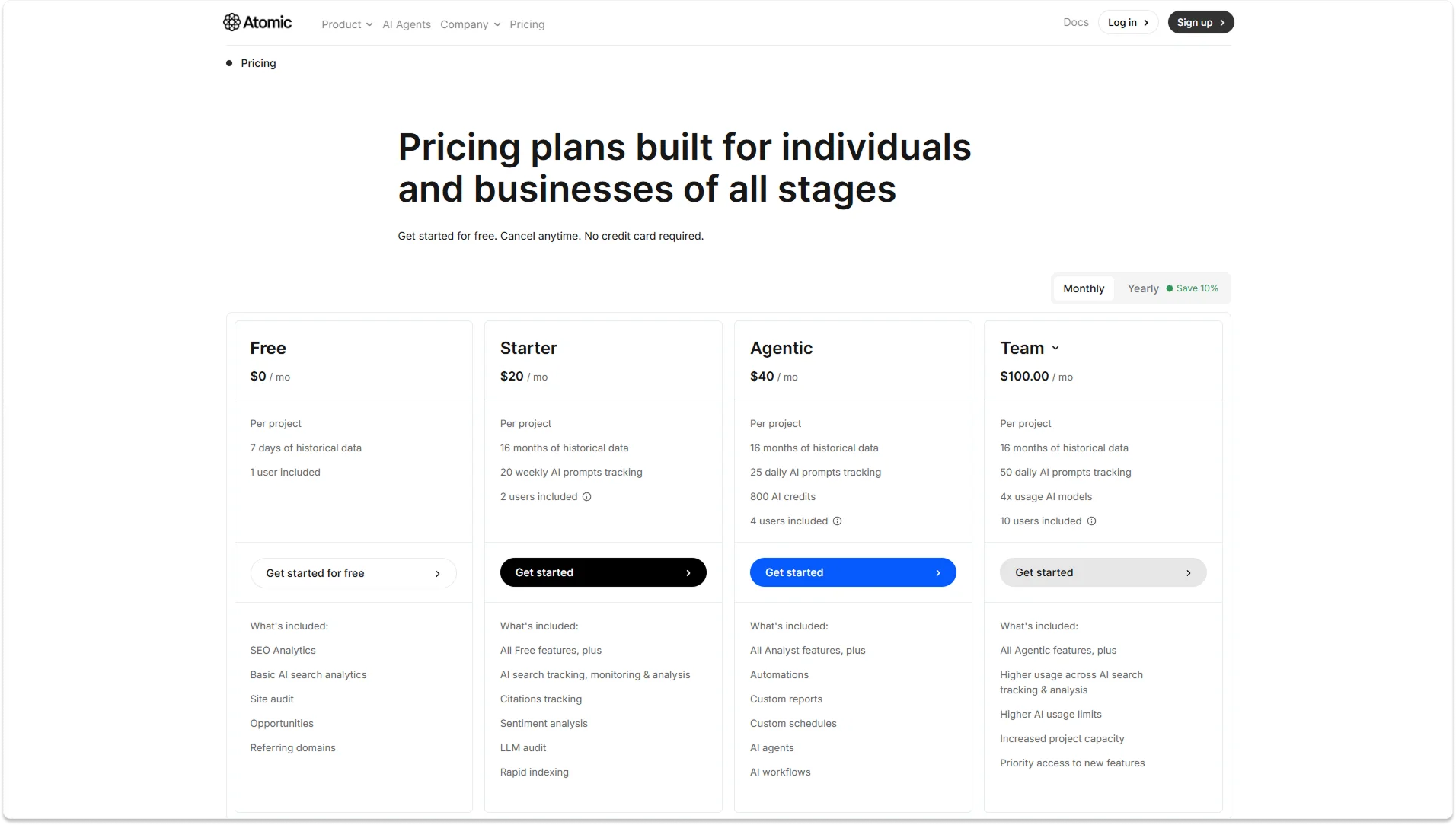
Pricing: Multiple plans available with a free audit to get started.
2. Semrush
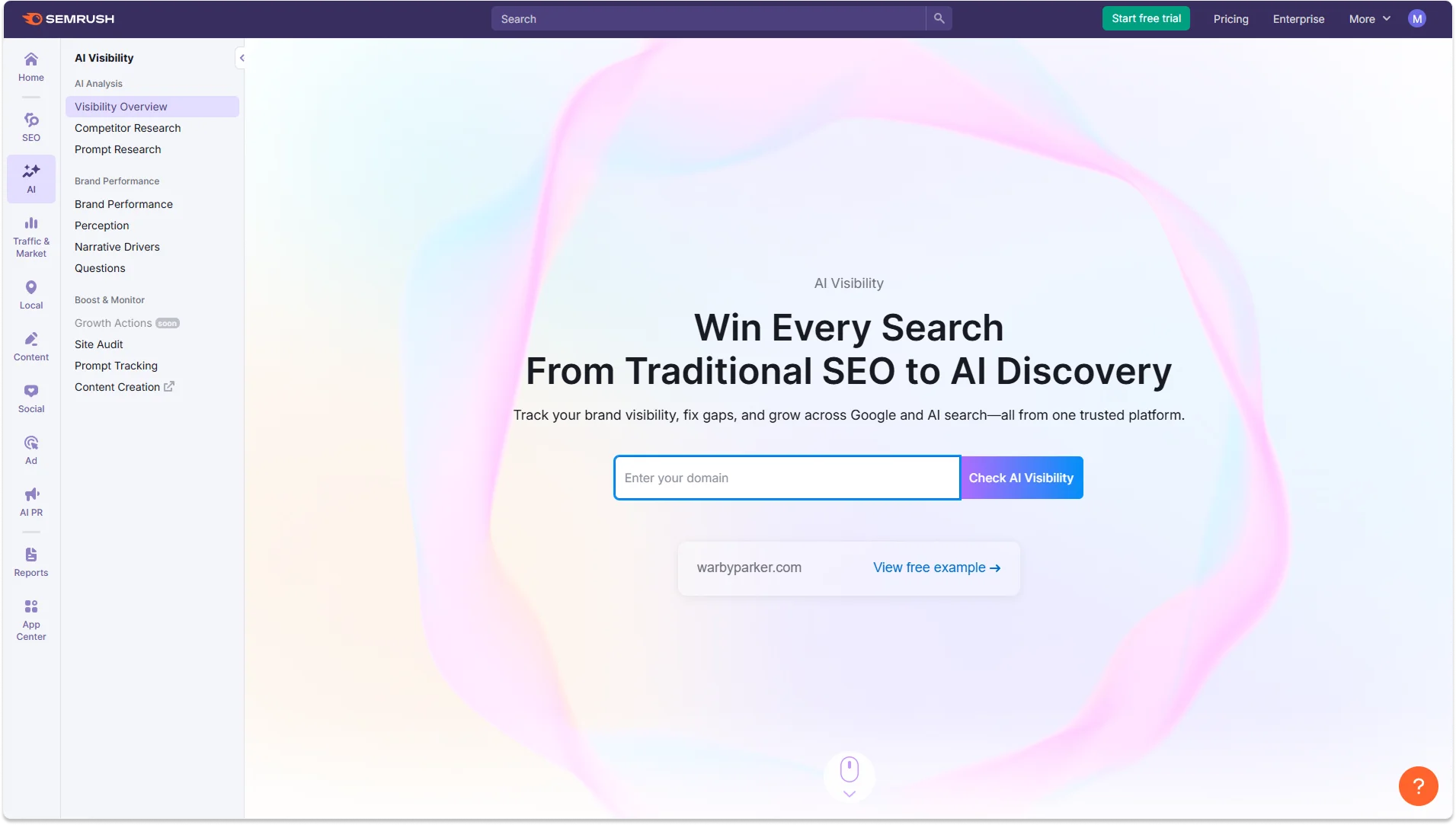
The most complete bridge between classic SERP answer optimization and AI-answer monitoring, designed for SMB and mid-market teams that want SEO and AEO in one environment. AEO is integrated into existing keyword workflows rather than bolted on, which means faster team adoption and fewer context switches.
Key Features
- AI Visibility Toolkit tracks brand mentions, citations, and sentiment across major AI engines with competitive gap analysis
- Keyword intent labeling (informational/navigational/commercial/transactional) filters for answer-intent queries most likely to trigger snippets and AI summaries
- Featured snippet tracking shows "new/lost" visibility with estimated traffic impact, collected via direct SERP crawling
- Prompt research surfaces what questions buyers ask in AI engines, mapped to existing keyword workflows
Pros
- Single platform for both traditional SEO and AI visibility, no extra tool needed
- Strongest featured snippet and SERP feature tracking in the market
- Large review ecosystem and proven adoption (4.5/5 on G2, thousands of reviews)
Cons
- AI tracking feels like a keyword-era extension, not natively built for conversational search
- Full AEO + SEO capability requires stacking the base plan with the AI add-on
- Less granular citation data than dedicated AEO platforms for teams where AI visibility is the primary growth channel
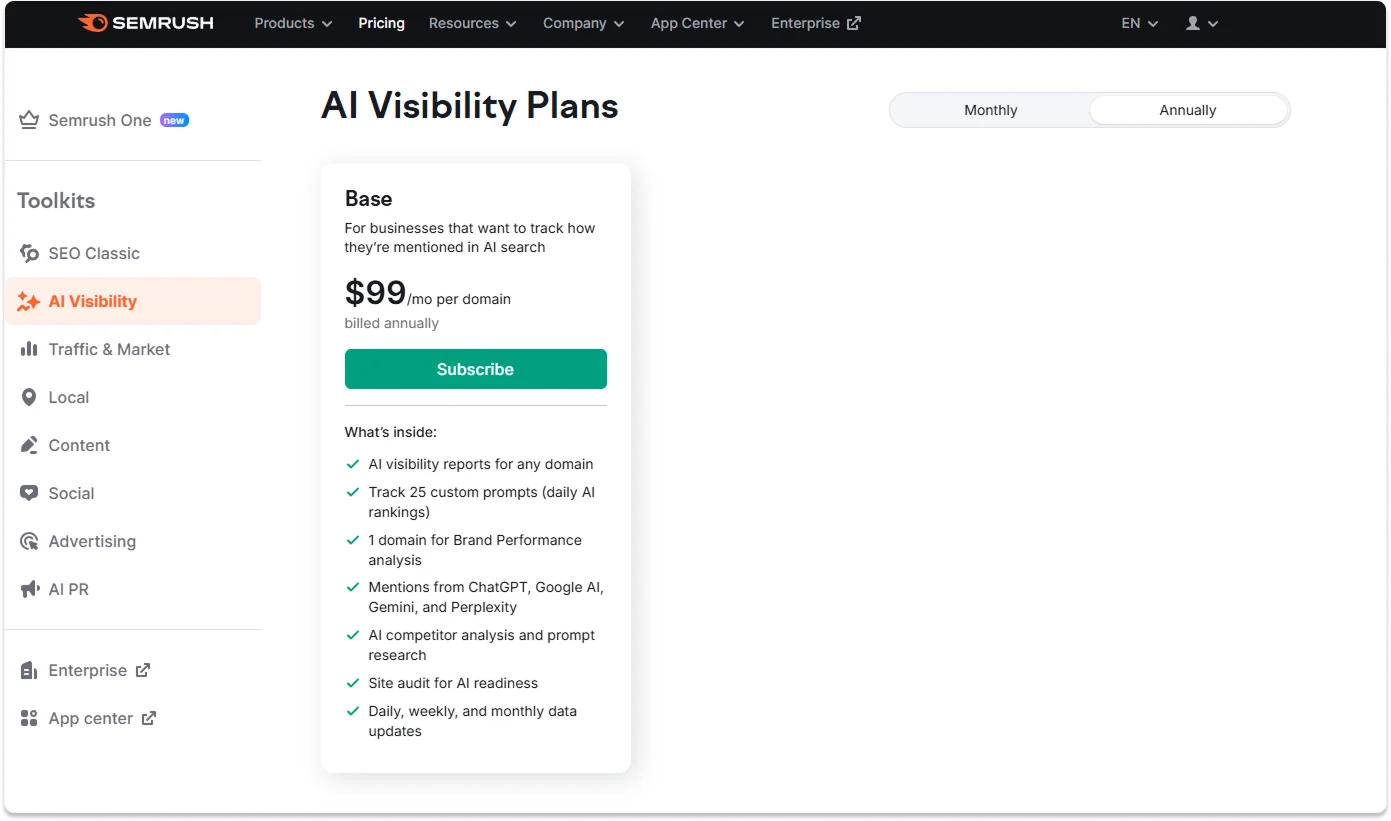
Pricing: Base plan starts at $139.95/month; AI Visibility Toolkit add-on starts at $99/month.
3. Conductor
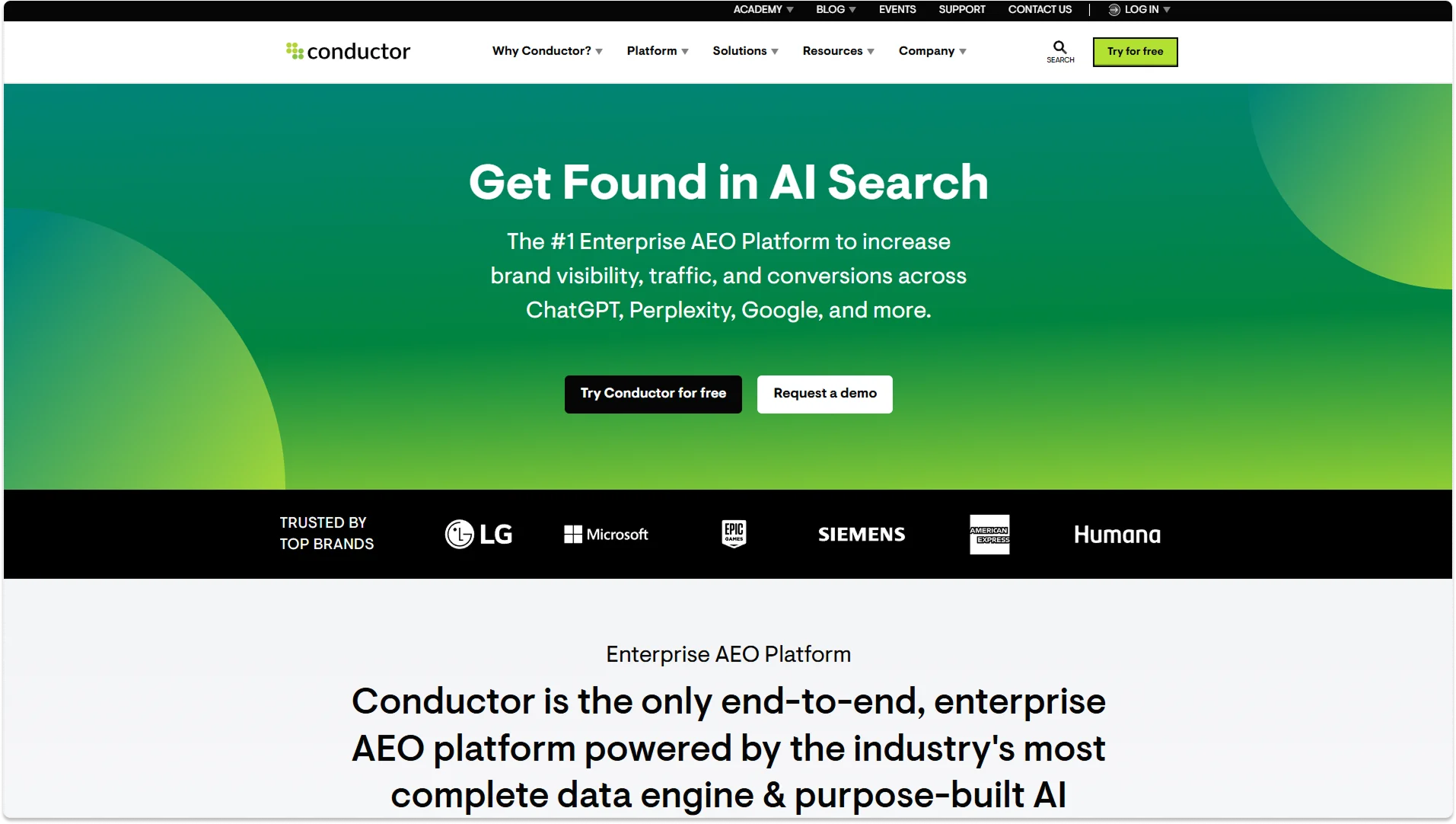
The best enterprise AEO operating system for teams that need governed measurement, topic, and prompt analysis, and ROI linkage to revenue outcomes. Conductor formally distinguishes brand mentions from website citations, a critical distinction that most platforms blur.
Key Features
- Explicitly separates brand mentions from website citations, enabling "mentioned-but-not-cited" opportunity tracking
- API-first data approach improves stability and compliance compared to brittle UI scraping
- Links AI visibility directly to traffic and conversion outcomes via GA and GSC integrations
- Topic and prompt analysis maps what buyers actually ask across the funnel, segmented by intent
Pros
- Strongest governance and ROI attribution in the market, directly answers the "how much pipeline?" question
- Built for multi-site, multi-region enterprise portfolios with robust workflow integration
- 4.6/5 on G2 across hundreds of verified enterprise reviews
Cons
- Custom pricing only, no self-serve option, requires a full procurement cycle
- Not suitable for small teams needing quick setup or budget-conscious buyers
- Limited SERP feature tracking compared to Semrush or Ahrefs
Pricing: Custom enterprise pricing, scaling by site size and usage needs.

4. BrightEdge
A mature enterprise SEO platform with AI Catalyst built in, a unified command center across AI Overviews, ChatGPT, and Perplexity with persona and intent mapping. The key advantage is that AI visibility isn't a separate purchase: it's included in all BrightEdge subscriptions.
Key Features
- AI Catalyst provides unified visibility across Google AI Overviews, ChatGPT, and Perplexity with prompt research
- Audience intelligence layer maps content to buyer personas and journey stages, not just queries
- Included in all BrightEdge subscriptions, no additional procurement decision required
- Strong reporting and analytics integrations for enterprise digital teams
Pros
- Zero integration friction for teams already on BrightEdge, AI monitoring is just another surface
- Deep audience intelligence and intent mapping beyond simple citation counts
- 4.4/5 on G2 with hundreds of verified enterprise reviews
Cons
- Quote-based enterprise pricing with no self-serve option
- Wrong fit for anyone not already invested in the BrightEdge ecosystem
- Less public documentation on AI coverage methodology than pure-play AEO vendors
Pricing: Quote-based enterprise pricing; AI Catalyst is included in all existing subscriptions.
5. Profound
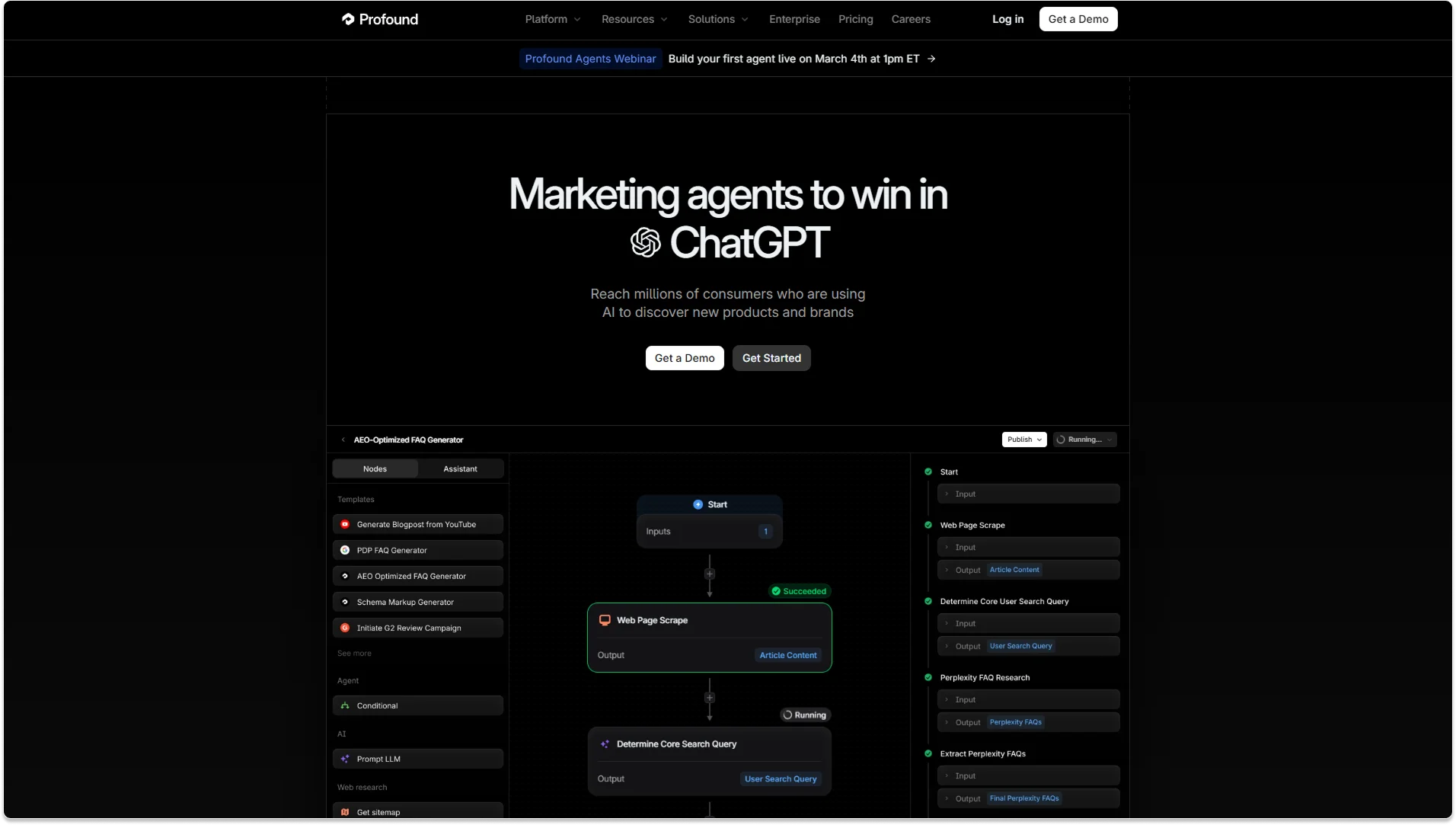
The deepest AI-native platform on the market, built for Fortune 500 companies that need SOC 2 compliance, HIPAA certification, and the broadest engine coverage available. With $58.5M raised, including a $35M Sequoia Series B in 2025, Profound has captured more VC funding than the rest of the AEO category combined.
Key Features
- Tracks 10+ AI engines, including ChatGPT, Perplexity, Claude, Gemini, Copilot, Grok, DeepSeek, Meta AI, and Amazon Rufus
- Conversation Explorer surfaces trending topics from 200M+ real user prompts, not synthetic test queries
- Agent Analytics monitors how AI crawlers interact with your site at the backend level, revealing why competitors get cited more
- G2 partnership integration connects AEO data directly to G2 review performance (G2 is the 4th most cited source on ChatGPT for B2B software)
Pros
- One of the widest engine coverage in the market with SOC 2 Type II and HIPAA compliance for regulated industries
- Real prompt data (not synthetic) provides ground truth about actual buyer behavior
Cons
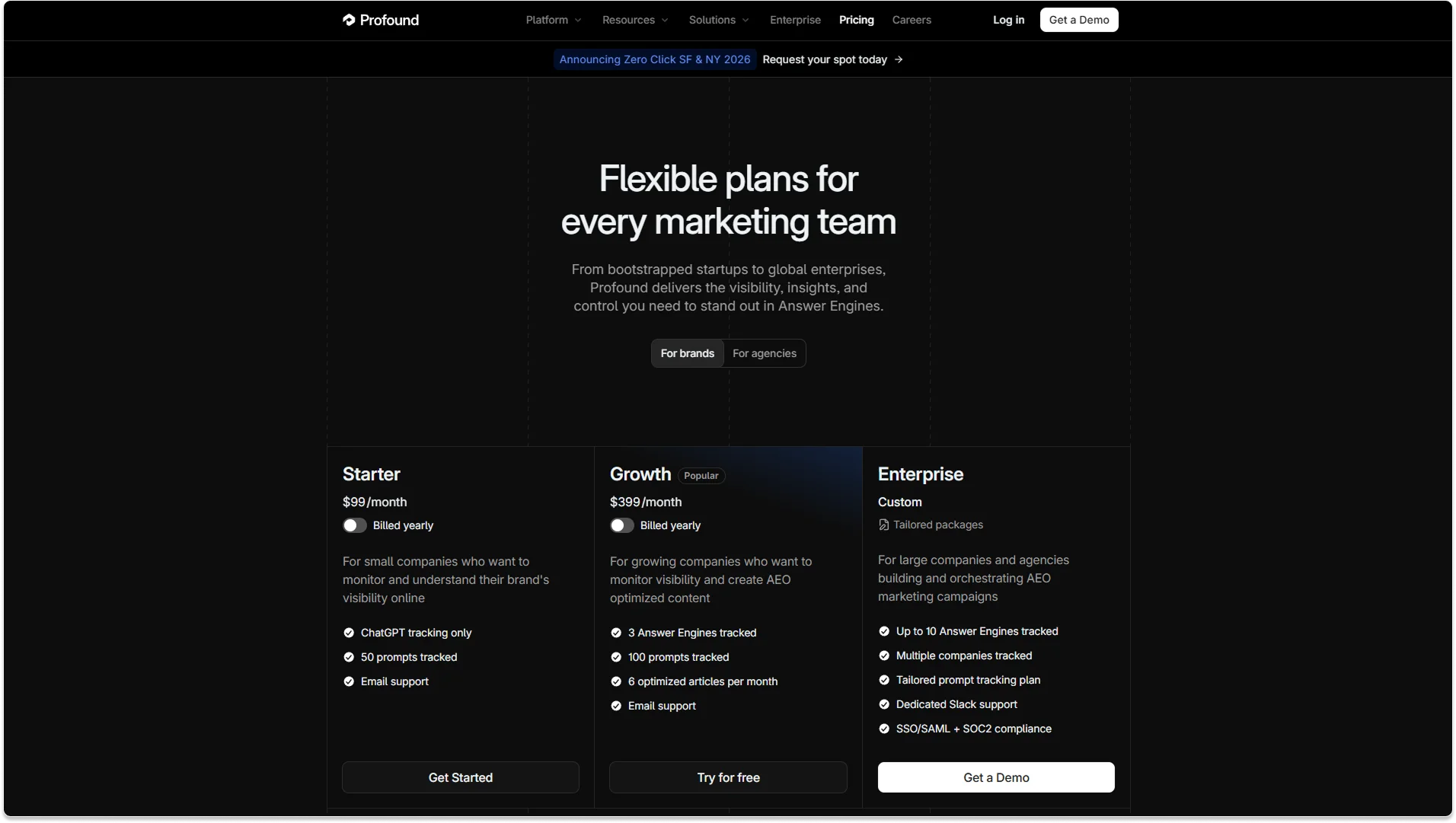
- Entry tiers are misleadingly limited; the $99 Starter plan covers ChatGPT only with 50 prompts; most buyers quickly need $399+ or a custom enterprise
- Wrong cost-to-value ratio for companies under $50M revenue unless AI visibility is a clearly measured primary growth channel
- Enterprise onboarding cycle is not suitable for teams needing fast setup
Pricing: Multiple plans starting from $99/month, with full enterprise coverage at custom pricing.
6. Ahrefs
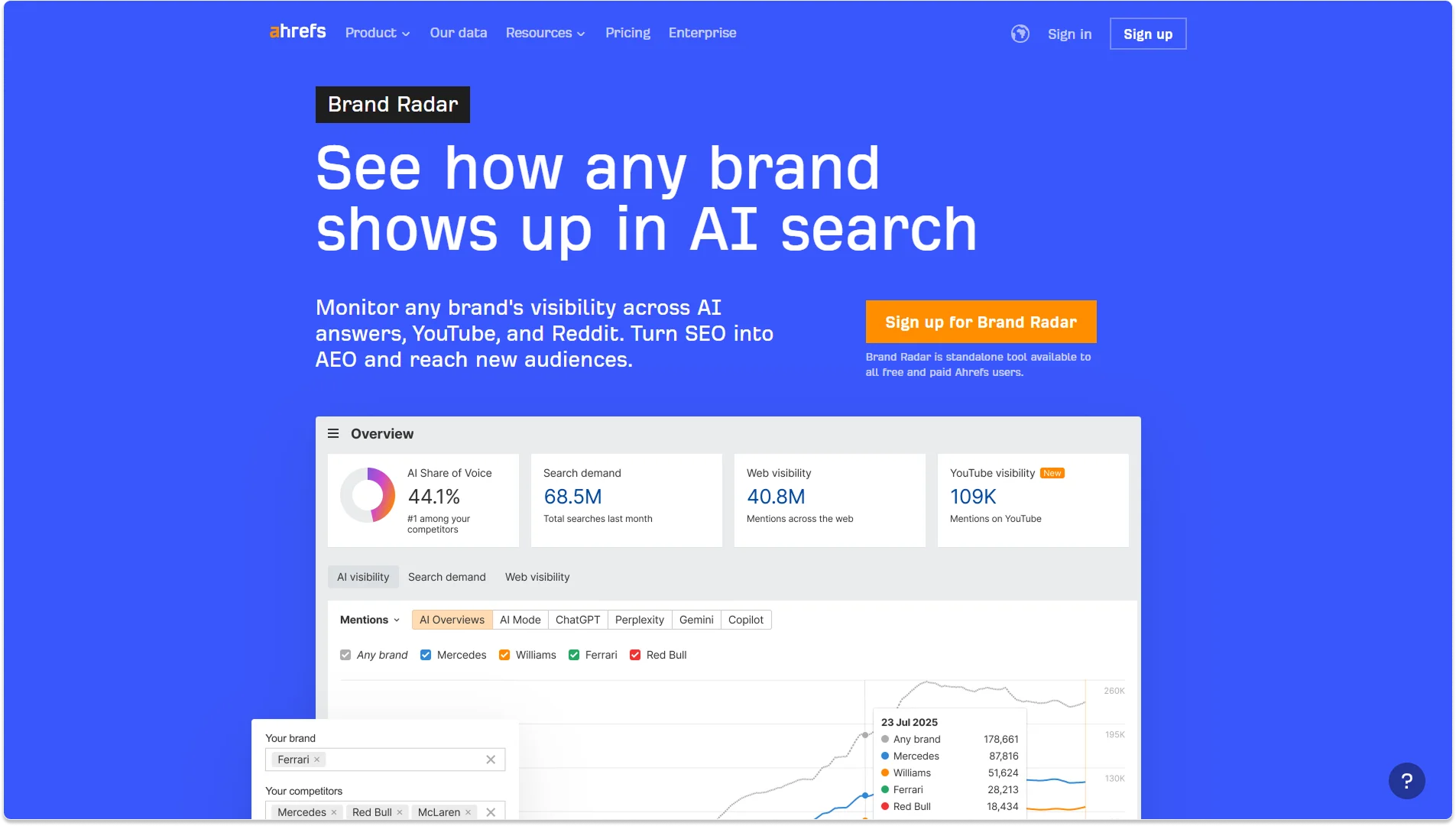
The best option for teams that want elite competitive research infrastructure combined with a massive-scale AI visibility database. Ahrefs Brand Radar draws from a 110-billion keyword database to surface "unknown unknowns", how AI engines associate your brand with topics you never thought to track.
Key Features
- Brand Radar analyzes AI visibility across hundreds of millions of real prompts, not a small custom list
- Keywords Explorer with intent filtering separates answer-intent queries from commercial intent for snippet targeting
- Combines classic competitive SEO research depth with a dedicated AI visibility layer
- Freemium tier available for testing Brand Radar before committing to paid plans
Pros
- Scale of prompt database is a genuine differentiator, discovers entity associations you didn't know existed
- Best competitive research infrastructure in the market for backlinks, keywords, and now AI visibility
Cons
- Brand Radar is an additional cost layer on top of the already-premium core SEO suite
- Platform architecture still skews toward keyword-based logic in an era defined by conversational prompts
- Less actionable content optimization guidance than AEO-native platforms
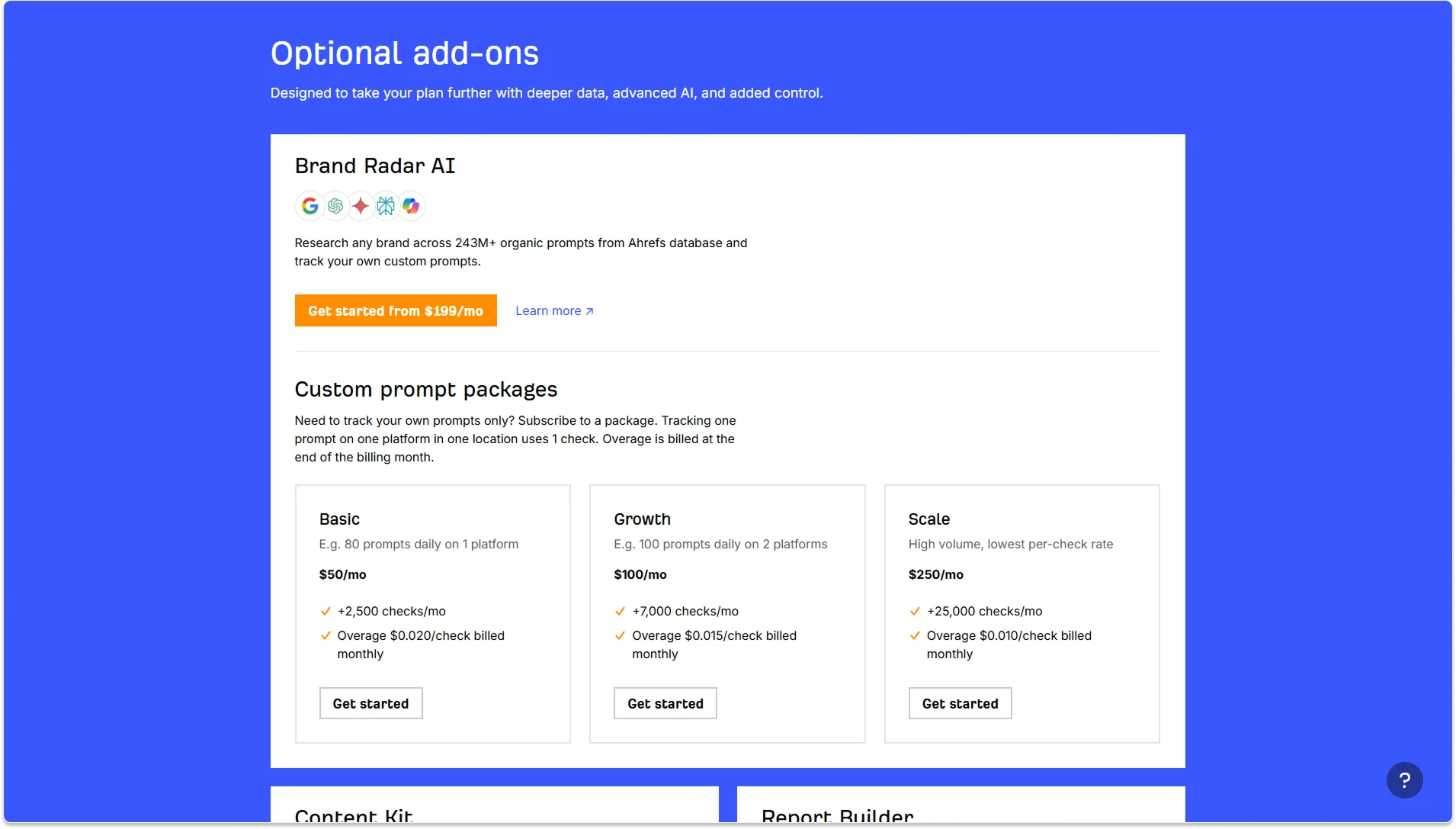
Pricing: Published monthly plans with Brand Radar available as a standalone add-on.
7. AIclicks
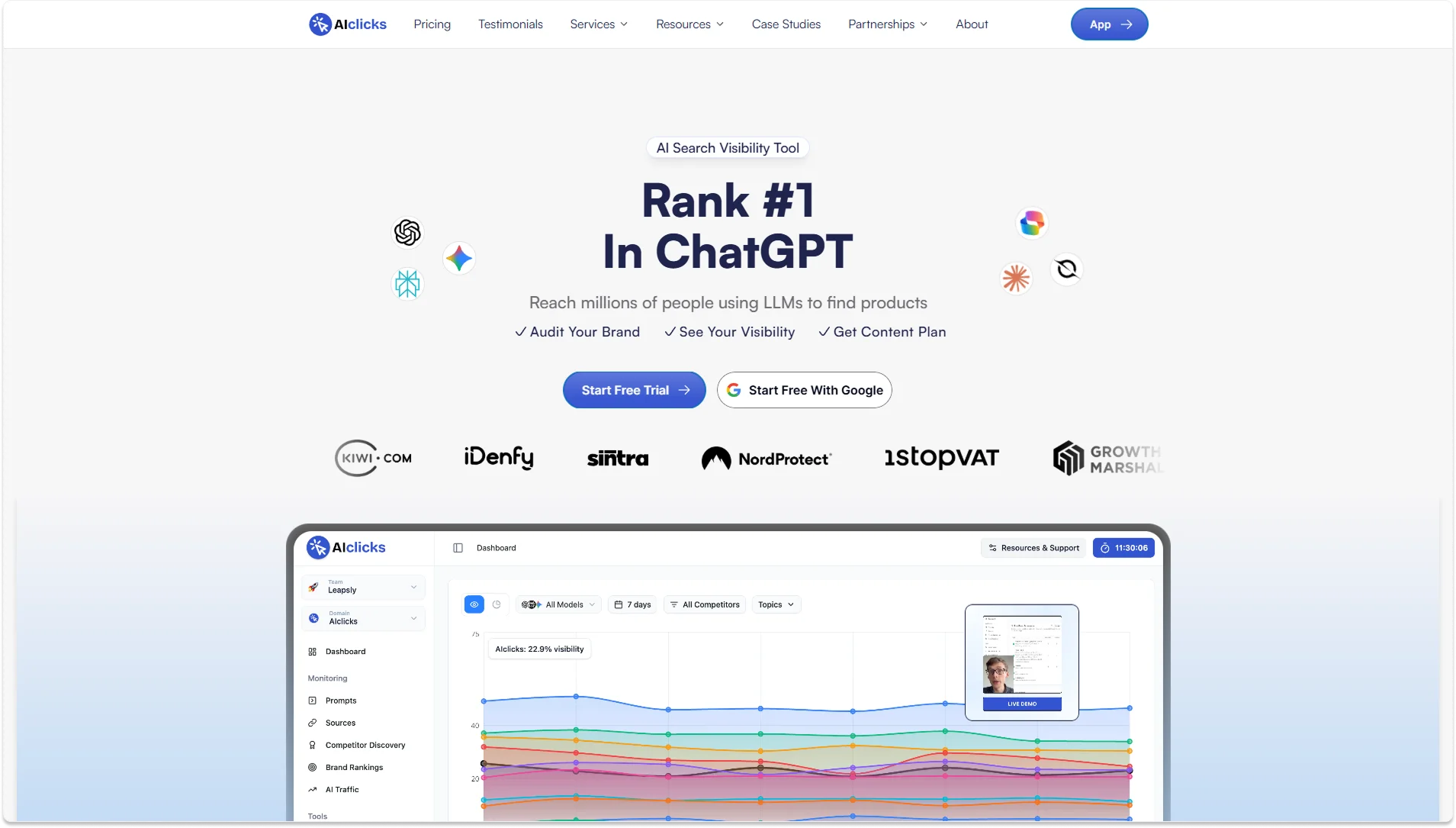
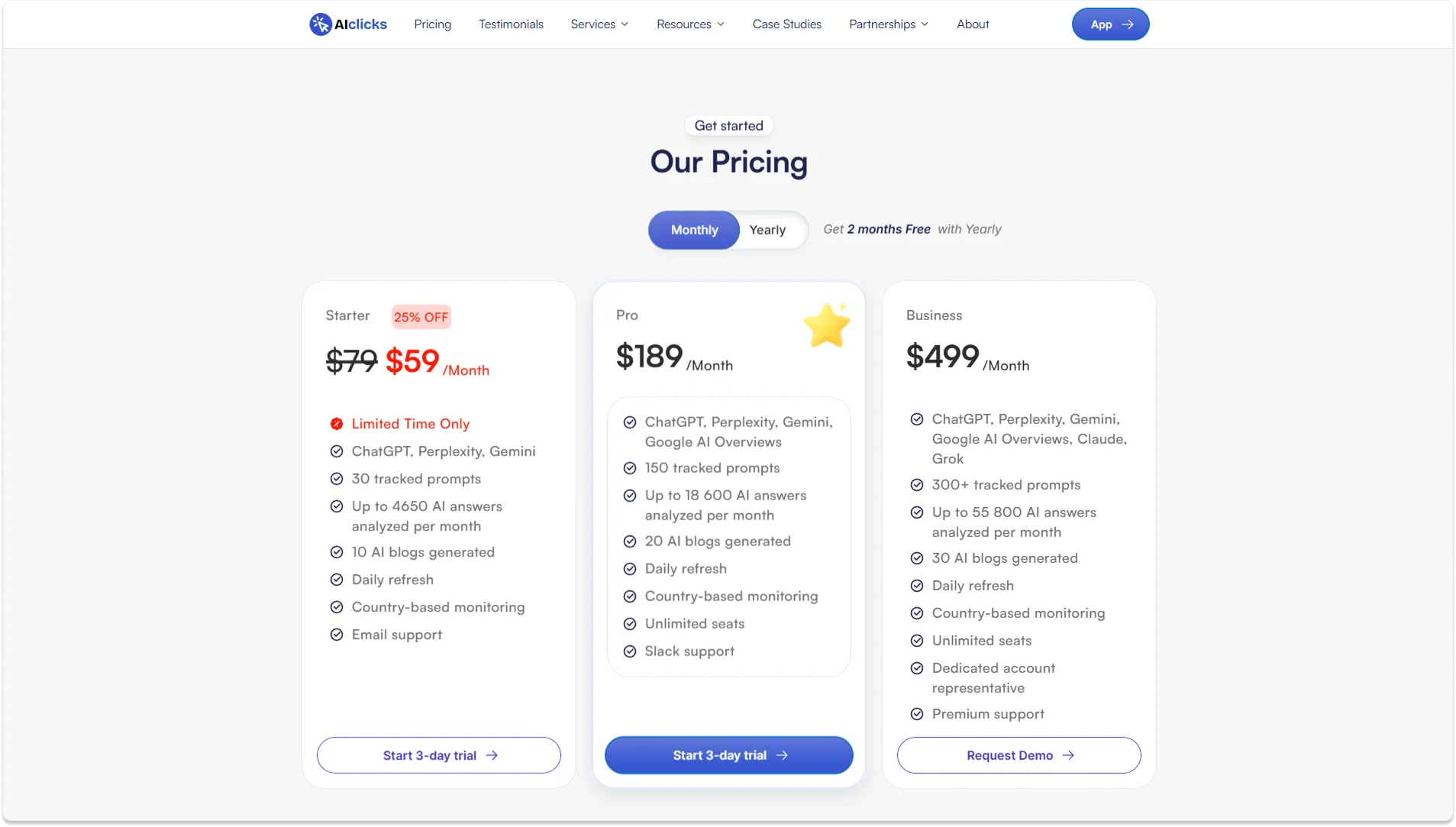
Built natively for AI search, not an SEO platform with AI features added on, AIclicks is the strongest choice for agencies and growth teams that need marketer-friendly dashboards without data science expertise. It tracks nine major AI engines and uses Prompt Cluster Mapping to capture how users ask the same question in hundreds of different ways.
Key Features
- Prompt Cluster Mapping groups related query variations rather than tracking individual keywords, capturing the full range of how buyers phrase AI questions
- Citation Intelligence reveals why competitors get cited more, specific content signals, domain authority patterns, and structural elements
- Tracks brand visibility across nine engines: ChatGPT, Claude, Gemini, Perplexity, Copilot, AI Overviews, Grok, DeepSeek, and Meta AI
- Share of Voice tracking shows your percentage of category mentions vs. competitors in real time
Pros
- Most marketer-friendly interface, dashboards that marketing managers can act on without translating through technical teams
- Broadest engine coverage in its price tier (nine engines at $79/month)
- Source Intelligence identifies which third-party sites drive the most AI citations, enabling targeted outreach planning
Cons
- No traditional SEO metrics, teams need a separate tool for backlinks, keyword rankings, and SERP features
- Insights-focused with limited content workflow automation; teams must implement recommendations manually
- No CRM integration for closed-loop attribution
Pricing: Multiple plans starting from $79/month.
8. Peec AI
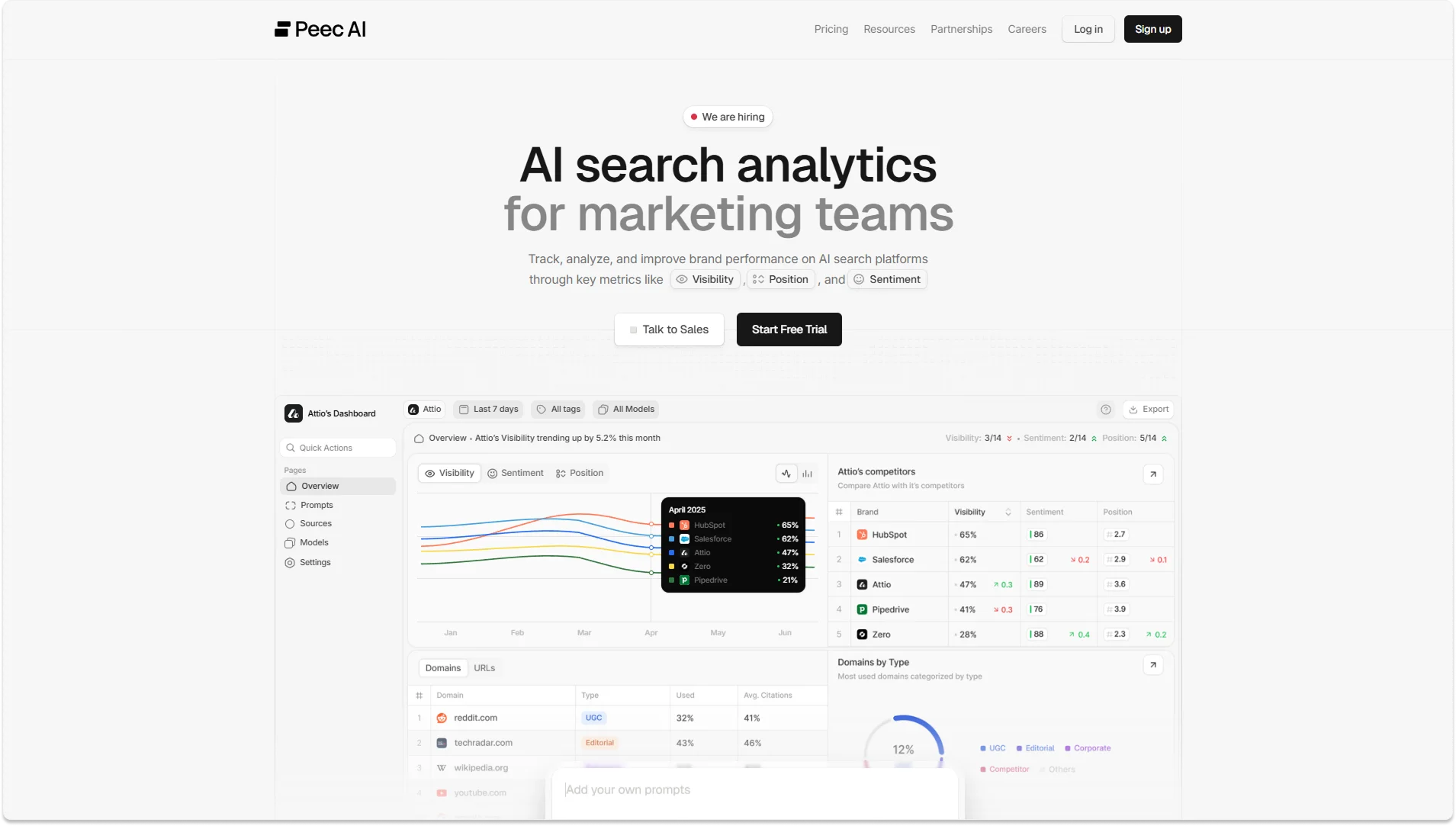
A European-based AEO platform, built for mid-market B2B SaaS, budget-conscious teams, and agencies managing multiple client accounts.
Key Features
- Explicitly distinguishes brand mentions from source citations, a measurement precision most competitors skip
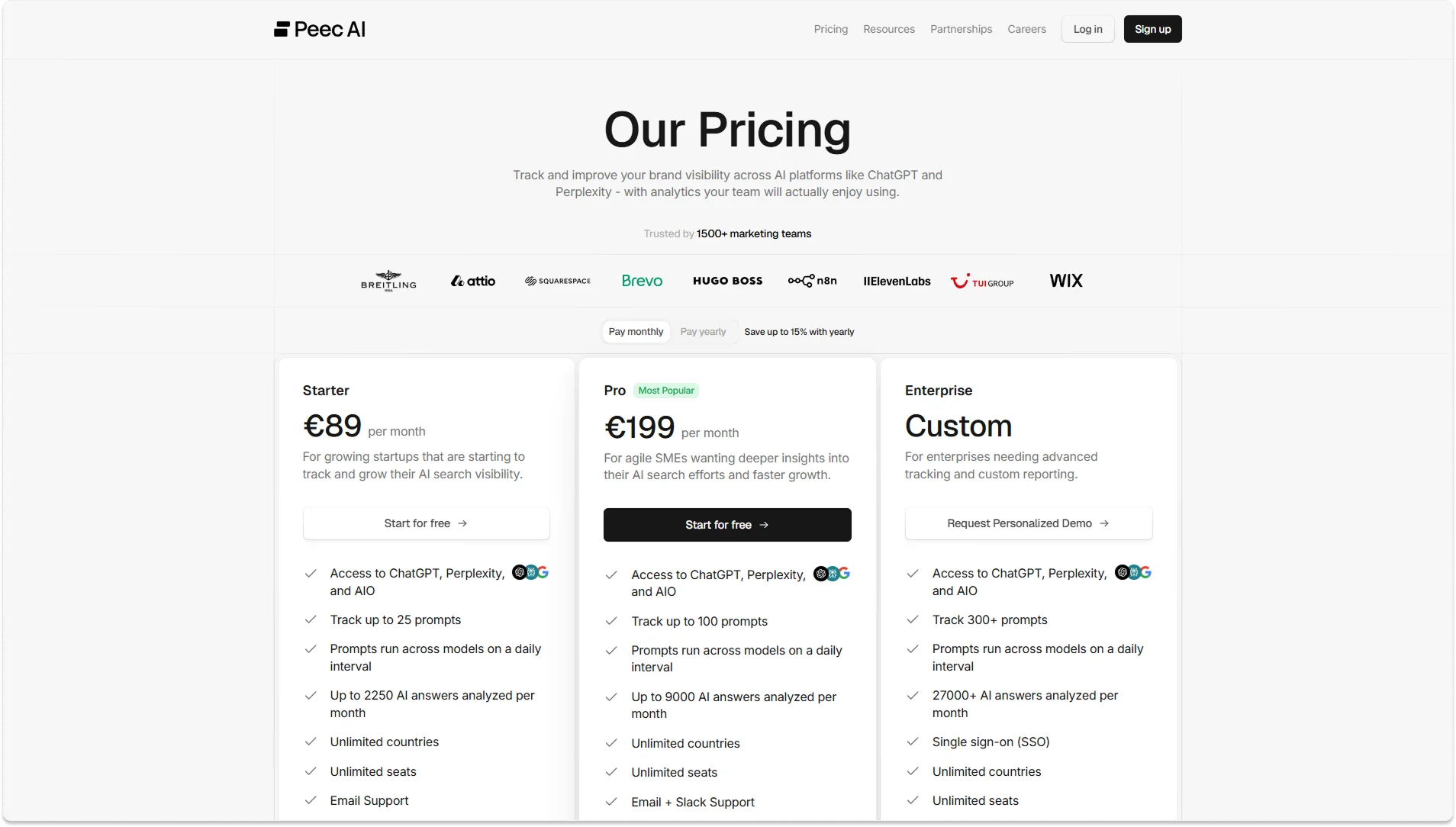
- À la carte engine pricing: base plans cover ChatGPT, Perplexity, and AI Overviews; additional engines (Claude, Gemini, Grok, DeepSeek, Llama) available as €20–€30 monthly add-ons
- Unlimited seats across all plans, making it agency-friendly without per-user fees multiplying costs
- Agency pitch workspaces provide limited-prompt trials for winning new clients without consuming billable quotas
Pros
- Best agency workflow features: unlimited seats, pitch workspaces, Looker Studio integration
- Praised in reviews for fast analysis, actionable tips, and direct Slack support access
Cons
- No agent analytics, lacks backend data on how AI crawlers interact with your site
- Add-on engine costs can push total spend higher than base pricing implies
- No CRM integration and no search volume data for suggested prompts
Pricing: Multiple plans starting from €89/month.
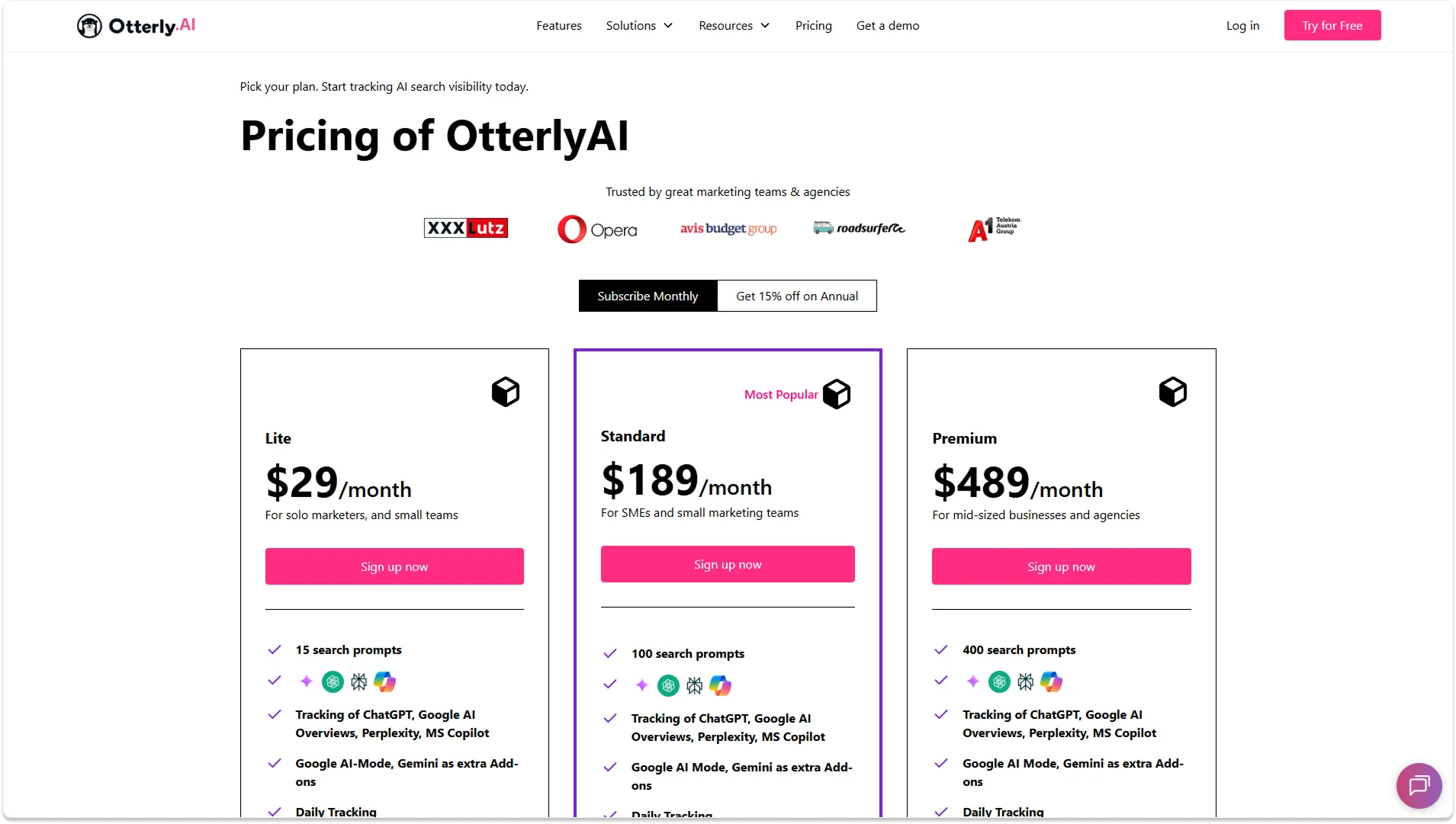
9. OtterlyAI
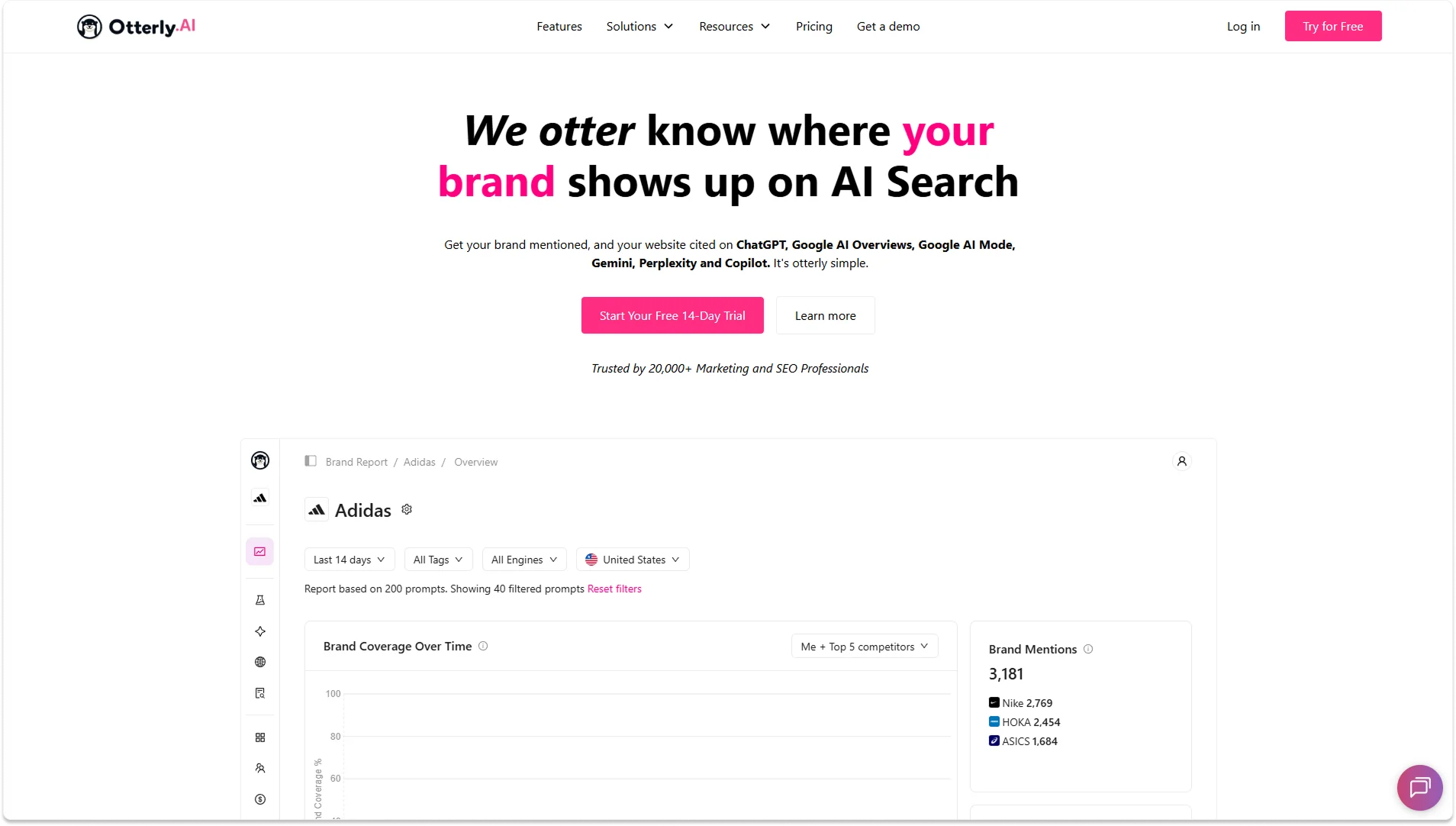
The most accessible entry point for multi-engine AEO monitoring, built for distributed teams and agencies that want quick setup and transparent pricing without enterprise procurement.
Key Features
- Tracks brand mentions and citations across Google AI Overviews, AI Mode, Gemini, Copilot, and additional engines
- Multi-country support for geographic segmentation of AI visibility performance
- Looker Studio connector (higher tiers) for combining AEO data with broader analytics dashboards
- Citation analysis reveals which sources AI engines trust and reference for your tracked prompts
Pros
- Lowest entry price in the market for multi-engine citation tracking
- Clear self-serve onboarding, practical for distributed teams or agencies needing early wins fast
- 4.9/5 on G2 (smaller sample, but consistently strong reviews)
Cons
- Output quality depends entirely on the quality of your prompt library; weak prompts produce misleading trends
- Limited optimization guidance compared to platforms with content workflow automation
- Smaller feature set than mid-tier and enterprise competitors
Pricing: Multiple plans starting from $29/month.
10. SE Ranking
The best mid-market all-in-one for teams priced out of enterprise platforms but unwilling to manage a multi-vendor stack. SE Ranking explicitly packages traditional SEO and GEO (generative engine optimization) together with transparent published pricing.
Key Features
- GEO tracking across ChatGPT, AI Mode, Perplexity, and Gemini, alongside traditional rank tracking in one subscription
- Brand mentions, links, competitor benchmarking, and historical trend tracking in a unified dashboard
- GA and GSC integrations provide a combined view of traditional and AI search performance
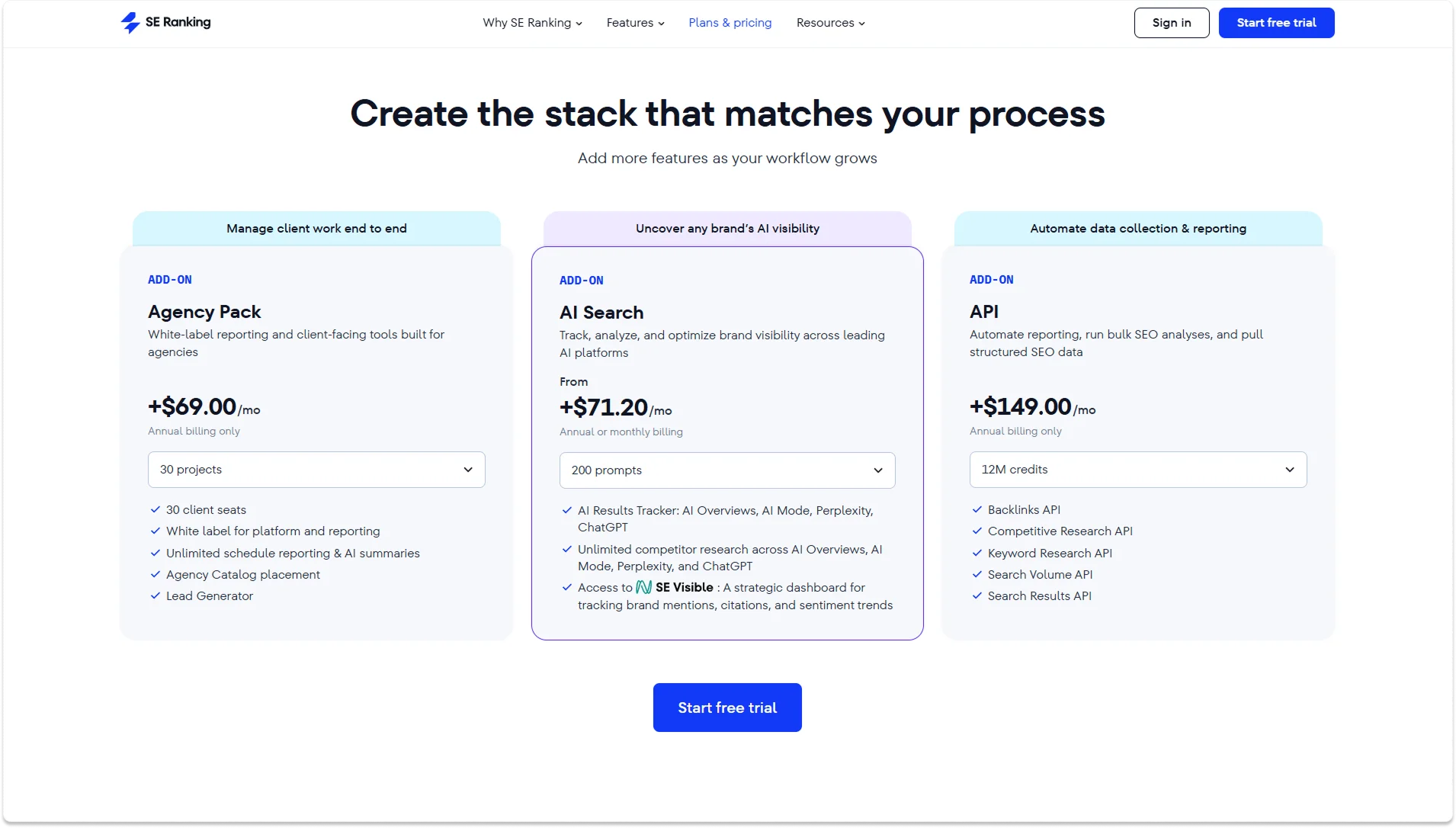
- Explicit prompt limits and AI Search add-on pricing make budgeting predictable
Pros
- Single platform for SEO + AEO eliminates tool sprawl for lean teams
- Transparent, published pricing, no enterprise procurement cycle required
- Practical for teams not ready for Semrush or Ahrefs pricing
Cons
- AI coverage methodology should be validated during trial, FAQs reference staged engine coverage
- Less AI citation depth than dedicated AEO platforms
- Limited advanced features like agent analytics or compliance certifications
Pricing: Plans starting from €100/month (annual), with AI Search as a separate add-on.
KPIs to Track for AEO Programs
AEO programs fail when teams track only rank. Use a balanced measurement set:
The downstream quality metrics are the ones that justify the budget. If AI traffic converts at 3–5x the rate of organic search, the economics of AEO investment become obvious.
The AEO Loop: A Repeating Operating Model
AEO delivers results when run as a continuous engineering loop, not one-off content edits.
Discover answer demand
↓
Map intent & answer format
↓
Diagnose eligibility: index, crawl, schema
↓
Create / refresh answer content
↓
Test: SERP features + AI answers
↓
Track citations, mentions, CTR, conversions
↓
Iterate: close gaps, expand entities, improve sources
↓
(repeat)
This loop matches how Google frames AI Overviews and AI Mode as link-supported experiences built on core search systems, the same fundamentals, measured differently.
Conclusion
The AEO tool category is early. The platforms that will win aren't the ones with the most dashboards; they're the ones that reduce ambiguity: what to optimize, why you're not cited, and what changed.
The next evolution connects AI citations to revenue, closing the attribution loop that every CFO demands. Platforms integrating with CRM systems, tracking assisted conversions, and proving ROI through closed-loop attribution will command premium pricing. Those offering only vanity metrics will consolidate or disappear.
The companies winning in AI search today already started tracking visibility. They identified which prompts drive qualified traffic, optimized content for LLM retrieval, and built dashboards showing how AI citations contribute to the pipeline.
The window for early-mover advantage narrows as competitors discover AEO tools and the platforms mature.
In AI search, visibility precedes traffic, and the tools that measure visibility determine which brands get remembered.
FAQ
Does AEO replace SEO?
No. AEO extends SEO; it doesn't replace it. Google remains the primary data source for LLM retrieval, so strong traditional SEO directly improves your AI citation performance. The two disciplines reinforce each other.
How long does it take to see results from AEO?
Most teams see measurable changes in citation frequency within 60–90 days of targeted optimization. Faster wins come from fixing technical crawlability issues and creating dedicated citation-target pages; broader share-of-voice gains take longer.
What's the difference between a brand mention and a citation in AI search?
A mention means an AI referenced your brand name in a response. A citation means it is specifically linked to or credited to your content as the source. Citations carry significantly more weight; they drive traffic, signal authority to AI systems, and correlate with higher conversion rates from AI-referred visitors.
