Atomic AGI is a Surfer alternative for teams whose work extends beyond the content editor into Google performance, website strategy and technical diagnosis. Surfer combines editorial optimization with AI tracking, content planning and integrations. Compare the depth of the page investigation and the production process, not an outdated writer-versus-analytics distinction.
Start with the job outside the content editor
Surfer is strong in the editorial stage: researching content requirements, drafting, optimizing and collaborating on a document. Its product has expanded into AI tracking and planning, so the comparison should recognize that broader scope. Atomic approaches the job through connected project evidence and recurring operations.
For a page losing qualified traffic, the first question is why. Inspect demand, rankings, CTR, conversions and technical access before deciding the document needs more terms or another section. Use the same existing page in both products and compare the diagnosis that precedes the edit.
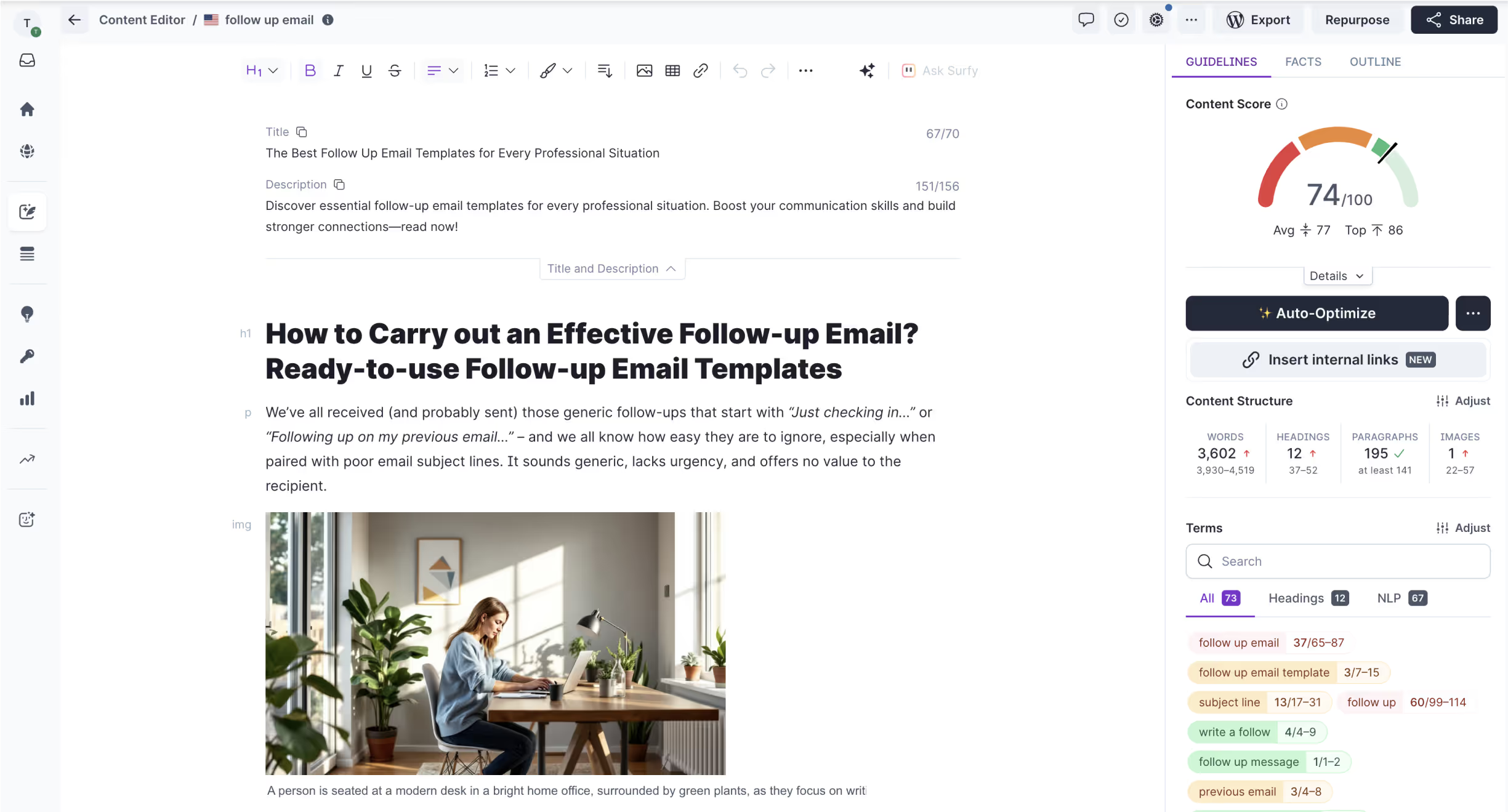
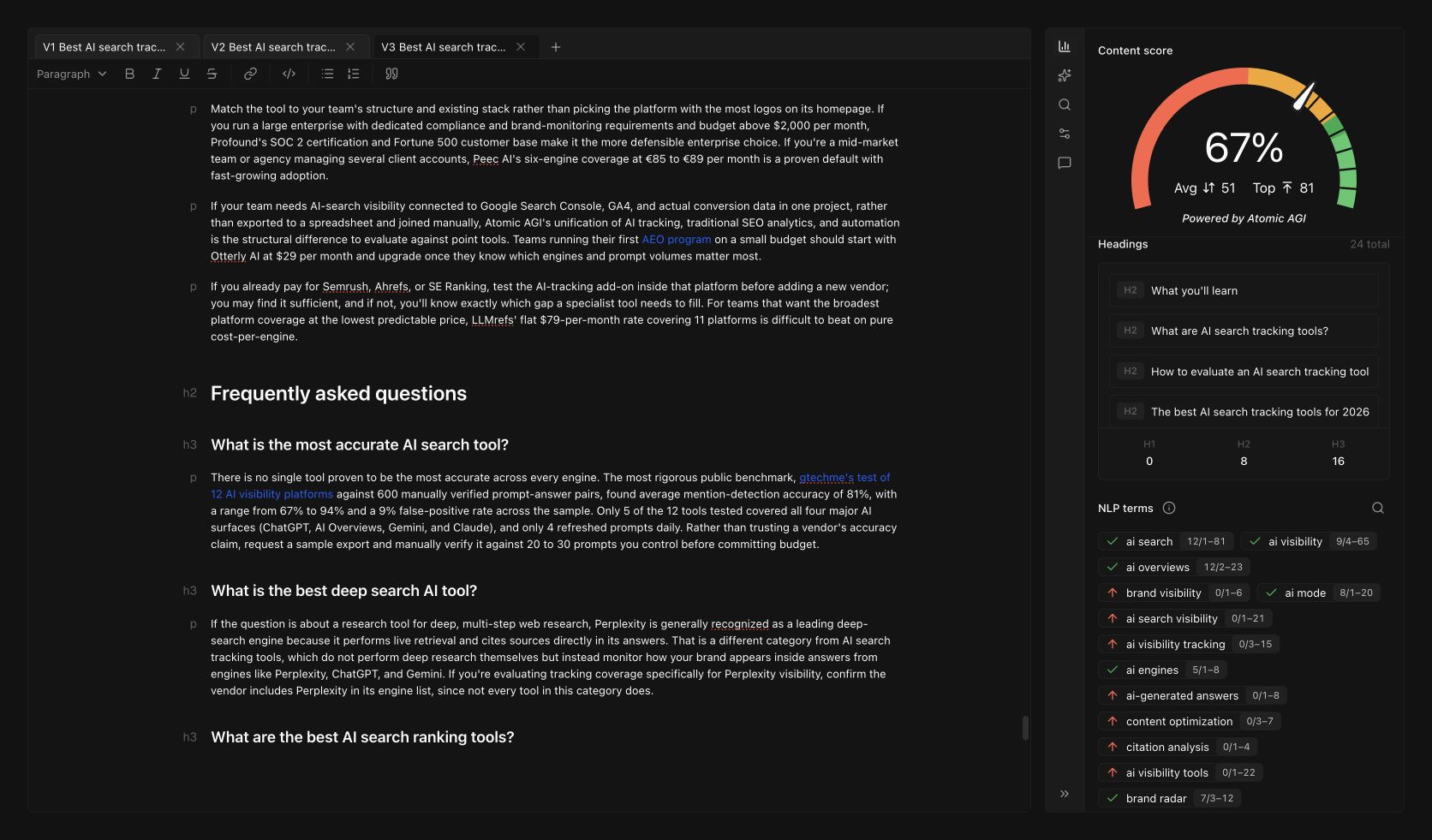
Why Atomic is better when content editing needs the wider SEO context: Atomic has a dedicated content editor with rich-text formatting, article versions, a content score, SEO checks, heading analysis and NLP term recommendations. Its advantage for a team owning the whole website is the connection to Google performance, technical investigation and agent-assisted work before and after an edit. Surfer also offers scoring and optimization guidance; the scores use different methods and should not be compared as equivalent measurements.
Compare the full prompt plan, not the content entry price
Surfer’s Discovery plan is content-led and does not include the same tracking panel as higher plans. Standard’s ChatGPT and weekly schedule differ from Pro’s broader daily monitoring. Its separate AI Search Analytics offer also needs its own allowance and billing comparison.
Atomic publishes prompt capacity and cadence by project plan. Define the models, questions and dates the team needs to observe, then compare that schedule with the writing and document allowance. An attractive content-entry price is not evidence that the same subscription includes a multi-model daily monitoring program.
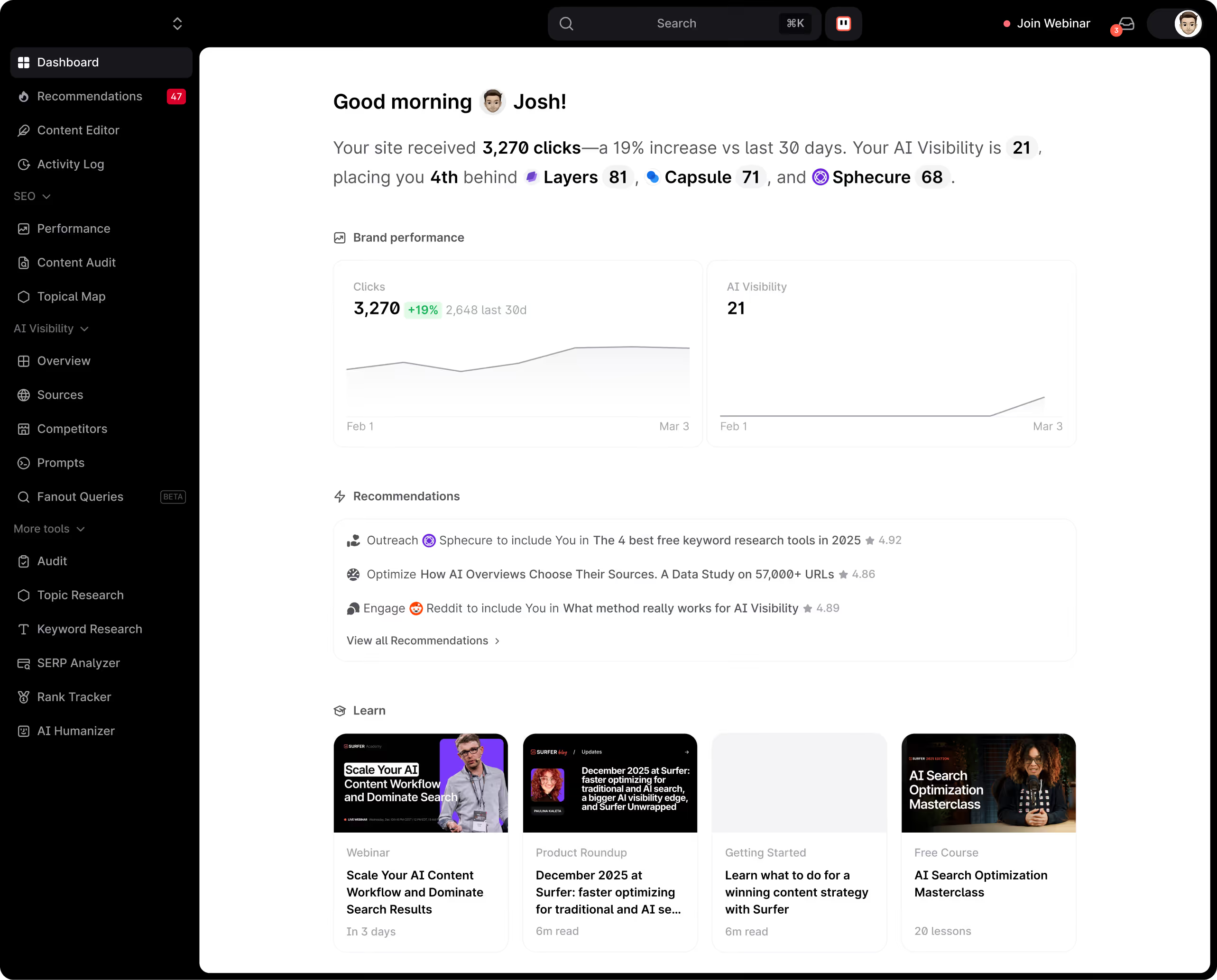
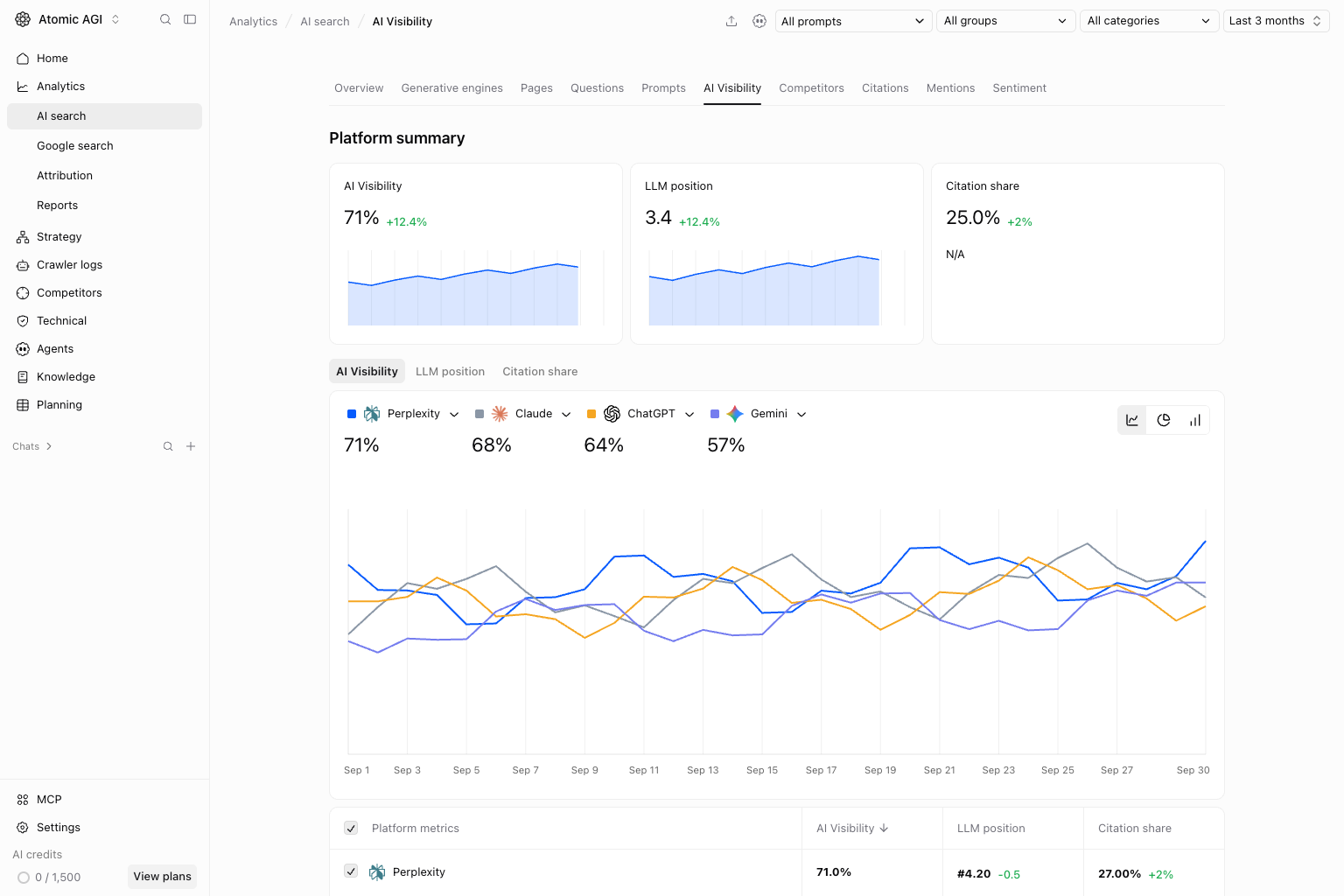
Why Atomic is better when AI monitoring must lead back to the website: Surfer’s visibility dashboard adds AI monitoring to its content workflow. Atomic’s AI Visibility dashboard is connected to Google queries, attribution, entity gaps and technical tools, which is useful when a visibility change requires investigation beyond the article editor. The advantage is the breadth of evidence available to the person choosing the next website task. Compare the actual Surfer plan’s models and cadence before concluding which monitoring package is sufficient.
Turn a topical map into an accountable page plan
Surfer advertises a Topical Map built around intent, brand and business context, alongside content gaps and planning tools. Atomic’s entity, cluster and funnel views also help teams reason about coverage, but the classifications and underlying page evidence need to be inspected rather than assumed equivalent.
For a SaaS category, ask each tool to distinguish missing comparison pages from weak educational articles and overlapping URLs. A useful plan names the URL, intended buyer question and reason to create, refresh or consolidate it. More topics alone do not make an editorial calendar commercially relevant.
Separate content quality from technical access
Surfer’s content audit, internal linking and cannibalization features can inform page-level improvements. Atomic combines those kinds of investigation with technical SEO and LLM audit issue groups, affected URLs, indexing evidence and connected crawler logs. Compare the exact check rather than treating every feature called Audit as the same service.
Surfer’s homepage also advertises Agent Analytics beta. Confirm current access and source coverage if bot observations are part of the buying decision. For a page returning an error or blocked by a template, verify the technical cause before investing in a better draft or interpreting a content score as readiness.
Test review and publication with the actual integration
Surfer’s Content Editor, Surfy, Brand Knowledge and WordPress integration can fit a team that spends most of its time reviewing documents. Atomic’s agents can use search and audit context, while Workflows and Grids on Team organize repeatable research, approvals and authorized CMS updates.
Take one approved refresh through the destination your team actually uses. Check field preservation, link formatting, images and the live result. Then compare how the next twenty pages would be queued and reviewed. A smooth document editor and an operational workflow solve related but different parts of content delivery.
When Surfer may be the better fit
Surfer deserves evaluation when the main bottleneck is the editorial optimization process: writers need live guidance, a consistent document workflow and collaboration around content quality. Its topical planning, linking and AI tracking may provide enough surrounding context for an established SEO team.
Atomic is relevant when a single operating team must explain Google changes, investigate technical issues, map sitewide coverage and carry improvements into recurring reviewed work. Compare the tools already in your stack and the handoffs that remain, rather than choosing from a document score or prompt count alone.
Compare the complete plan and operating cost
Surfer’s reviewed annual-billing selection lists Discovery $49, Standard $99, Pro $182 and Peace of Mind $299 per month. Document, page, seat and prompt limits differ. Standard lists 25 ChatGPT prompts with weekly refresh; Pro lists 50 with daily refresh. The standalone AI Search Analytics package is separate; confirm current checkout terms for the intended setup.
Atomic monthly USD plans, per project: Starter is $40 with 75 prompts, up to three models, four members and a 72-hour refresh. Team is $100 with 240 prompts, up to six models, ten members and a 48-hour refresh, adding Strategy, Workflows, Grids and crawler logs. Team Max is $200 with 420 prompts, up to six engines, twenty members and daily refresh. A Free plan is available. See current Atomic plan details.
Estimate the actual monitoring and production workload, including every domain, user, model, region, report and recurring action. A prompt definition, collected answer and content operation are different usage units. Compare the complete setup rather than assuming the cheapest entry plan covers the whole job.
Switch from Surfer with a clear baseline
- Retain the setup: save the prompts, markets, competitors and reports available to your Surfer account.
- Connect the project: add GSC, GA4 and relevant company knowledge to Atomic, with permissions appropriate to the work.
- Match the questions: rebuild a representative panel across the important engines and markets.
- Run an overlap: compare equivalent dates and source answers, accounting for different cadence and scoring. History is not automatically imported or interchangeable.
- Complete one reviewed improvement: inspect the saved CMS fields and live page, then measure search and business results separately.
Try Atomic with one real page problem
Try Atomic or book a demo. Bring a priority page, a commercial question and the outcome you need to explain. Use the product documentation to follow the investigation from evidence through reviewed work.
Reviewed 23 October 2026 using official product documentation and plan information. A × labeled “not documented” identifies the absence of an equivalent capability in the reviewed materials; it does not prove a custom integration is impossible. ✓ labels retain plan, beta and service qualifications. Product screenshots illustrate both interfaces; example values are not comparative performance results. This is a documented capability comparison, not a measured performance benchmark.