Atomic AGI is a Promptwatch alternative for teams choosing how to connect AI visibility with website investigation and execution. Promptwatch already combines Google data, crawler activity, human clicks and content agents. The useful distinction is the depth of site strategy, technical diagnosis and repeatable operations around those shared capabilities.
Recognize the shared Google-data foundation
Promptwatch’s GSC integration is substantive: it imports page clicks, impressions, CTR and position, adds URLs to the inventory and uses URL Inspection for indexing context. Real search queries can also feed prompt research. A comparison that says Promptwatch lacks Google SEO data would be wrong.
Evaluate the investigation instead. In Atomic, compare query and landing-page changes by country or device, then connect the findings to technical issues and content coverage. Ask Promptwatch to explain the same commercial page over the same dates. Compare how clearly each product identifies the cause and the next action.
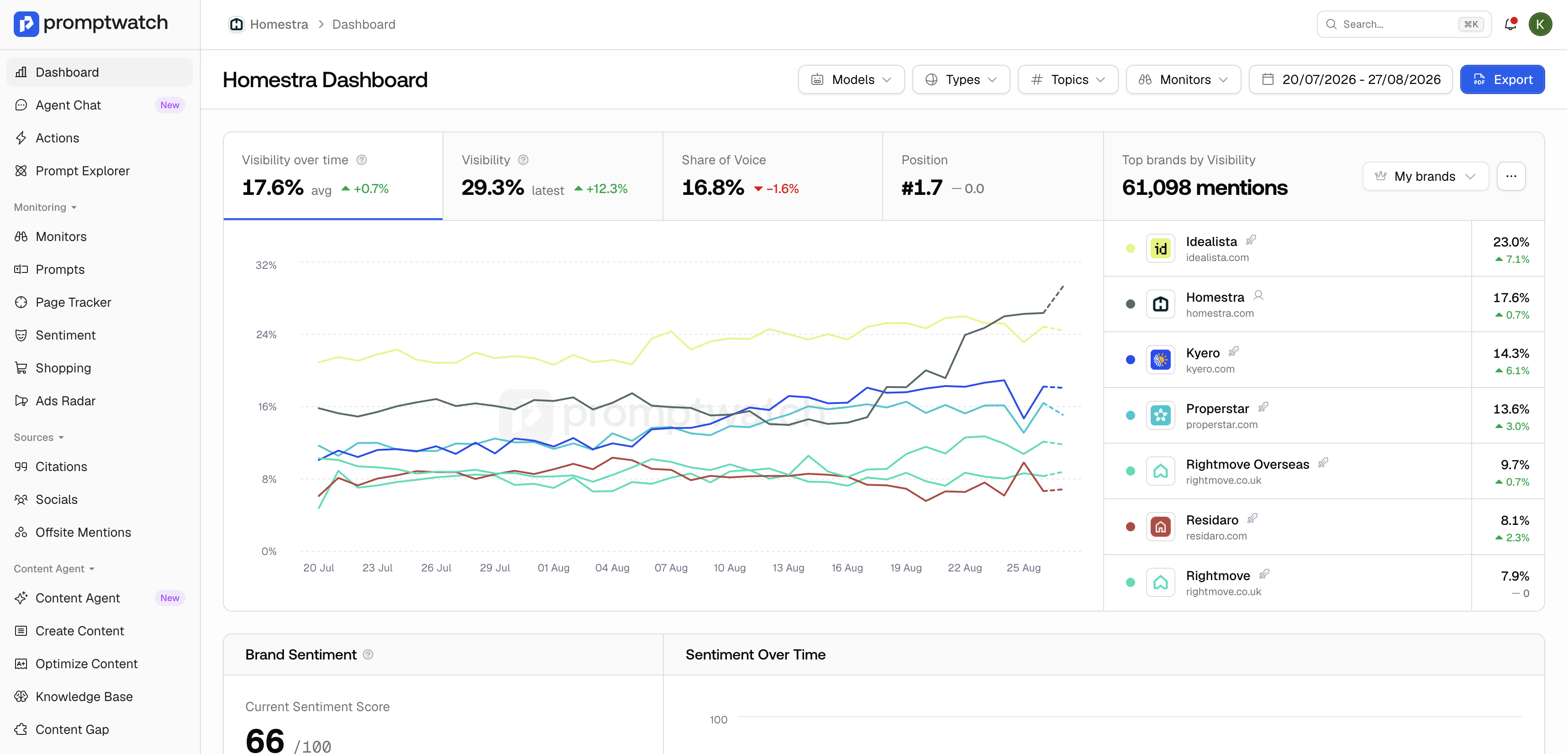
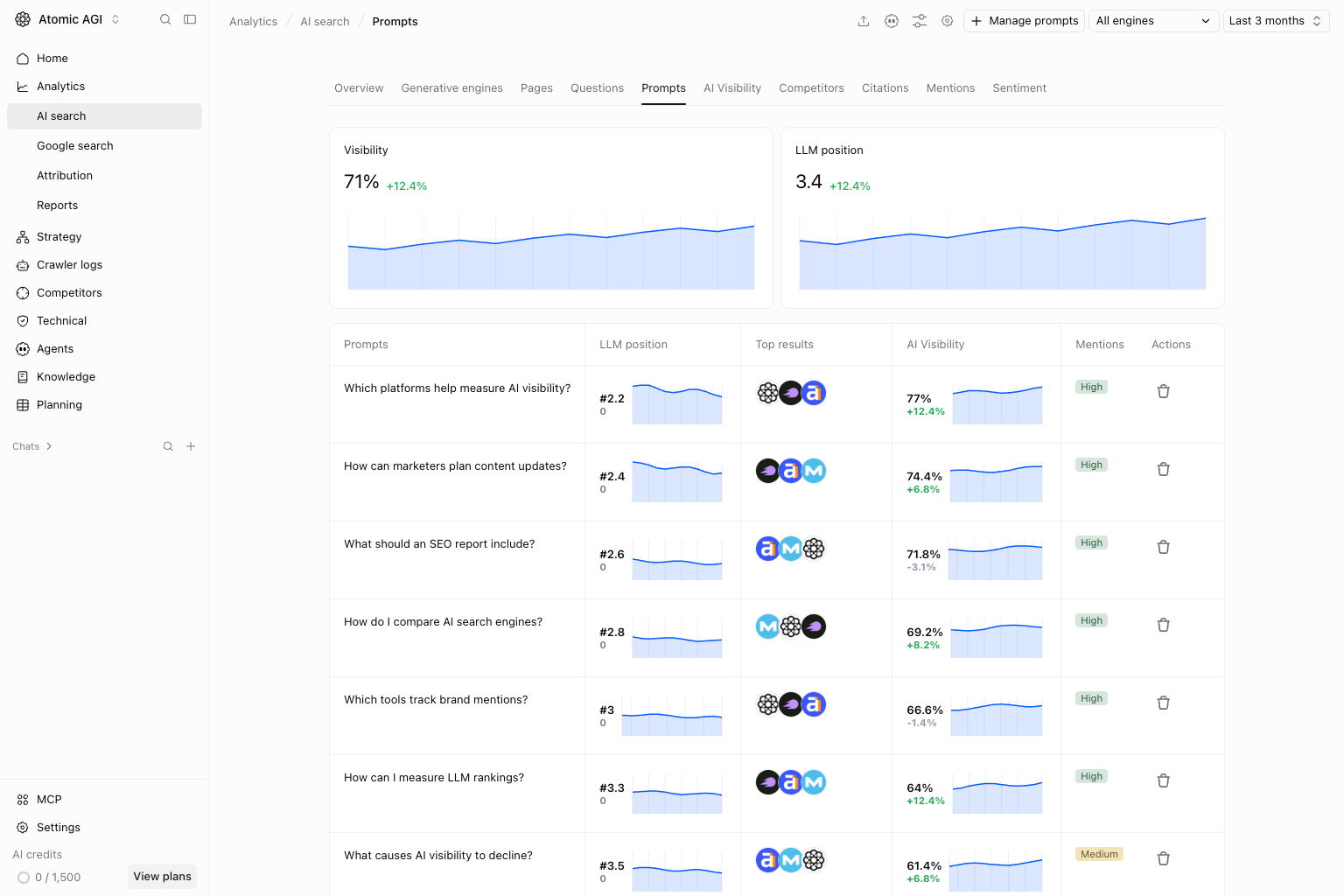
Why Atomic is better for investigating the page behind a visibility trend: Promptwatch has connected Google data, so this is not an integration-exclusive claim. Atomic’s AI search tracking advantage for a team managing the whole website is the connection from prompt visibility and competing results to Google page performance, entity coverage and technical investigation. The prompt screen below is the starting panel; use the supporting page and query evidence before choosing a refresh. Compare matched engines and dates rather than equating the two vendors’ scores.
Read crawler, citation and human events separately
Promptwatch’s 360 approach combines crawler logs, citations and clicks around topics. This can help a team inspect the path from machine access to human activity. Its Agent Analytics and conversion tracking make it more than a prompt-score dashboard.
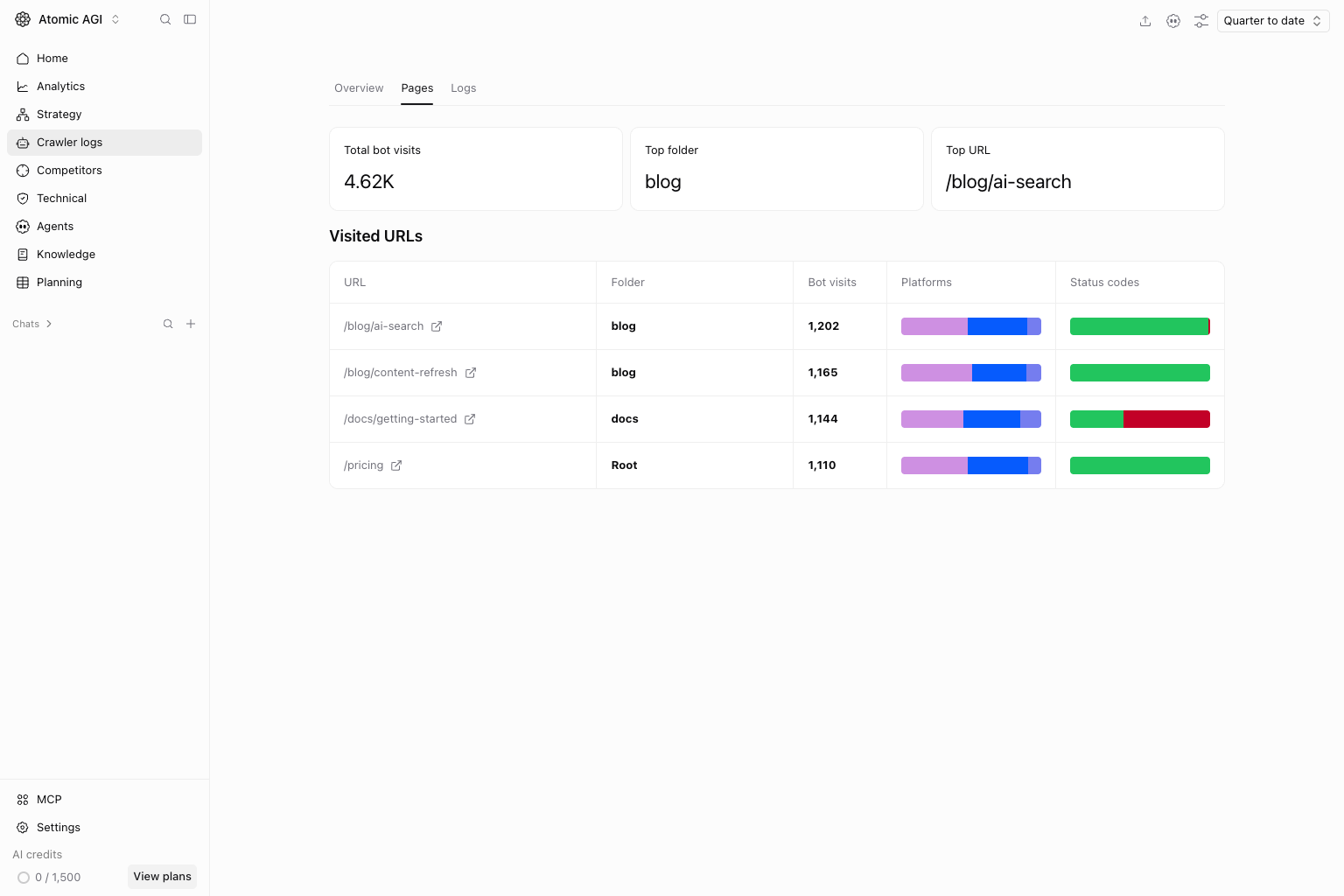
Atomic also separates observed bot requests from answer visibility and GA4 outcomes. For a refreshed comparison page, check three stages: whether bots reached it, whether sampled answers cited it and whether visitors completed the configured goal. A bot request is useful access evidence, but it cannot establish the later stages by itself.

Why Atomic is better when crawler evidence needs a wider technical diagnosis: Promptwatch’s crawler panel already shows bot activity and top pages. Atomic adds the surrounding SEO workflow: inspect URL-level requests and status-code distributions, then investigate affected-page audit groups, internal links and indexing in the same project. That helps distinguish a bot-access problem from a broken template or discovery issue. It is a connected-diagnosis advantage, not a claim that Promptwatch lacks crawler logs or URL-level evidence.
Compare the website map behind the prompt panel
Atomic’s entity, cluster and funnel views classify the site’s subjects and pages against competitor coverage. That helps a team decide whether an AI recommendation gap comes from a missing buying-stage page, an underdeveloped subject or overlapping URLs.
Promptwatch’s prompt research, page inventory and citation evidence can point toward similar opportunities from another starting point. Test a product category with both educational and commercial intent. Ask each tool to name the specific existing and missing URLs needed to cover the journey, rather than accepting a generic instruction to publish more content.
Extend access evidence into a technical fix list
Promptwatch documents connected crawler activity, indexing status and AI-readiness tools. Atomic’s audit workspace adds issue groups and affected URLs, supported by internal-link and cannibalization investigation. The comparison should identify which diagnostics the team actually needs, not deny Promptwatch’s access evidence.
Use a page that was moved or duplicated during a redesign. Inspect the redirect, Google indexing state, incoming internal links and any competing page before rewriting it. Compare whether the resulting task is precise enough for a developer or editor to complete without repeating the research in another tool.
Test agents against a real editorial queue
Promptwatch offers Agent Chat on Essential and adds content writing, refreshes and company knowledge on Professional. Enterprise includes managed content workflows. Atomic’s agents also use company knowledge, while Team adds visual Workflows and typed-record Grids for recurring operations.
Evaluate a small refresh queue rather than a single impressive draft. Check how evidence, approvals, rejected changes and published URLs are recorded. Connect the actual CMS and inspect the saved fields and live page. The deciding factor is the review and delivery process around the content, since both products already offer agents and execution.
When Promptwatch may be the better fit
Promptwatch merits evaluation when a team prioritizes the combined crawler/citation/human view, broad model tracking and included MCP or API access. Its higher tiers add Shopping Insights, Ads Radar and more detailed geographic targeting, which may matter to commercial research teams.
Atomic is relevant when sitewide subject coverage, Google query investigation and technical backlog management must connect directly to recurring reviewed work. Choose using a representative page and operating process. A broader prompt list or an extra dashboard is less valuable than an investigation the team can finish and act on.
Compare the complete plan and operating cost
Promptwatch’s monthly brand plans list Essential $95 for 50 prompts, Professional $245 for 150 and Business $579 for 350, with response and project allowances. Content production and Knowledge Base start on Professional; Business adds Shopping Insights and Ads Radar. Confirm crawler volume, tracking schedule and geography alongside the headline prompt limit.
Atomic monthly USD plans, per project: Starter is $40 with 75 prompts, up to three models, four members and a 72-hour refresh. Team is $100 with 240 prompts, up to six models, ten members and a 48-hour refresh, adding Strategy, Workflows, Grids and crawler logs. Team Max is $200 with 420 prompts, up to six engines, twenty members and daily refresh. A Free plan is available. See current Atomic plan details.
Estimate the actual monitoring and production workload, including every domain, user, model, region, report and recurring action. A prompt definition, collected answer and content operation are different usage units. Compare the complete setup rather than assuming the cheapest entry plan covers the whole job.
Switch from Promptwatch with a clear baseline
- Retain the setup: save the prompts, markets, competitors and reports available to your Promptwatch account.
- Connect the project: add GSC, GA4 and relevant company knowledge to Atomic, with permissions appropriate to the work.
- Match the questions: rebuild a representative panel across the important engines and markets.
- Run an overlap: compare equivalent dates and source answers, accounting for different cadence and scoring. History is not automatically imported or interchangeable.
- Complete one reviewed improvement: inspect the saved CMS fields and live page, then measure search and business results separately.
Try Atomic with one real page problem
Try Atomic or book a demo. Bring a priority page, a commercial question and the outcome you need to explain. Use the product documentation to follow the investigation from evidence through reviewed work.
Reviewed 23 October 2026 using official product documentation and plan information. A × labeled “not documented” identifies the absence of an equivalent capability in the reviewed materials; it does not prove a custom integration is impossible. ✓ labels retain plan, beta and service qualifications. Product screenshots illustrate both interfaces; example values are not comparative performance results. This is a documented capability comparison, not a measured performance benchmark.