Atomic AGI is an OtterlyAI alternative for teams that need to investigate and improve website performance as well as monitor AI answers. OtterlyAI offers daily tracking, brand reports, GEO audits and AI Agent Analytics. The practical choice is between the monitoring package you need and the broader work surrounding each finding.
Start with the panel you need to observe every day
Otterly’s Lite plan can be a reasonable starting point for a small set of daily questions. A company following its brand name, category and a few buying comparisons may value frequent observations more than a large prompt allowance. Its standard plans also list unlimited team members.
Atomic Starter offers a larger prompt panel on a slower schedule, while Team Max provides daily tracking. Decide which commercial questions matter first, then compare cadence and engine coverage. Counting prompt definitions alone would miss the tradeoff between a broad periodic investigation and a narrow daily brand monitor.
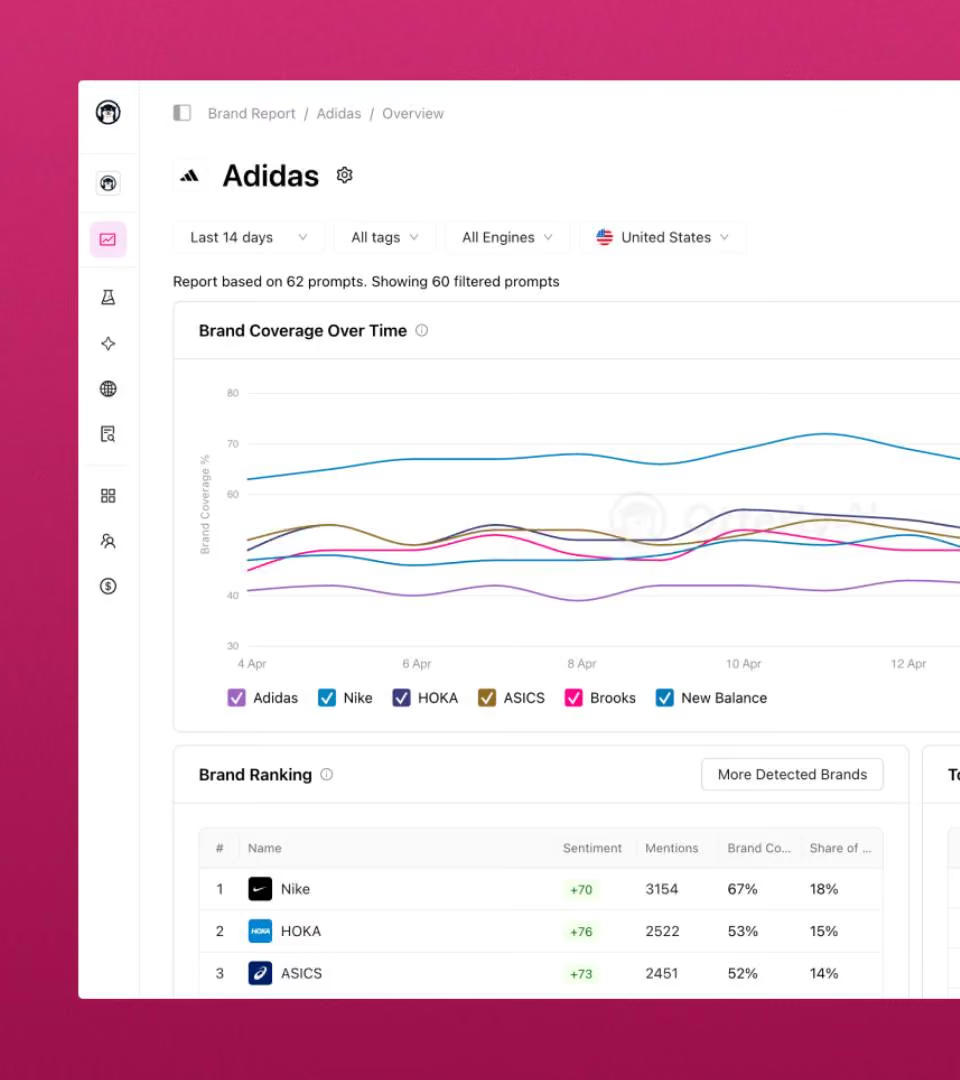
Why Atomic is better when daily monitoring must lead to an SEO decision: OtterlyAI’s daily brand panel is useful when observation frequency and broad team access matter. Atomic pairs prompt-level visibility and competing results with Google performance, page evidence and technical tools. For the person responsible for fixing the website, that means the next investigation can happen in the same project. Compare refresh cadence separately; Atomic’s AI search tracking entry plans do not promise OtterlyAI’s daily schedule.
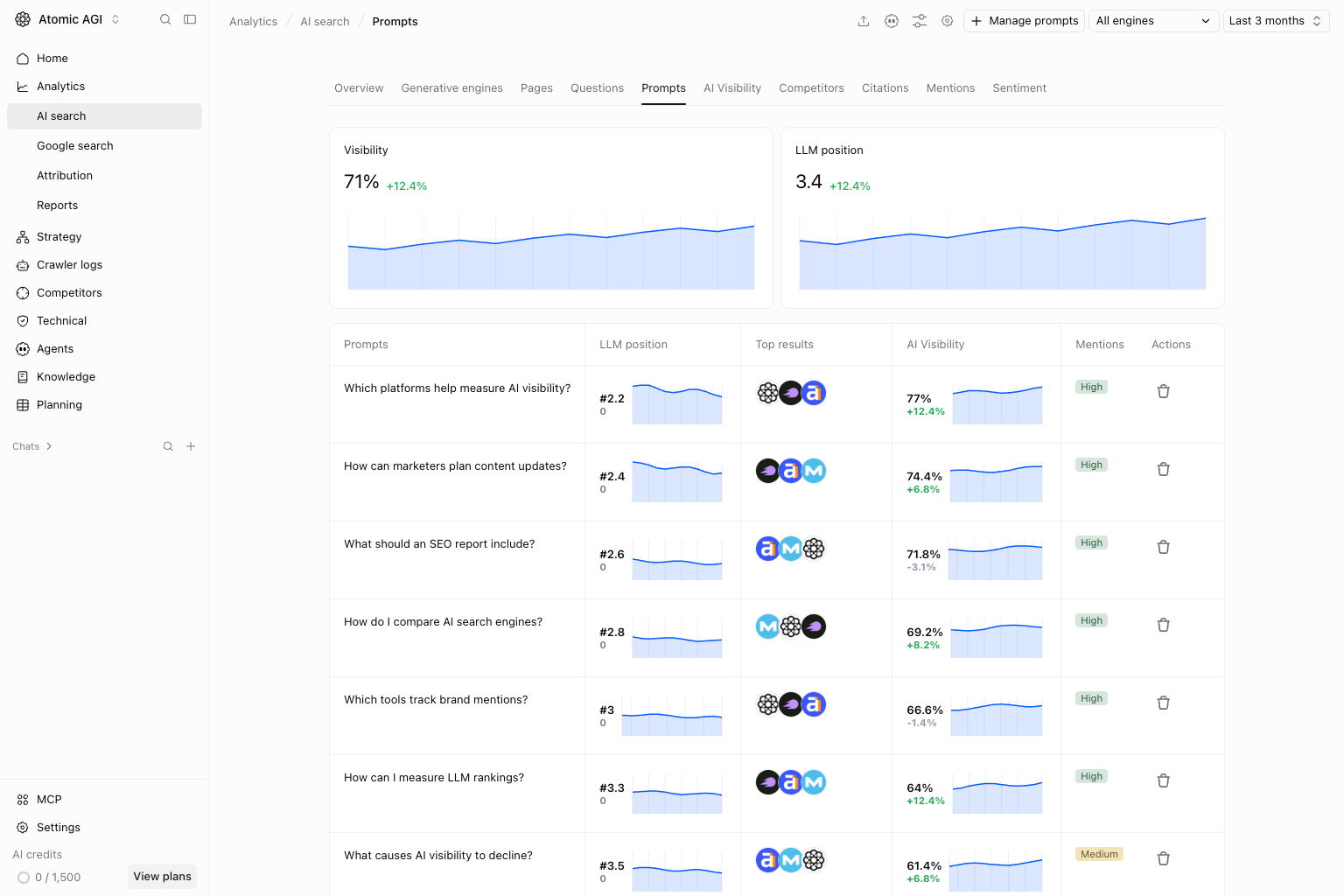
Move from a missing mention to a specific website decision
Otterly’s brand reports show where mentions and citations change. Atomic connects that observation with GSC queries, landing pages and GA4 outcomes. If a page is missing from AI recommendations, inspect whether the same page also lost Google demand or rankings before deciding what to change.
For an agency client, “visibility fell” is only the beginning of the report. The useful recommendation names the affected page, the missing subject or source, and the proposed action. Test how many separate tools are needed to assemble that explanation, not only how easily a monitoring chart can be shared.
Distinguish GEO audits from the full technical backlog
Otterly includes GEO Audit checks for crawlability and content. Atomic’s technical workflow groups SEO and LLM findings by issue and URL, then adds internal-link, cannibalization and indexing investigation. Neither an audit score nor a changed score should be treated as proof of better AI placement.
For example, if several commercial pages stop appearing after a deployment, inspect response codes, indexing and discovery paths before rewriting them. Compare which product produces a developer-ready list of URLs and checks. An actionable technical finding is more useful than a recommendation that merely says to improve AI readiness.
Use Agent Analytics without confusing bots with buyers
Otterly’s Agent Analytics identifies named AI crawlers and browsing agents through server, edge or CDN integration. It separates those requests from AI-referred human visitors. This is meaningful functionality and should not be omitted from the comparison.
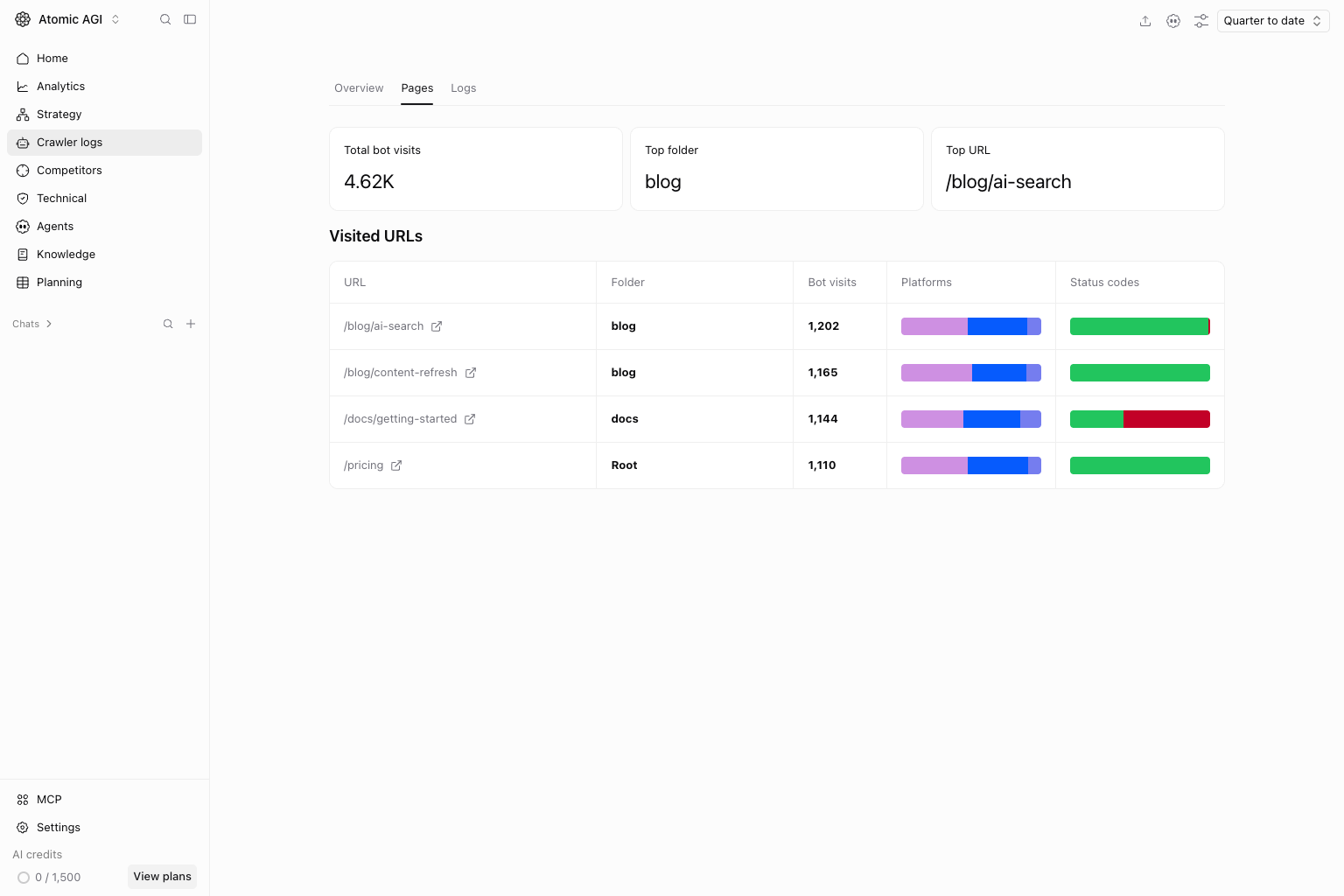
Atomic’s connected crawler logs serve the access investigation, while GA4 addresses human sessions and configured conversions. When reviewing a campaign, ask whether bots reached the changed URLs, whether answers cited them and whether referred visitors converted. Those are separate stages; a higher request count cannot answer all three questions.
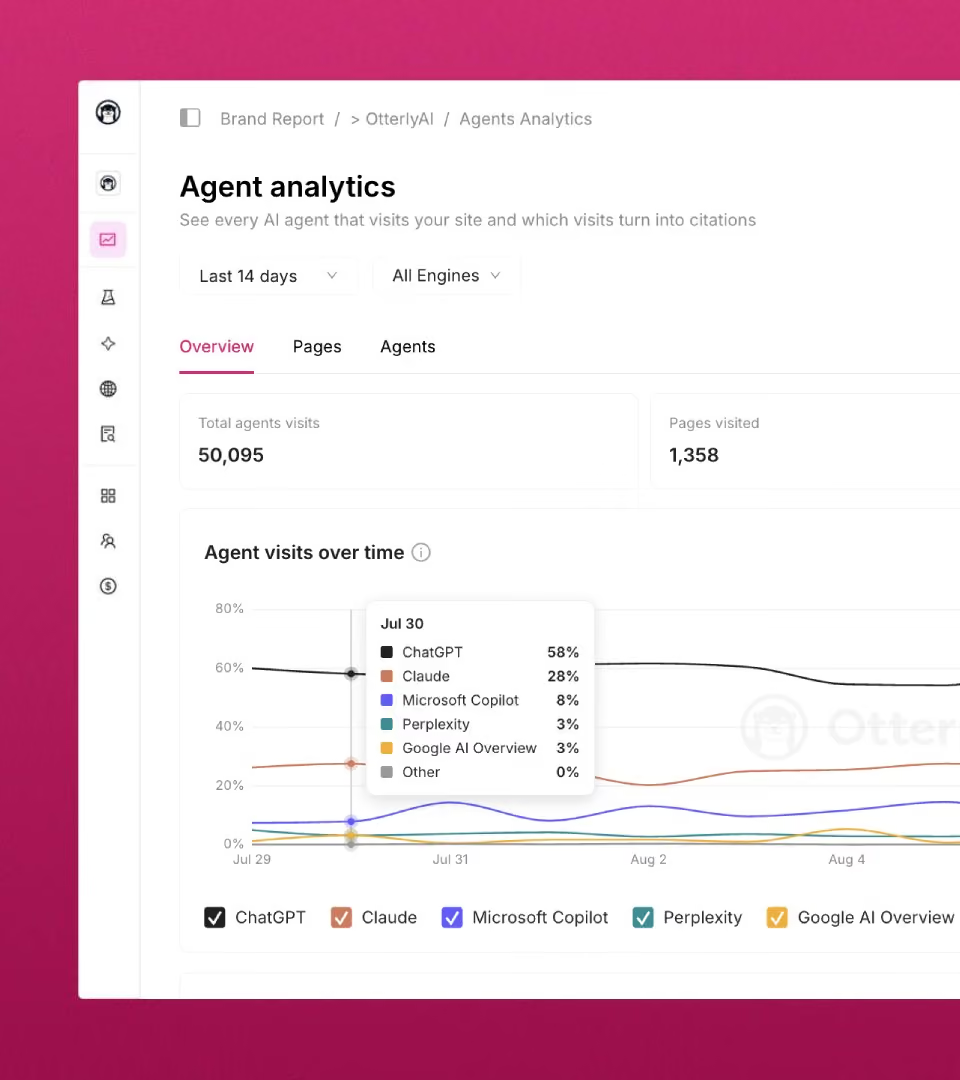
Why Atomic is better for connecting a bot failure to the website backlog: OtterlyAI Agent Analytics already distinguishes AI bot requests from human referrals. Atomic’s technical investigation advantage is the surrounding investigation: visited URLs and status-code distributions can be reviewed alongside SEO and LLM audits, internal links and indexing. A developer can identify the failed page and investigate the wider cause without treating bot traffic as a proxy for revenue. Atomic crawler logs require Team or higher and a supported connection.
Compare the work after the recommendation
Otterly’s recommendations and prompt research help a marketer choose what to investigate. Standard and higher plans add API and MCP access for external analysis and supported changes. Atomic’s native agents, visual Workflows and Grids instead organize recurring research, drafts, approvals and authorized CMS actions inside the project.
Try a monthly comparison-page refresh as the evaluation task. Keep the source evidence, proposed edit and approval together, then inspect the published page. If your team already has a strong editorial system, Otterly’s reports may feed it well. If that handoff is the bottleneck, Atomic’s integrated operations deserve closer attention.
When OtterlyAI may be the better fit
Choose Otterly for evaluation when daily AI monitoring, straightforward brand reports and many collaborators are the central requirement. Its low-volume Lite panel can fit a focused project, and its GEO audit adds useful guidance beyond mentions alone.
Evaluate Atomic when the same team must explain Google performance changes, map missing website coverage and carry repairs through review. A monitoring tool can remain valuable alongside an existing SEO stack. Replacing it only makes sense when the combined work becomes easier, rather than because one subscription contains more named features.
Compare the complete plan and operating cost
OtterlyAI’s monthly plans list Lite at $29 for 15 prompts, Standard at $189 for 100 and Premium at $489 for 400. Daily tracking and unlimited team members are listed. Additional engines cost extra, and API, MCP and Agent Analytics start on Standard.
Atomic monthly USD plans, per project: Starter is $40 with 75 prompts, up to three models, four members and a 72-hour refresh. Team is $100 with 240 prompts, up to six models, ten members and a 48-hour refresh, adding Strategy, Workflows, Grids and crawler logs. Team Max is $200 with 420 prompts, up to six engines, twenty members and daily refresh. A Free plan is available. See current Atomic plan details.
Estimate the actual monitoring and production workload, including every domain, user, model, region, report and recurring action. A prompt definition, collected answer and content operation are different usage units. Compare the complete setup rather than assuming the cheapest entry plan covers the whole job.
Switch from OtterlyAI with a clear baseline
- Retain the setup: save the prompts, markets, competitors and reports available to your OtterlyAI account.
- Connect the project: add GSC, GA4 and relevant company knowledge to Atomic, with permissions appropriate to the work.
- Match the questions: rebuild a representative panel across the important engines and markets.
- Run an overlap: compare equivalent dates and source answers, accounting for different cadence and scoring. History is not automatically imported or interchangeable.
- Complete one reviewed improvement: inspect the saved CMS fields and live page, then measure search and business results separately.
Try Atomic with one real page problem
Try Atomic or book a demo. Bring a priority page, a commercial question and the outcome you need to explain. Use the product documentation to follow the investigation from evidence through reviewed work.
Reviewed 23 October 2026 using official product documentation and plan information. A × labeled “not documented” identifies the absence of an equivalent capability in the reviewed materials; it does not prove a custom integration is impossible. ✓ labels retain plan, beta and service qualifications. Product screenshots illustrate both interfaces; example values are not comparative performance results. This is a documented capability comparison, not a measured performance benchmark.