


Atomic AGI is an LLM Pulse alternative for teams connecting Google SEO, website coverage and reviewed execution. LLM Pulse combines AI monitoring with reputation, source intelligence, traffic analytics and content recommendations. The comparison depends on the selected cadence and feature tier, not only the number of prompts on the entry plan.
Compare the cadence actually selected at checkout
LLM Pulse separates weekly and daily tracking, as well as monthly and annual billing. A low displayed entry amount does not automatically describe daily monitoring. Five core models and optional additions also affect what the prompt panel actually covers.
For a team watching a product launch, daily observations may matter. For a broader monthly research program, a weekly panel might be sufficient. Atomic publishes a 72-hour, 48-hour or daily schedule by plan. Define the decision rhythm first, then compare the same questions, models and dates rather than placing two headline prices beside each other.
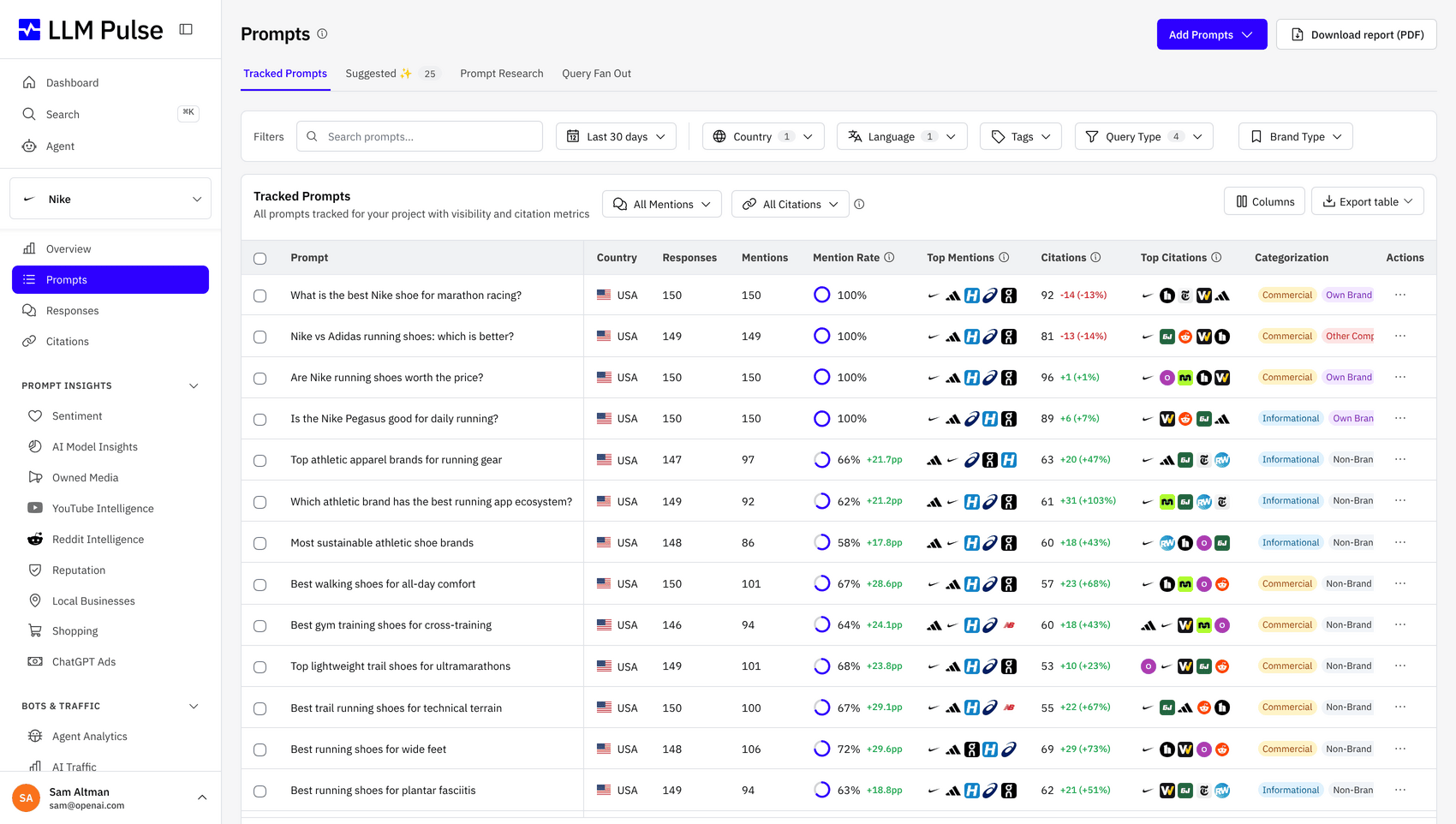
Why Atomic is better when prompt monitoring is part of a wider SEO role: LLM Pulse provides detailed prompt tracking across selected models and cadences. Atomic’s AI search tracking advantage for an SEO owner is what sits around the prompt panel: Google query performance, page attribution, entity coverage and technical investigation in the same project. That helps turn a visibility observation into a website decision. LLM Pulse’s dedicated reputation and app research should be evaluated on their own merits, and weekly versus daily tracking must be compared explicitly.
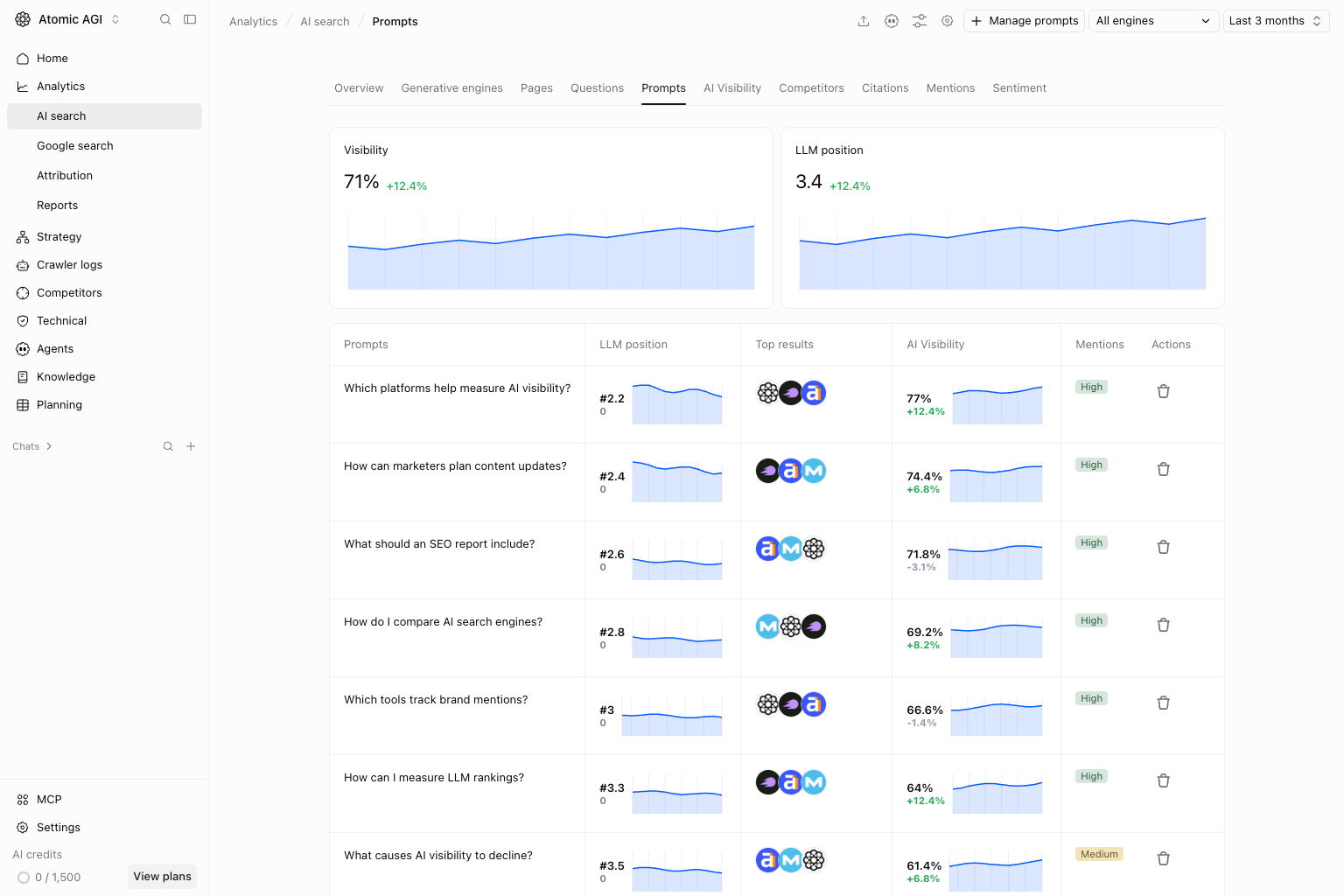
Separate reputation research from website subject coverage
LLM Pulse’s reputation product investigates how AI describes a brand across several dimensions, with competitor and narrative context. Its owned-media research also helps identify influential sources beyond the company website. Those are valuable jobs for PR and communications teams.
Atomic’s entity, cluster and funnel views instead connect market subjects to the website’s own pages. A brand may have an accurate reputation but still lack commercial comparison or implementation content. Conversely, publishing more pages may not resolve an inaccurate external narrative. Use the investigation that matches the problem before assigning content work.
Connect mentions to observed visits and conversions
LLM Pulse supports web analytics connections and AI Traffic Analytics on higher tiers. Its public product pages describe several analytics providers, so the comparison should not imply that only Atomic measures downstream activity. Confirm the source, configuration and conversion definition in the evaluated package.
Atomic combines GSC query and landing-page performance with AI observations and GA4 attribution. For a page gaining mentions, inspect whether referred visits also changed and whether those visits completed the intended action. Compare identical periods and pages. Visibility growth without a matching session or conversion is not a proven business result.
Investigate access before generating a GEO draft
LLM Pulse offers Agent Analytics and public readiness checks. These can help inspect which bots reached a site and whether its content is accessible. Atomic adds a technical workflow built around audit issue groups, affected URLs, internal links, overlapping pages and indexing evidence.
During evaluation, use a valuable URL with a known redirect or indexability issue. Check whether each system points to the underlying problem before recommending a new article. A drafting tool can produce a strong-looking answer while the destination page remains inaccessible, so the diagnostic step should come first.
Choose the operating process around recommendations
LLM Pulse’s recommendations and GEO Writer connect gaps with proposed actions and drafts. Its agent, MCP, API, CLI and automation connectors allow additional workflows with tier-specific access. Atomic’s Workflows and Grids on Team provide a native place for recurring records, review and authorized CMS operations.
Test a queue of existing pages: retain the evidence, proposed edit, review decision and final URL for each one. Compare what is native and what requires an external automation service. The right choice depends on whether the team already has that infrastructure and whether reviewers can follow each change without reconstructing its context.
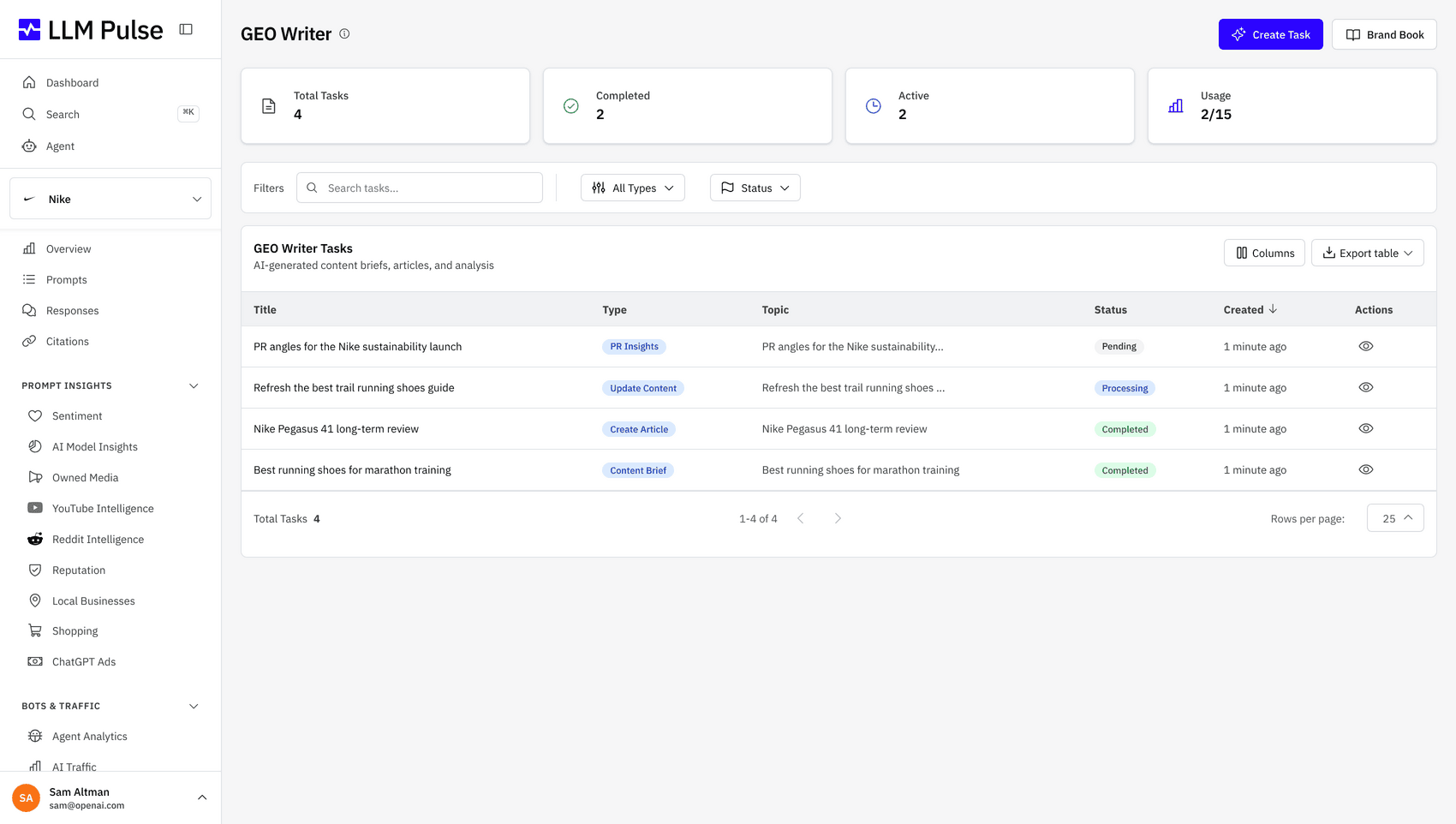
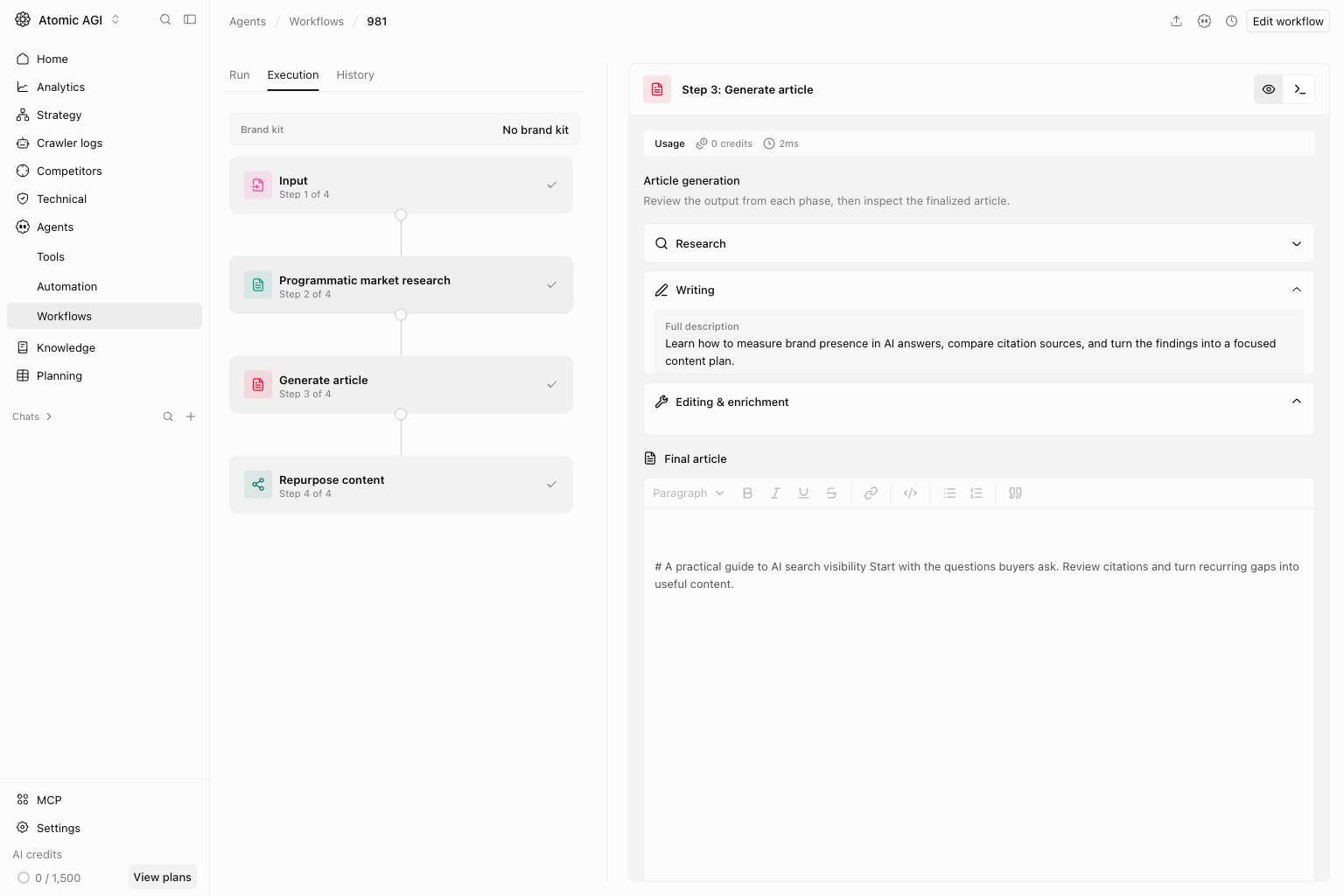
Why Atomic is better for repeatable content work from a diagnosed gap: LLM Pulse’s GEO Writer turns AI-search insights into content work. Atomic adds an inspectable article-generation process with research, writing, editing and a final article editor; Team also provides Workflows and Grids to repeat the process with review and authorized publishing. That is a stronger fit when the team needs a controlled production queue grounded in Google and website evidence. It is not a promise that generated content will earn citations.
When LLM Pulse may be the better fit
LLM Pulse deserves evaluation when brand reputation, owned-media intelligence, source research or its supported analytics stack are central to the program. A communications team may care more about narrative accuracy and influential external sources than about managing a sitewide technical backlog.
Atomic is relevant when a search team needs Google query performance, website coverage and technical diagnosis connected with reviewed work. Decide whether to replace or complement the reputation tool. A move should simplify a real process; it should not discard a specialist dataset the organization still needs.
Compare the complete plan and operating cost
LLM Pulse’s monthly weekly-tracking selection lists Starter €49 for 50 prompts and one project, Growth €99 for 150 and two, and Scale €299 for 450 and five. Daily tracking, optional models and higher volume change the package. Compare the selected cadence, EUR currency and feature gates before comparing costs.
Atomic monthly USD plans, per project: Starter is $40 with 75 prompts, up to three models, four members and a 72-hour refresh. Team is $100 with 240 prompts, up to six models, ten members and a 48-hour refresh, adding Strategy, Workflows, Grids and crawler logs. Team Max is $200 with 420 prompts, up to six engines, twenty members and daily refresh. A Free plan is available. See current Atomic plan details.
Estimate the actual monitoring and production workload, including every domain, user, model, region, report and recurring action. A prompt definition, collected answer and content operation are different usage units. Compare the complete setup rather than assuming the cheapest entry plan covers the whole job.
Switch from LLM Pulse with a clear baseline
- Retain the setup: save the prompts, markets, competitors and reports available to your LLM Pulse account.
- Connect the project: add GSC, GA4 and relevant company knowledge to Atomic, with permissions appropriate to the work.
- Match the questions: rebuild a representative panel across the important engines and markets.
- Run an overlap: compare equivalent dates and source answers, accounting for different cadence and scoring. History is not automatically imported or interchangeable.
- Complete one reviewed improvement: inspect the saved CMS fields and live page, then measure search and business results separately.
Try Atomic with one real page problem
Try Atomic or book a demo. Bring a priority page, a commercial question and the outcome you need to explain. Use the product documentation to follow the investigation from evidence through reviewed work.
Reviewed 23 October 2026 using official product documentation and plan information. A × labeled “not documented” identifies the absence of an equivalent capability in the reviewed materials; it does not prove a custom integration is impossible. ✓ labels retain plan, beta and service qualifications. Product screenshots illustrate both interfaces; example values are not comparative performance results. This is a documented capability comparison, not a measured performance benchmark.