


Atomic AGI is a Goodie alternative when the team’s work centers on Google performance, website coverage and technical improvements. Goodie combines monitoring, optimization, content production and strategist support, with product-level commerce intelligence on higher plans. Compare the complete program and the specific data needed to make decisions.
Price the AEO program, not only the monitoring panel
Goodie packages monitoring with optimization allowances and strategist support. Its Core plan includes a defined prompt panel, model set and monthly optimization capacity. Pro adds broader commerce intelligence. This is a different purchasing unit from buying a prompt tracker and assigning all interpretation and execution to an internal team.
Atomic’s project plans are relevant when the organization wants to operate its own search workspace. Compare both subscription cost and the work the team must still perform. A smaller software bill does not prove lower total effort if the business also needs strategic support and implementation.
Follow a visibility finding back to the website
Atomic connects an AI-answer gap with GSC query and landing-page performance, website content and technical evidence. For a SaaS comparison page, that can distinguish weak commercial coverage from a ranking loss or a discovery problem. The next action should name the affected URL and the evidence behind the change.
Goodie’s Optimization Actions also prioritize improvements from visibility data. Ask both systems to investigate the same page and show why an action matters. A useful recommendation should be testable and bounded, rather than a broad instruction to improve authority or add more AI-friendly content.
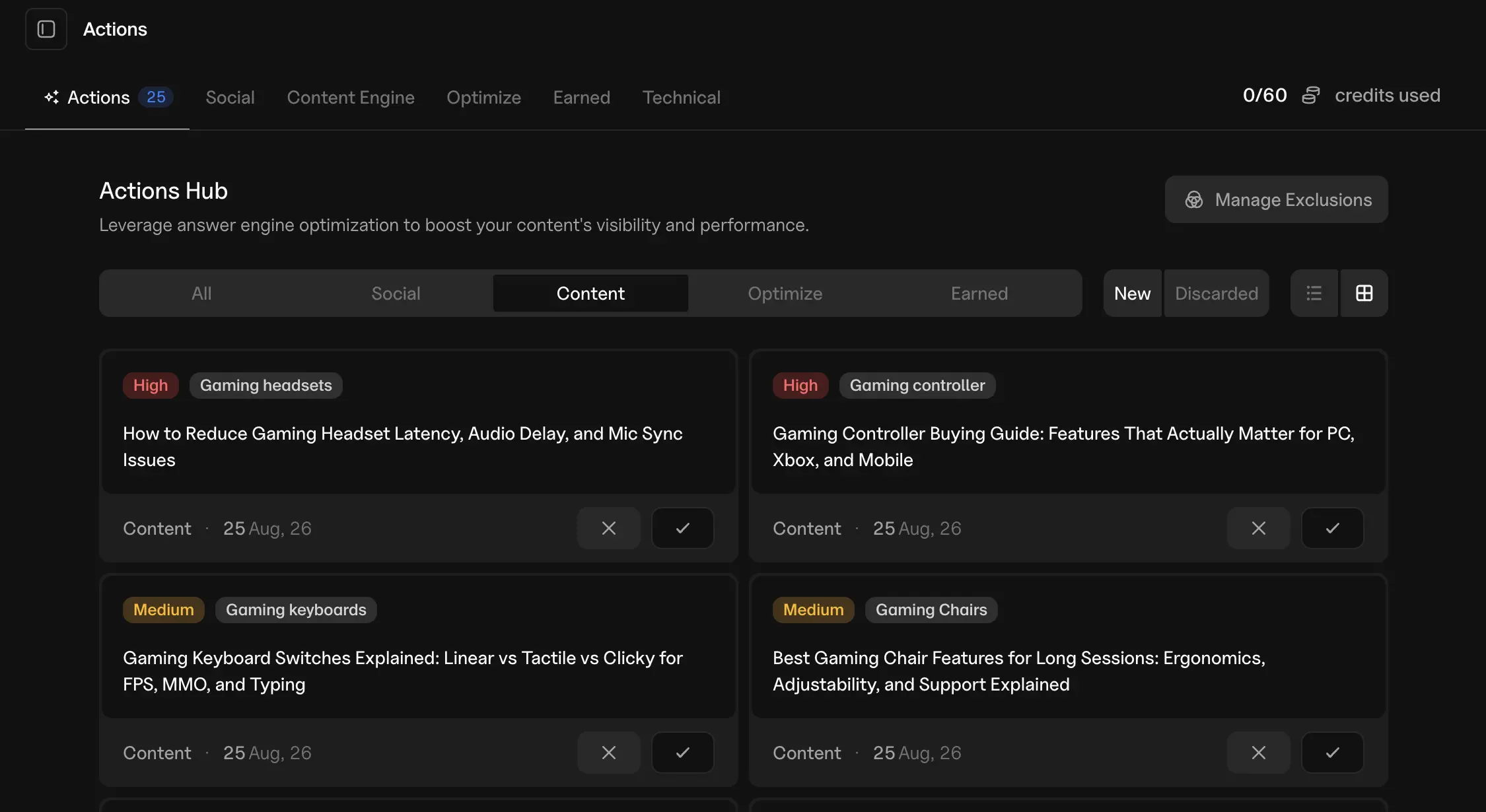
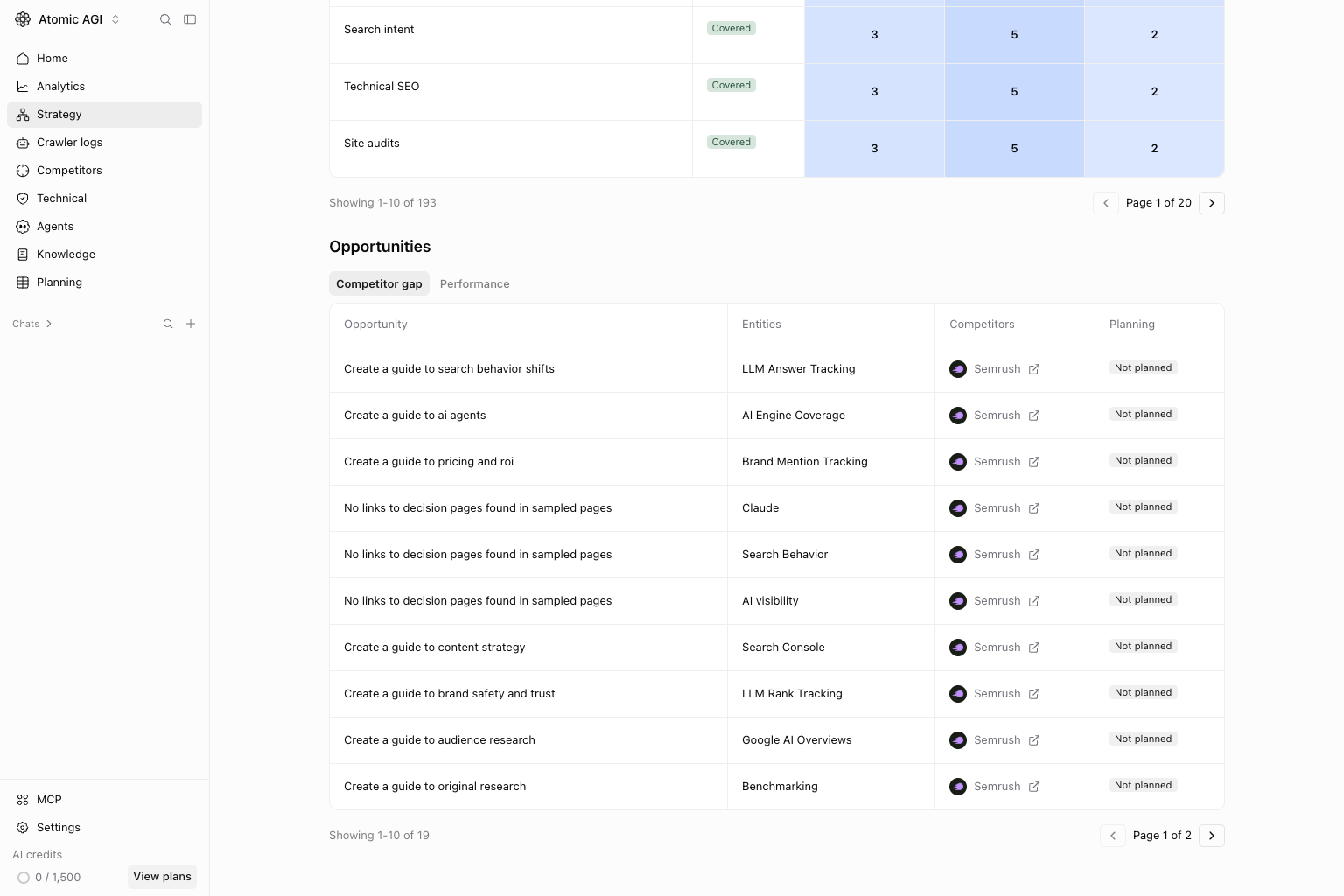
Why Atomic is better for translating an optimization idea into a website plan: Goodie’s Actions Hub provides opportunities and recommended improvements. Atomic’s coverage planning entity-gap view is useful when an SEO team needs to identify a missing website subject, connect it to competitor evidence and record a specific content task with planning status. The benefit is a concrete page backlog before production, with Workflows and Grids available on Team to organize recurring work. Goodie also has content and action tools; compare the evidence behind the proposed task.
Keep commerce intelligence distinct from brand tracking
Goodie’s Agentic Commerce product addresses individual products and how they appear in AI-assisted shopping. For a retailer, SKU-level visibility, product attributes and merchant context may matter more than a brand appearing in a general category answer.
Atomic’s brand and page monitoring should not be presented as a substitute for that dedicated product workspace. If the business also needs Google SEO and website operations, test whether Atomic complements the commerce program or covers the central job on its own. The appropriate tool depends on the unit of analysis: brand, page, category or individual product.
Use traffic and revenue evidence with the right boundaries
Goodie advertises AI Traffic Analytics and Revenue Attribution, with complete attribution scoped on Enterprise. Confirm the analytics integration, event configuration and coverage of the package under review. A revenue-oriented product description does not mean every AI answer can be connected to a transaction.
Atomic uses connected GSC and GA4 evidence to inspect observed performance and configured outcomes. In either product, separate a mention, a referral and a completed purchase. For a campaign report, record which changed URLs gained citations and what identifiable visitors did afterward, while preserving the limits of the measurement.
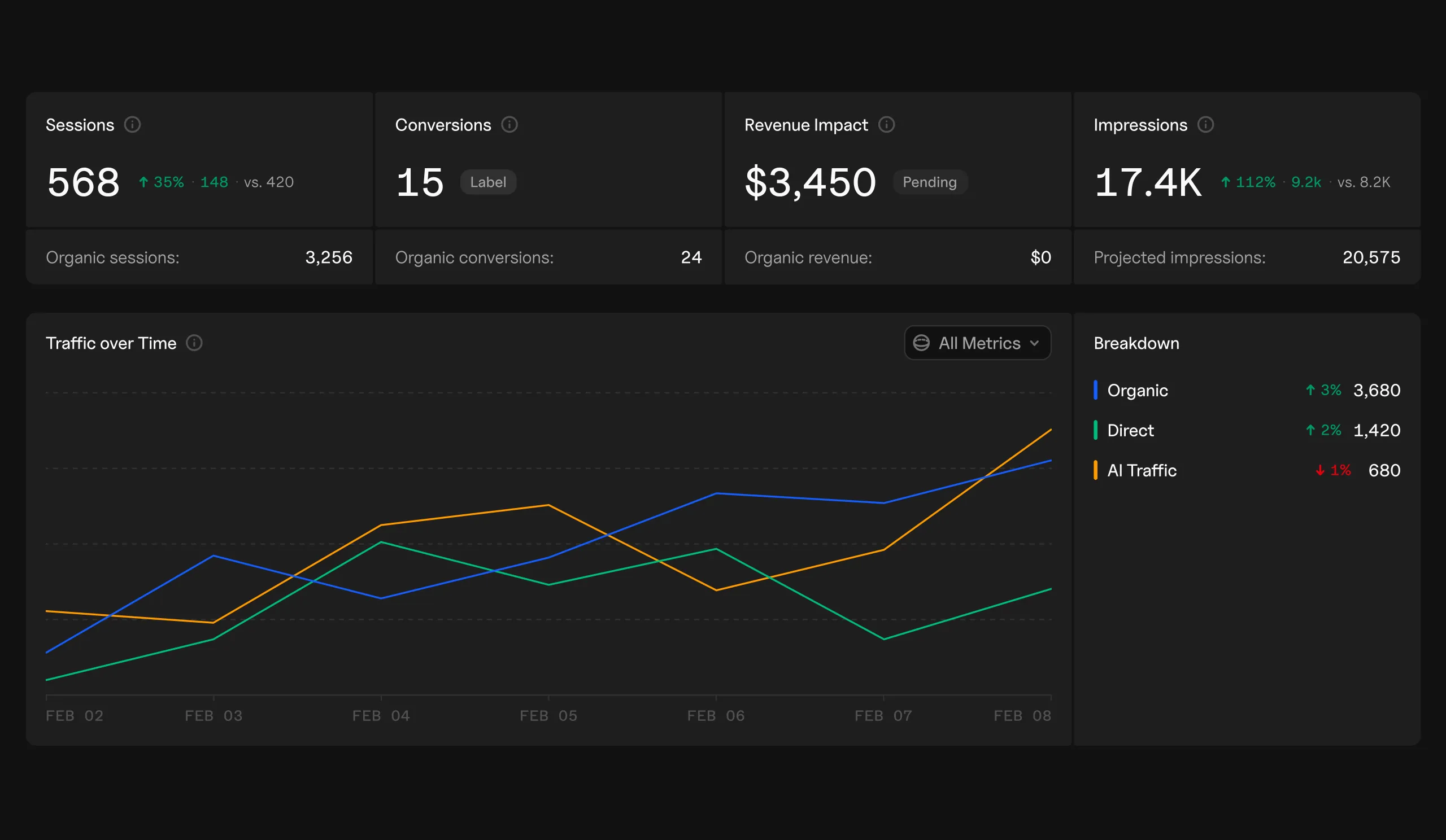
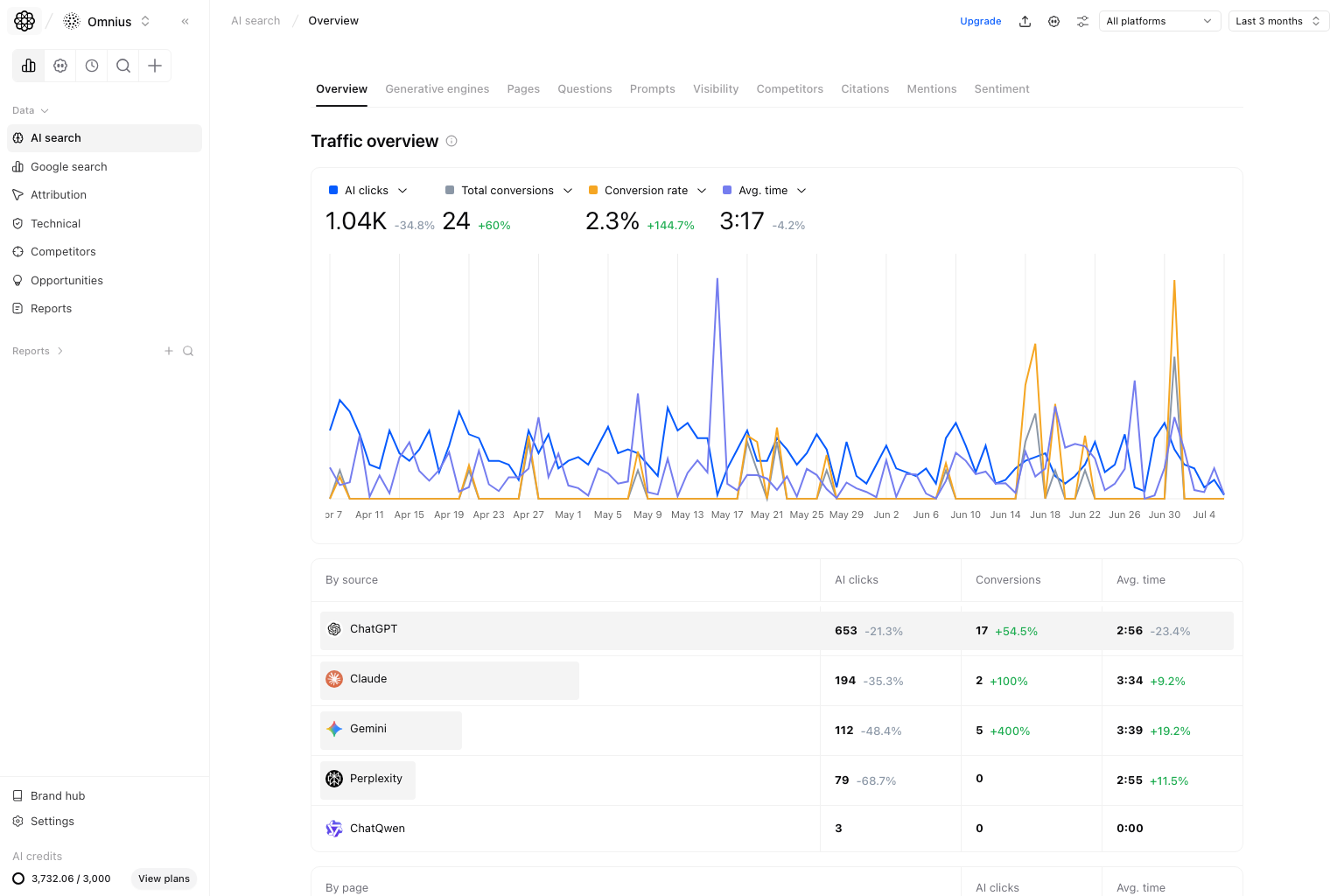
Why Atomic is better when AI traffic must be diagnosed alongside Google performance: Goodie already measures AI sessions, conversions and attribution, so those metrics are not exclusive to Atomic. Atomic’s search analytics advantage for a search team is the surrounding page investigation: review AI traffic by source, then inspect Google queries, landing pages, technical issues and site coverage within the project. That helps explain whether a business problem belongs to discovery, traffic quality or the page itself. Goodie’s broader managed attribution and commerce program may serve different requirements.
Connect technical diagnosis with reviewed execution
Goodie includes AI Agent Analytics and an Agent Site Audit, so crawler access and readiness belong in the comparison. Atomic’s technical workflow extends into affected-URL issue groups, internal links, cannibalization and indexing investigation, with Workflows and Grids organizing repeatable work on Team.
Test one product category with both a content gap and a technical defect. Determine which action each product recommends first, who reviews it and how it reaches the CMS. Verify the actual output, not merely an optimization credit being consumed. A correct diagnosis and controlled release matter more than the count of available actions.
When Goodie may be the better fit
Goodie deserves evaluation for brands that want a strategist-supported AEO program, dedicated product intelligence and a packaged loop of monitoring, optimization and content work. Its unlimited-seat model may suit cross-functional teams with many reviewers.
Atomic is relevant when the main owner is a search team responsible for Google performance, site coverage and recurring technical or editorial work. Compare the program with a real brief: which pages, products and markets matter, who must approve changes and what would make the next monthly report useful?
Compare the complete plan and operating cost
Goodie’s monthly Core plan lists $295 for 110 prompts, five core models and 50 optimizations, with unlimited seats and strategist support. Pro lists $999 for 250 prompts, eight models and 100 optimizations, adding SKU-level commerce intelligence. Enterprise pricing is custom and expands attribution, implementation, model and API scope.
Atomic monthly USD plans, per project: Starter is $40 with 75 prompts, up to three models, four members and a 72-hour refresh. Team is $100 with 240 prompts, up to six models, ten members and a 48-hour refresh, adding Strategy, Workflows, Grids and crawler logs. Team Max is $200 with 420 prompts, up to six engines, twenty members and daily refresh. A Free plan is available. See current Atomic plan details.
Estimate the actual monitoring and production workload, including every domain, user, model, region, report and recurring action. A prompt definition, collected answer and content operation are different usage units. Compare the complete setup rather than assuming the cheapest entry plan covers the whole job.
Switch from Goodie with a clear baseline
- Retain the setup: save the prompts, markets, competitors and reports available to your Goodie account.
- Connect the project: add GSC, GA4 and relevant company knowledge to Atomic, with permissions appropriate to the work.
- Match the questions: rebuild a representative panel across the important engines and markets.
- Run an overlap: compare equivalent dates and source answers, accounting for different cadence and scoring. History is not automatically imported or interchangeable.
- Complete one reviewed improvement: inspect the saved CMS fields and live page, then measure search and business results separately.
Try Atomic with one real page problem
Try Atomic or book a demo. Bring a priority page, a commercial question and the outcome you need to explain. Use the product documentation to follow the investigation from evidence through reviewed work.
Reviewed 23 October 2026 using official product documentation and plan information. A × labeled “not documented” identifies the absence of an equivalent capability in the reviewed materials; it does not prove a custom integration is impossible. ✓ labels retain plan, beta and service qualifications. Product screenshots illustrate both interfaces; example values are not comparative performance results. This is a documented capability comparison, not a measured performance benchmark.