


Atomic AGI is a Brandlight alternative for teams whose daily work starts with Google performance and website improvements. Brandlight focuses on enterprise AI visibility, buyer questions, narrative accuracy and the impact of campaigns. Compare the operating model and evidence each team needs, rather than treating the two products as interchangeable visibility dashboards.
Choose the measurement program before choosing the score
Brandlight’s enterprise approach begins with buyer questions and the markets a brand serves. It builds and maintains the panel, then measures answers on a synchronized schedule. That can suit a global organization that needs a consistent reporting program across brands, countries and executive stakeholders.
Atomic’s project workspace lets the search team work from tracked prompts alongside its own Google and website evidence. Before comparing visibility percentages, ask who selected the questions, how the panel changes and what dates and engines each score represents. Two well-constructed measurements can still answer different business questions.
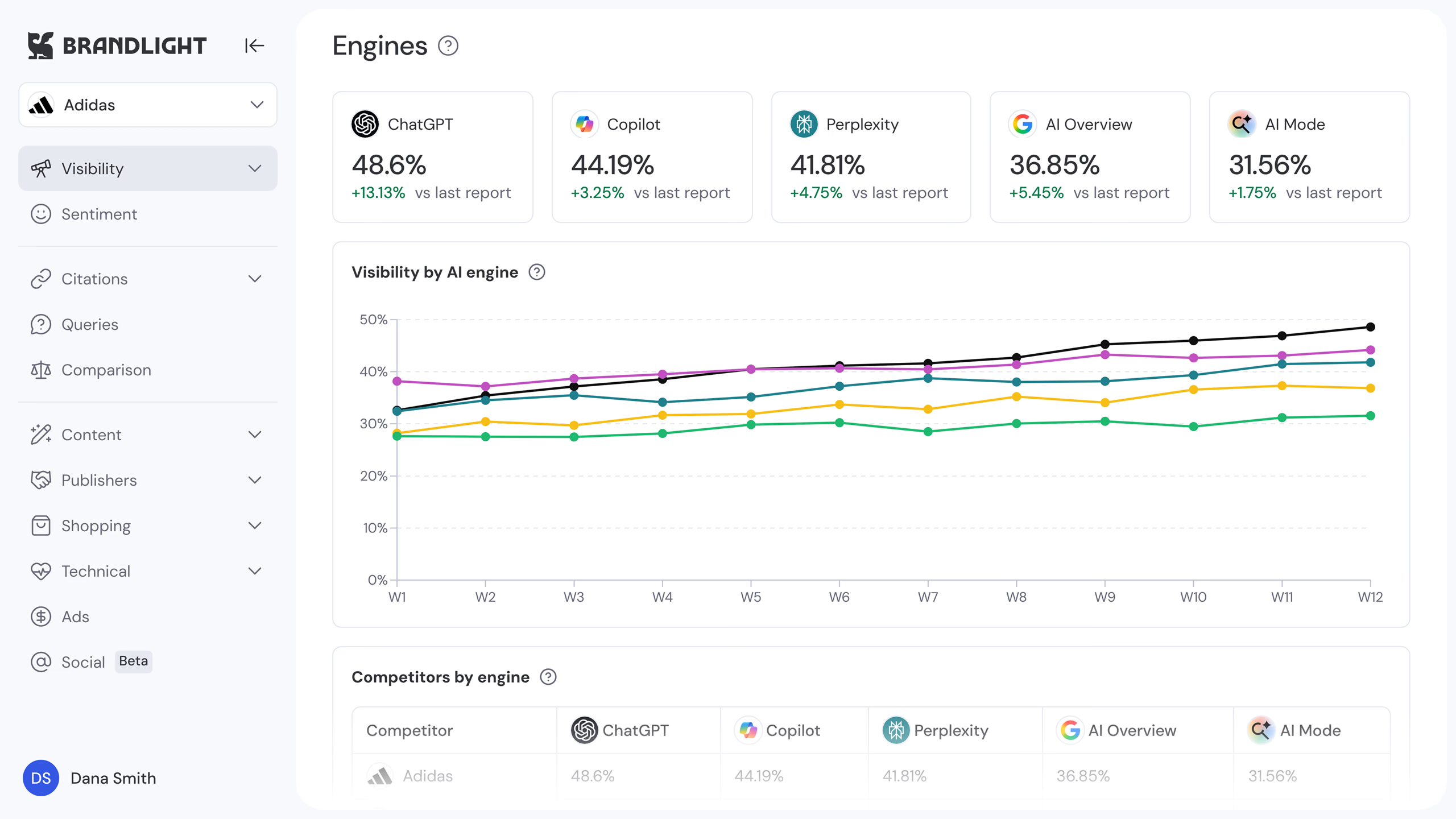
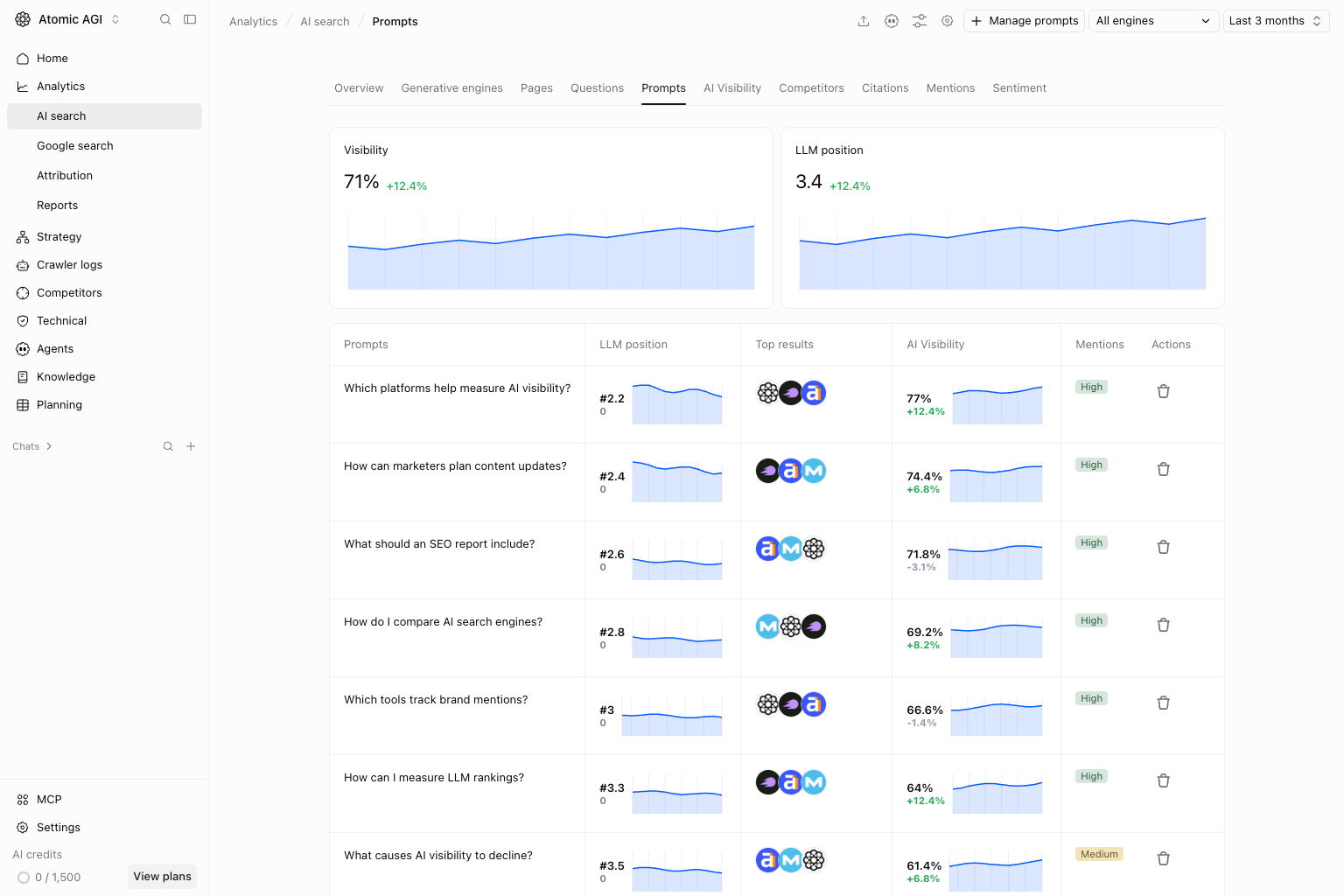
Why Atomic is better for an SEO owner’s weekly page decisions: Brandlight’s engine view helps an enterprise team track brand presence across AI platforms. Atomic’s AI search tracking prompt view is a better operational starting point when the same person also owns Google performance and the website changes: review competing results, then move into page, query and technical evidence. The advantage is the connected search workflow and published project plans, not a claim that a self-serve dashboard replaces Brandlight’s managed enterprise program.
Separate brand identity from website subject coverage
Brandlight uses brand entity mapping and approved facts to keep AI measurement and representation consistent. Atomic’s entity, cluster and funnel views classify website subjects and pages to prioritize content work. The shared word “entity” does not establish that the products solve the same problem.
For a financial-services brand, one task might be correcting how AI describes an offering across countries. Another is discovering that the site lacks comparison and eligibility pages for a buying journey. Evaluate Brandlight’s narrative program for the first job and Atomic’s connected site-coverage investigation for the second.
Connect the campaign story with first-party outcomes
Brandlight’s Impact Tracker groups campaign URLs and analyzes citation and visibility contribution. Its attribution work also incorporates available search, referral and sales signals with the customer’s measurement team. That is broader than a simple mention count, but a contribution to visibility is still different from a booked sale.
Atomic’s GSC and GA4 views help an operator inspect observed search performance, sessions and configured conversions. Use both types of evidence carefully: which pages changed, which answers cited them and what did identifiable visitors do? A useful executive report makes those distinctions clear instead of presenting one impact score as revenue.
Bring a website issue into the weekly operating queue
Atomic suits teams that need to move from a losing Google page to its query evidence, coverage gaps and technical findings in the same project. Audits, internal links, cannibalization and indexing tools help determine whether the page needs a rewrite, consolidation or a technical fix.
Brandlight advertises content optimization and implementation support, including engineering work for scoped technical needs. Compare the service with a real issue and an owner. An enterprise engagement may be valuable when the organization lacks implementation capacity; a self-directed team may prefer direct access to its own investigation and workflow records.
Define who reviews and ships the work
Brandlight offers prioritized edits, agentic drafts and strategist-supported readouts. Atomic’s agents, Workflows and Grids organize recurring jobs with source data, review steps and authorized publishing. The key operational distinction is who owns the evidence, editorial decision and final release.
For a product-launch campaign, nominate several URLs and one accountable reviewer. Test how new claims are approved, how the CMS is updated and how a failed or ineffective change is recorded. Ask to see work that did not improve visibility as well as successful examples. That makes the evaluation more useful than a polished case-study percentage.
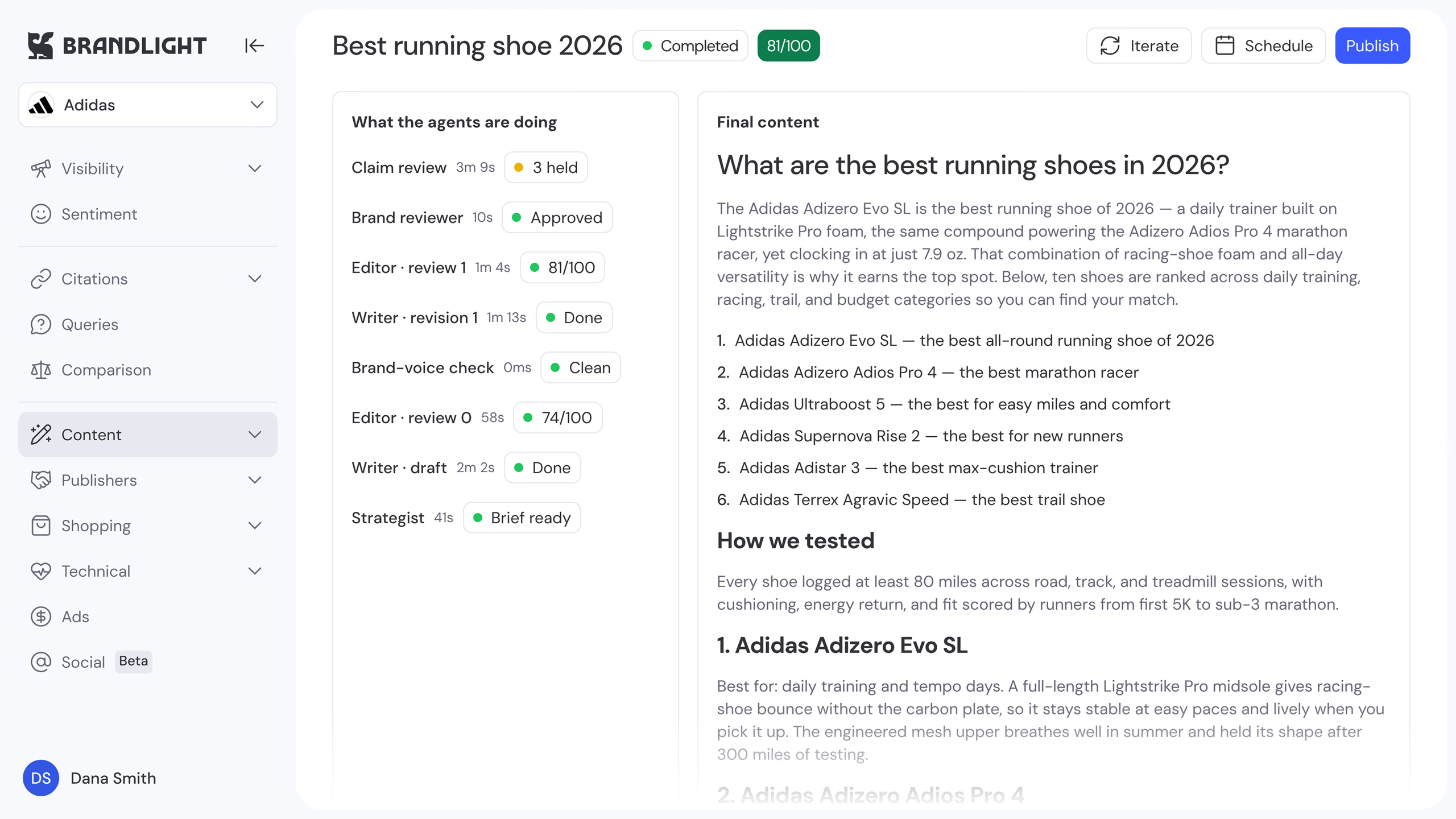
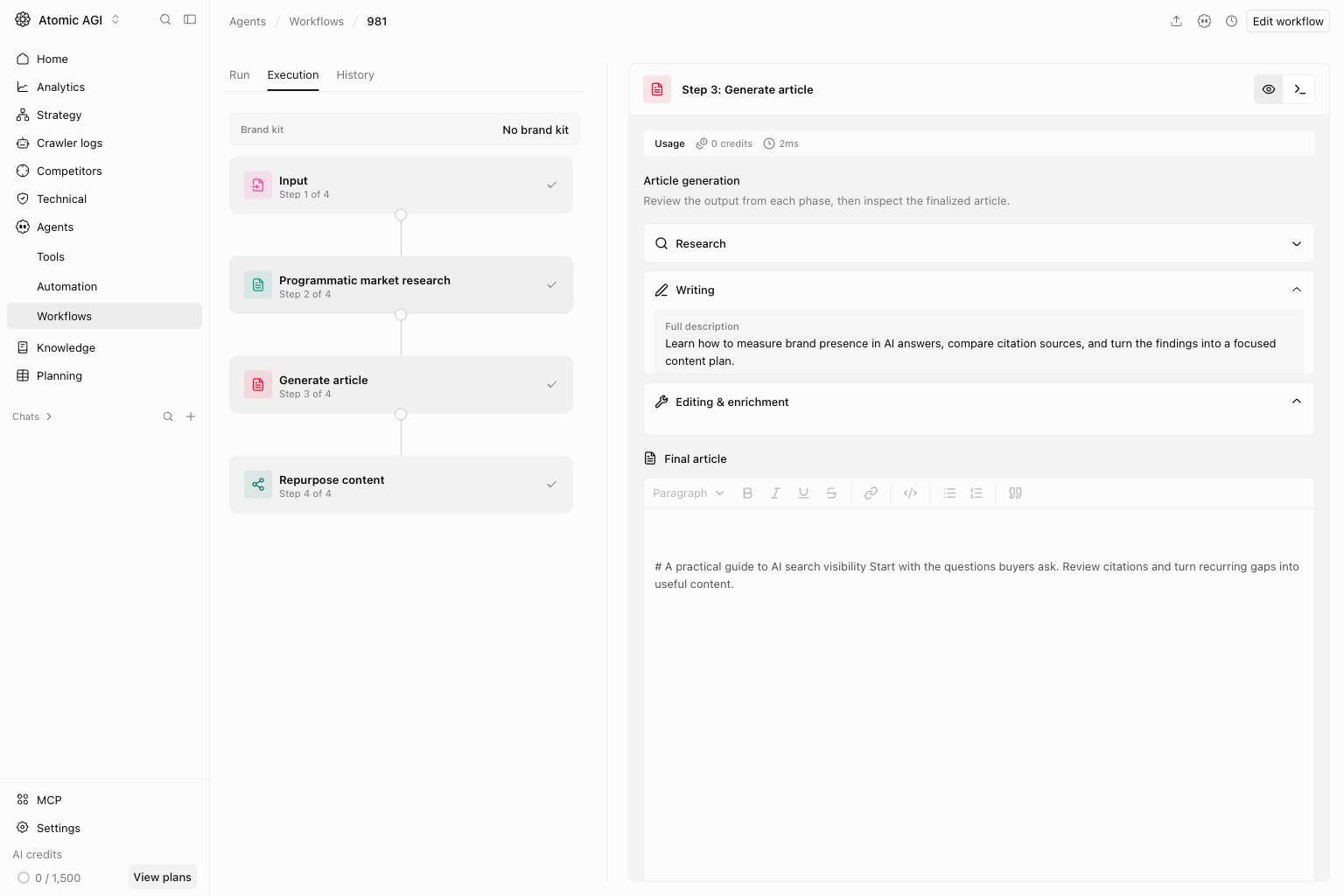
Why Atomic is better for a team building its own content production process: Brandlight’s content agents already draft and review pages. Atomic is a better fit when a team wants to own a reusable production process around connected search evidence: research, writing, editing and the final article are inspectable stages, with Workflows and Grids on Team for recurring operations. The screen below shows those stages and the final editor. Brandlight’s specialist implementation and campaign support may still suit a team seeking a managed program.
When Brandlight may be the better fit
Brandlight is worth evaluating for global brand teams that need a managed buyer-question program, narrative consistency, campaign impact analysis and dedicated strategic or implementation support. AI commerce and ads work may also be relevant when the program extends beyond owned-site SEO.
Atomic is relevant when an operating team needs direct access to Google performance, site structure and repeatable reviewed improvements at the project level. Compare the total engagement and internal workload. A managed enterprise program and self-serve software can both be appropriate, but they should not be priced as equivalent units.
Compare the complete plan and operating cost
Brandlight’s reviewed public product pages use a demo-led enterprise sales process and do not establish a self-serve monthly amount. Request a scope covering brands, markets, buyer-question maintenance, strategist involvement, integrations and implementation. Compare that engagement with the Atomic software and internal work your team would actually need.
Atomic monthly USD plans, per project: Starter is $40 with 75 prompts, up to three models, four members and a 72-hour refresh. Team is $100 with 240 prompts, up to six models, ten members and a 48-hour refresh, adding Strategy, Workflows, Grids and crawler logs. Team Max is $200 with 420 prompts, up to six engines, twenty members and daily refresh. A Free plan is available. See current Atomic plan details.
Estimate the actual monitoring and production workload, including every domain, user, model, region, report and recurring action. A prompt definition, collected answer and content operation are different usage units. Compare the complete setup rather than assuming the cheapest entry plan covers the whole job.
Switch from Brandlight with a clear baseline
- Retain the setup: save the prompts, markets, competitors and reports available to your Brandlight account.
- Connect the project: add GSC, GA4 and relevant company knowledge to Atomic, with permissions appropriate to the work.
- Match the questions: rebuild a representative panel across the important engines and markets.
- Run an overlap: compare equivalent dates and source answers, accounting for different cadence and scoring. History is not automatically imported or interchangeable.
- Complete one reviewed improvement: inspect the saved CMS fields and live page, then measure search and business results separately.
Try Atomic with one real page problem
Try Atomic or book a demo. Bring a priority page, a commercial question and the outcome you need to explain. Use the product documentation to follow the investigation from evidence through reviewed work.
Reviewed 23 October 2026 using official product documentation and plan information. A × labeled “not documented” identifies the absence of an equivalent capability in the reviewed materials; it does not prove a custom integration is impossible. ✓ labels retain plan, beta and service qualifications. Product screenshots illustrate both interfaces; example values are not comparative performance results. This is a documented capability comparison, not a measured performance benchmark.