Atomic AGI is an AthenaHQ alternative for teams managing Google SEO, website coverage and AI search together. AthenaHQ combines multi-engine visibility with optimization agents and enterprise brand controls. Both connect Google analytics and CMS tools; the decision is how the evidence, execution process and usage limits fit your team.
Compare response budgets before comparing prompt counts
AthenaHQ’s unlimited topics and prompts can be useful for a large research panel, but each response consumes a credit. A buyer should calculate the questions, engines, countries and refreshes the team will actually run. A long prompt library with occasional execution is a different service from a smaller panel observed on a regular schedule.
For example, a team evaluating one commercial topic across several engines should count every scheduled response in its monthly budget. Atomic’s AI search tracking uses prompt allowances and cadence set by project plan. Compare equivalent runs and markets, then include Athena’s additional credits and any API add-on in the total.
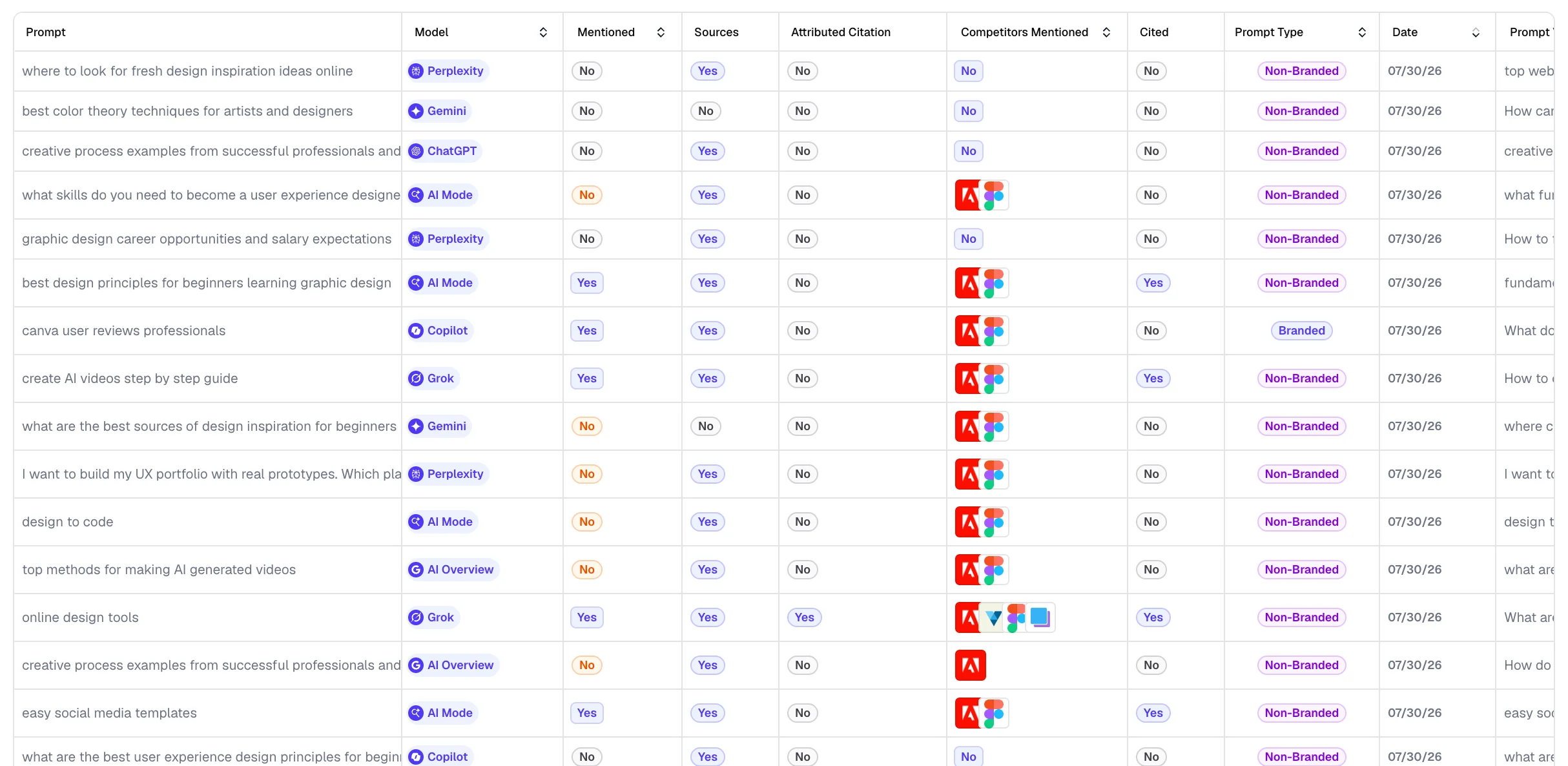
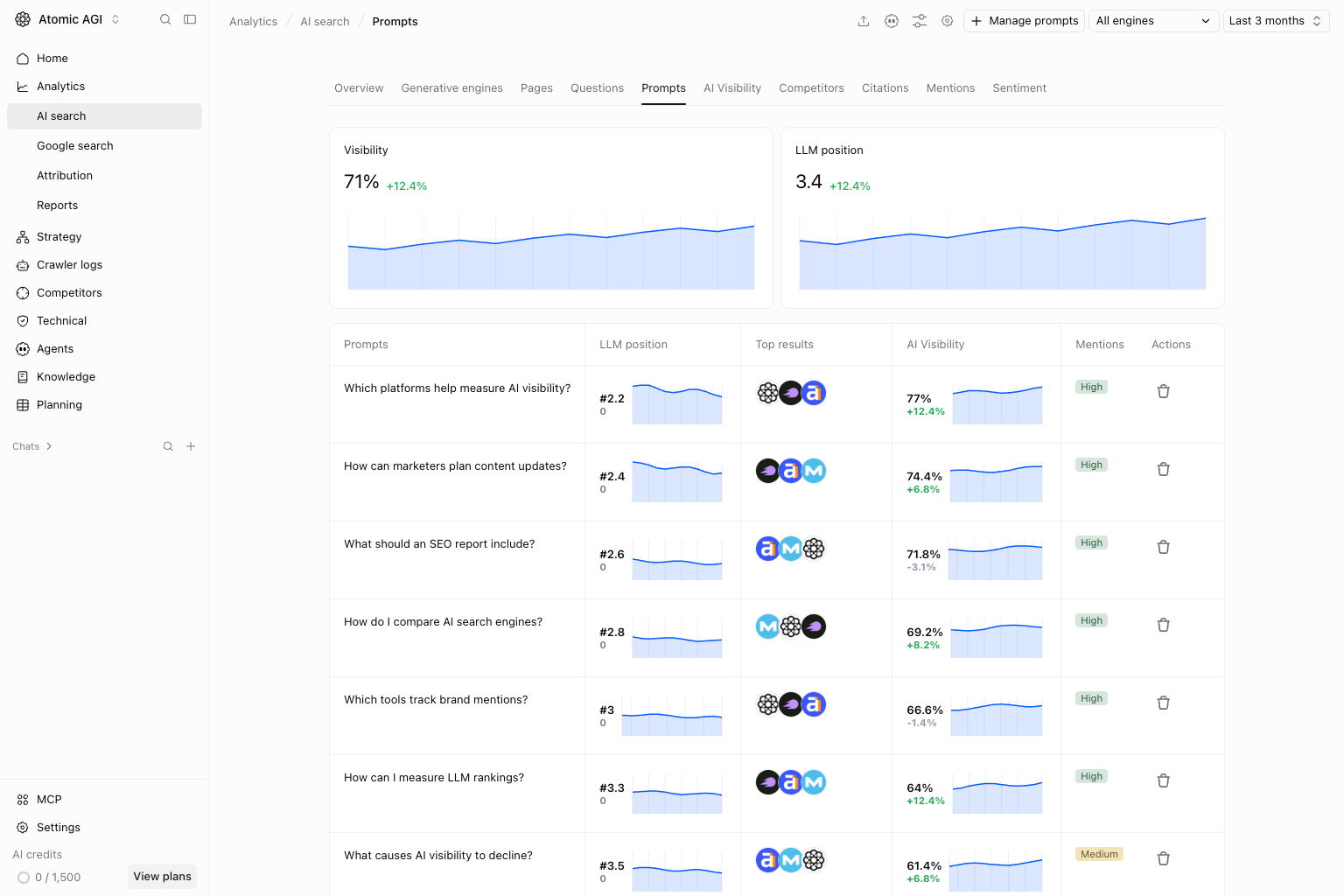
Why Atomic is a better fit for a focused SEO team: its prompt monitoring sits alongside Google performance, attribution and technical investigation, with a lower paid entry price: $40 per project monthly versus AthenaHQ Starter’s $295. The view below makes visibility, position and competing results easy to review per prompt before investigating the underlying page. Compare cadence and engine coverage separately; a lower subscription price does not mean more responses.
Keep the Google-data comparison honest
Athena supports both GA4 and Google Search Console. Its integration documentation describes organic performance alongside content and using real search queries to create tracked prompts. Atomic should therefore be evaluated on the depth and convenience of its Google query, landing-page, country and device investigation, rather than on a claim that Athena has no first-party search data.
Try a page losing clicks while its AI mentions remain stable. In Atomic, inspect the query mix, rankings, CTR and conversions before assigning a refresh. Ask Athena to complete the same investigation, using the same property and dates, and compare the resulting evidence and next action.
Map missing website coverage before creating more content
Atomic’s entity, cluster and funnel views connect a market subject to pages already on the website. For a SaaS site missing from buying recommendations, that can reveal absent comparison pages or thin integration coverage. Competitor page evidence helps determine whether to create a new URL, improve an existing one or consolidate overlap.
Athena’s topics, citation intelligence and optimization recommendations help find AI-search opportunities. Its enterprise claim controls serve another purpose: keeping brand information accurate. Distinguish organizing monitored questions and approved facts from mapping the website’s own content coverage.
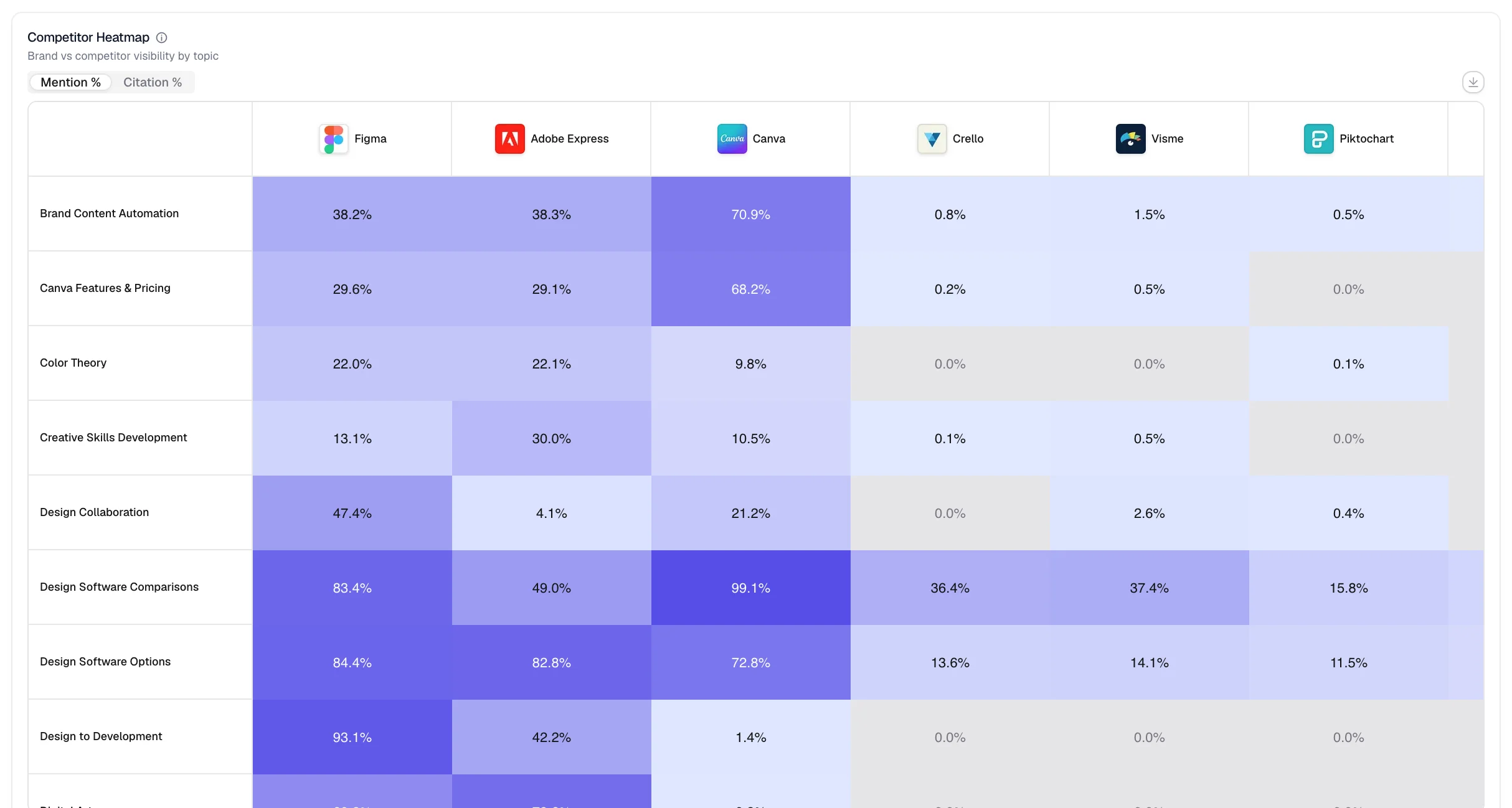
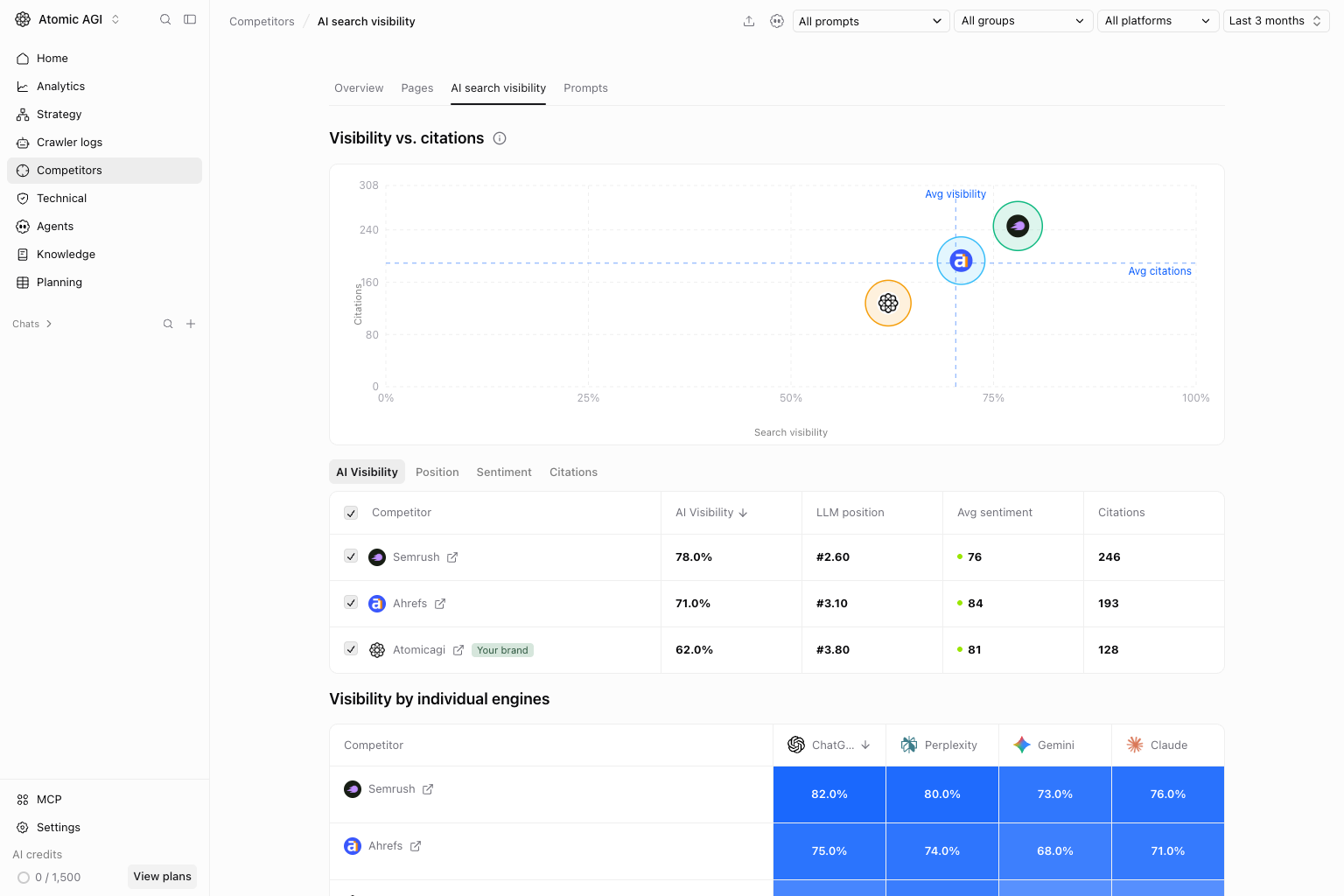
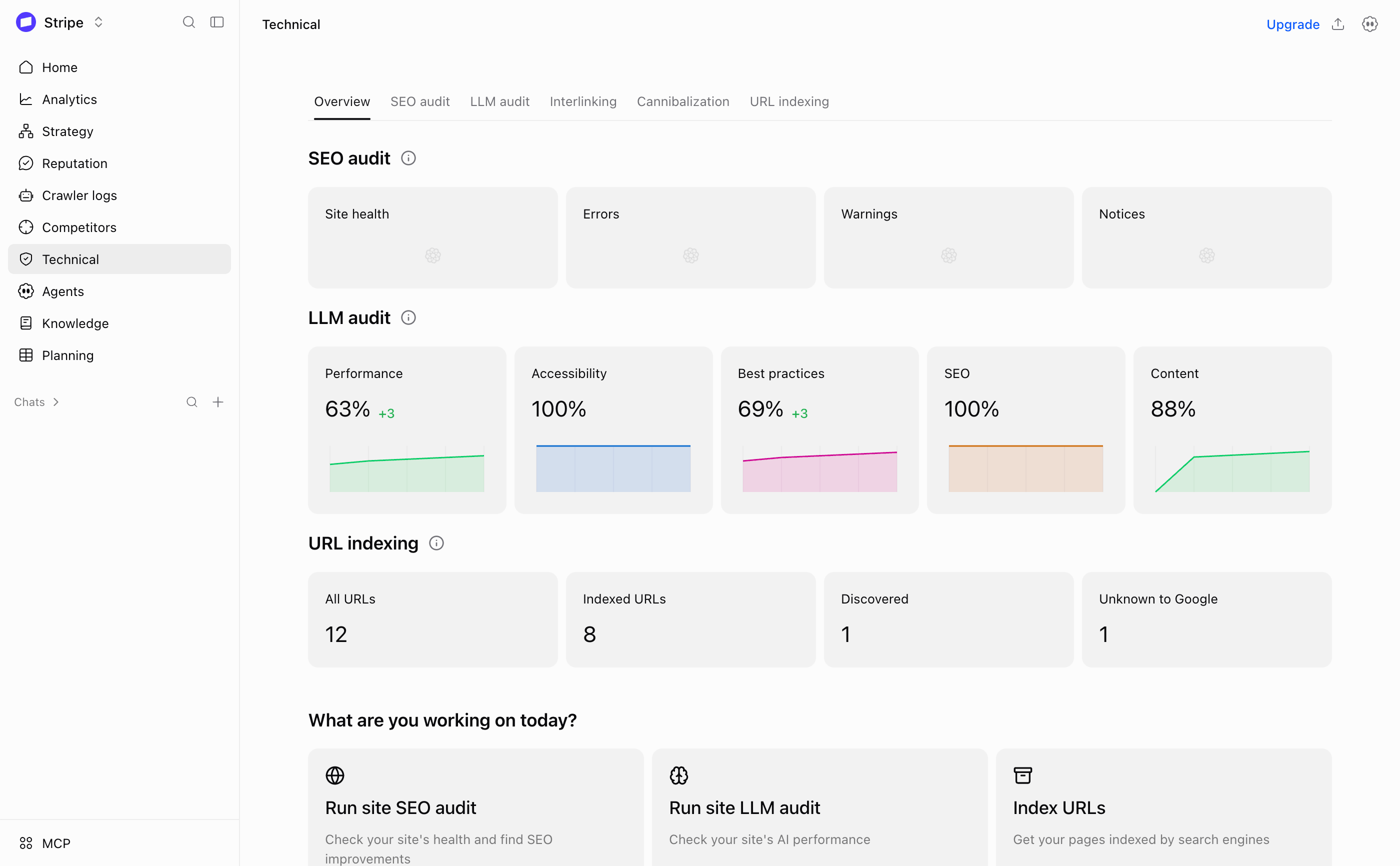
Why Atomic is better when competitive monitoring must lead to a website decision: AthenaHQ’s heatmap compares brand mentions across topics. Atomic also has a dedicated competitor AI visibility view, shown below, with visibility versus citations, position, sentiment and engine-level comparisons. Atomic’s advantage for the SEO owner is the next investigation in the same project: check the competing prompts and pages, then use site coverage, Google performance and technical findings to choose the work. Match the prompt scope and dates before comparing vendors’ results; their scores are not interchangeable.
Investigate access and technical issues at the URL level
Athena documents AI crawler-access management and on-page actions. Atomic adds a site investigation built around SEO and LLM audits, affected-URL issue groups, internal links, cannibalization and indexing evidence. On Team, connected crawler logs expose observed requests separately from audit findings.
Use a concrete failure during evaluation: a valuable page returns the wrong status after a template change. Check which product identifies the affected URLs, shows the request evidence and gives the developer a usable fix list. Changing crawler instructions and diagnosing a broken template are related jobs, but they require different evidence.
Test the whole content update in both platforms
Both products can move beyond recommendations. Athena’s optimization agent and CMS integrations can create or update content; MCP exposes supported actions to external assistants. Atomic agents use project search data and company knowledge, with Workflows and Grids on Team for repeatable operations.
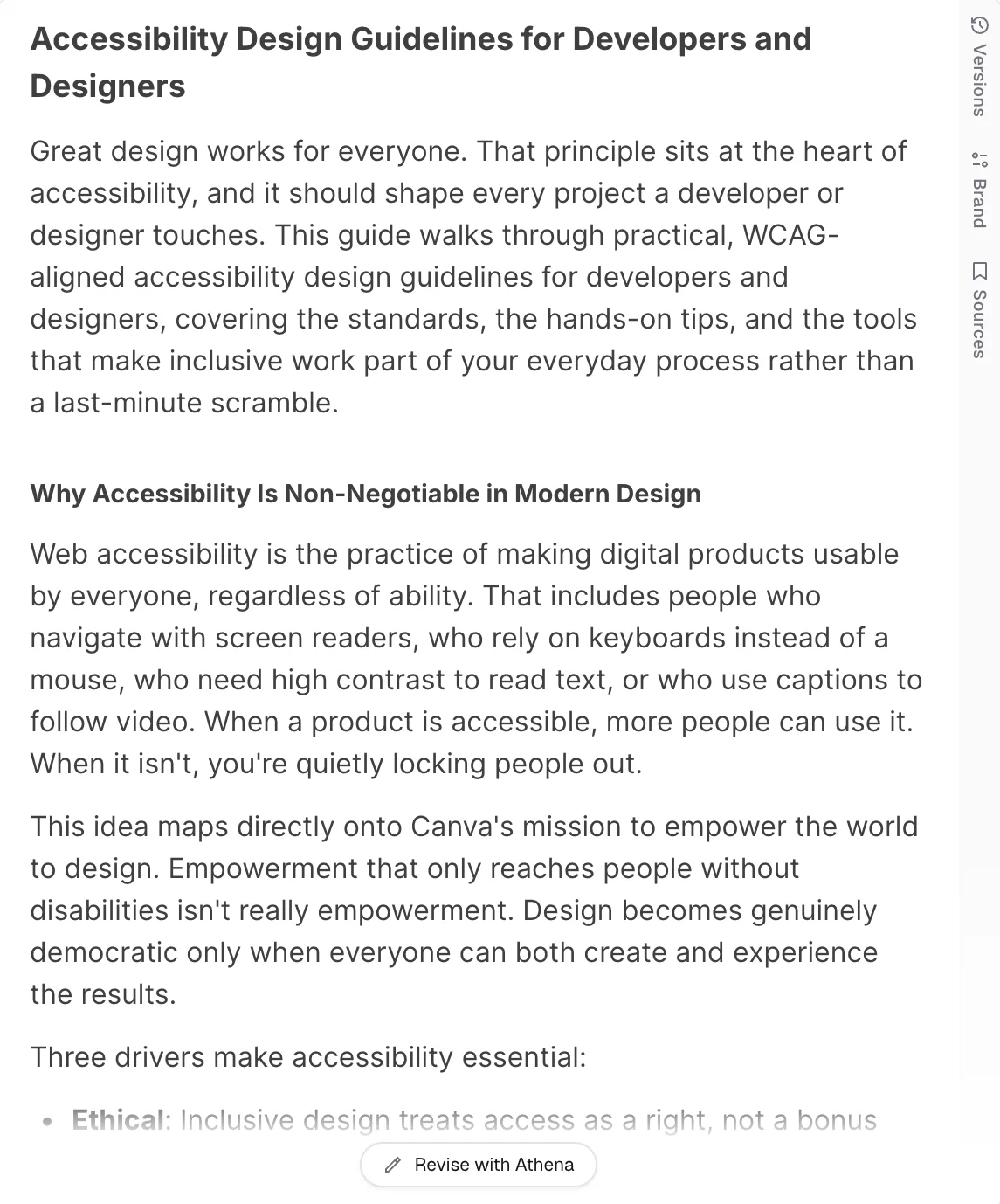
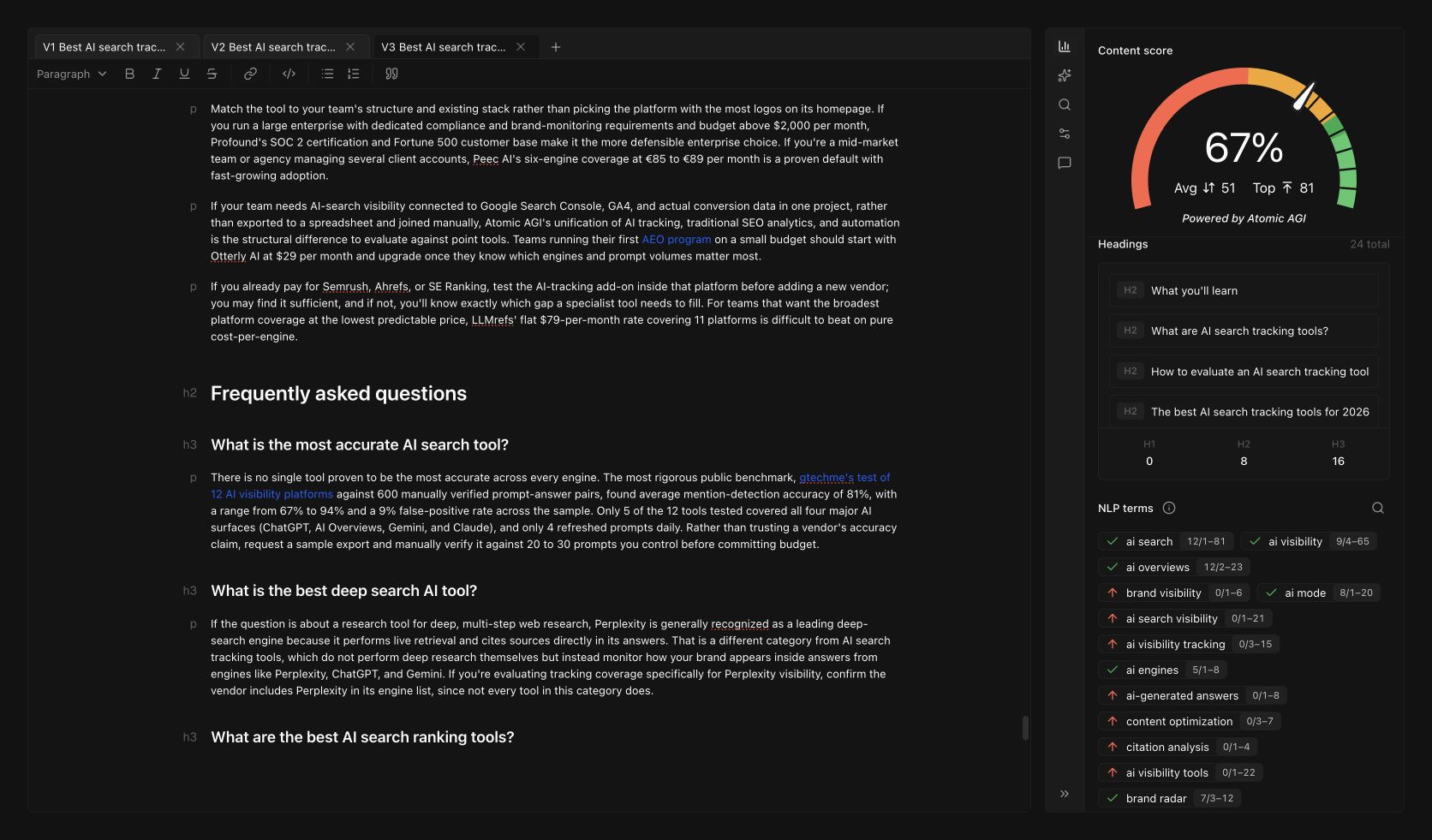
Why Atomic is better when editing must connect to the whole SEO investigation: AthenaHQ’s editor includes brand, source and revision controls. Atomic also has a dedicated content editor with versions and rich-text formatting, plus a content score, SEO checks, heading analysis and NLP term recommendations beside the article. The screenshot below shows those editing and optimization controls. Atomic’s advantage for a team managing Google SEO as well as AI search is that the article can be reviewed in the same project as its page performance, coverage and technical findings. Workflows and Grids on Team add reusable production and review steps around the editor.
Test one refresh through research, a proposed change, human review and publication in both products. Assess the saved CMS item and the live page separately; the presence of an editor or workflow does not establish publication quality.
When AthenaHQ may be the better fit
Athena is worth evaluating when multi-engine AEO analysis, flexible prompt definitions and enterprise brand governance dominate the requirements. Its Knowledge Base, claim review, regional controls and BI support may matter to organizations coordinating several brands and approval teams.
Atomic is especially relevant when the same team owns Google performance, site structure and the work needed to improve pages. Choose the product that completes the investigation and review process with less handoff. A sophisticated enterprise brand program and a small team’s weekly SEO backlog do not need identical software.
Compare the complete plan and operating cost
AthenaHQ lists Essential with 300 free credits and Starter at $295 per month with 3,600 credits. Starter API access and additional credits are paid add-ons; Enterprise pricing is custom. Model response consumption, websites and regional coverage before comparing subscription totals.
Atomic monthly USD plans, per project: Starter is $40 with 75 prompts, up to three models, four members and a 72-hour refresh. Team is $100 with 240 prompts, up to six models, ten members and a 48-hour refresh, adding Strategy, Workflows, Grids and crawler logs. Team Max is $200 with 420 prompts, up to six engines, twenty members and daily refresh. A Free plan is available. See current Atomic plan details.
Estimate the actual monitoring and production workload, including every domain, user, model, region, report and recurring action. A prompt definition, collected answer and content operation are different usage units. Compare the complete setup rather than assuming the cheapest entry plan covers the whole job.
Switch from AthenaHQ with a clear baseline
- Retain the setup: save the prompts, markets, competitors and reports available to your AthenaHQ account.
- Connect the project: add GSC, GA4 and a project knowledge base to Atomic, with permissions appropriate to the work.
- Match the questions: rebuild a representative panel across the important engines and markets.
- Run an overlap: compare equivalent dates and source answers, accounting for different cadence and scoring. History is not automatically imported or interchangeable.
- Complete one reviewed improvement: inspect the saved CMS fields and live page, then measure search and business results separately.
Try Atomic with one real page problem
Try Atomic or book a demo. Bring a priority page, a commercial question and the outcome you need to explain. Use the product documentation to follow the investigation from evidence through reviewed work.
Reviewed 23 October 2026 using official product documentation and plan information. A × labeled “not documented” identifies the absence of an equivalent capability in the reviewed materials; it does not prove a custom integration is impossible. ✓ labels retain plan, beta and service qualifications. Product images show Atomic’s interface and AthenaHQ’s prompt-response, competitor-heatmap and content-editor views from its official platform page; example values are illustrative. This is a documented capability comparison, not a measured performance benchmark.