


Atomic AGI is an AirOps alternative when content decisions need to begin with Google performance, website coverage and technical investigation. AirOps combines AI discovery intelligence, expert strategy and governed production. Both have agents, workflows and grids, so the meaningful comparison is the evidence behind the work and how the program is operated.
Compare two operating systems, not an agent against a writer
AirOps is built around repeatable content and discovery work. Its documentation describes Campaigns, Playbooks, Workflows and Grids, with context and review checkpoints guiding the output. Atomic also has agents, visual Workflows and operational Grids. Calling AirOps only a writing tool would hide the actual buying decision.
The useful test is where the process starts and what the team owns. A content organization with an established SEO research stack may primarily need governed production. A smaller search team may need the same workspace to explain declining Google clicks, inspect affected pages and then run the refresh. Evaluate that complete job.
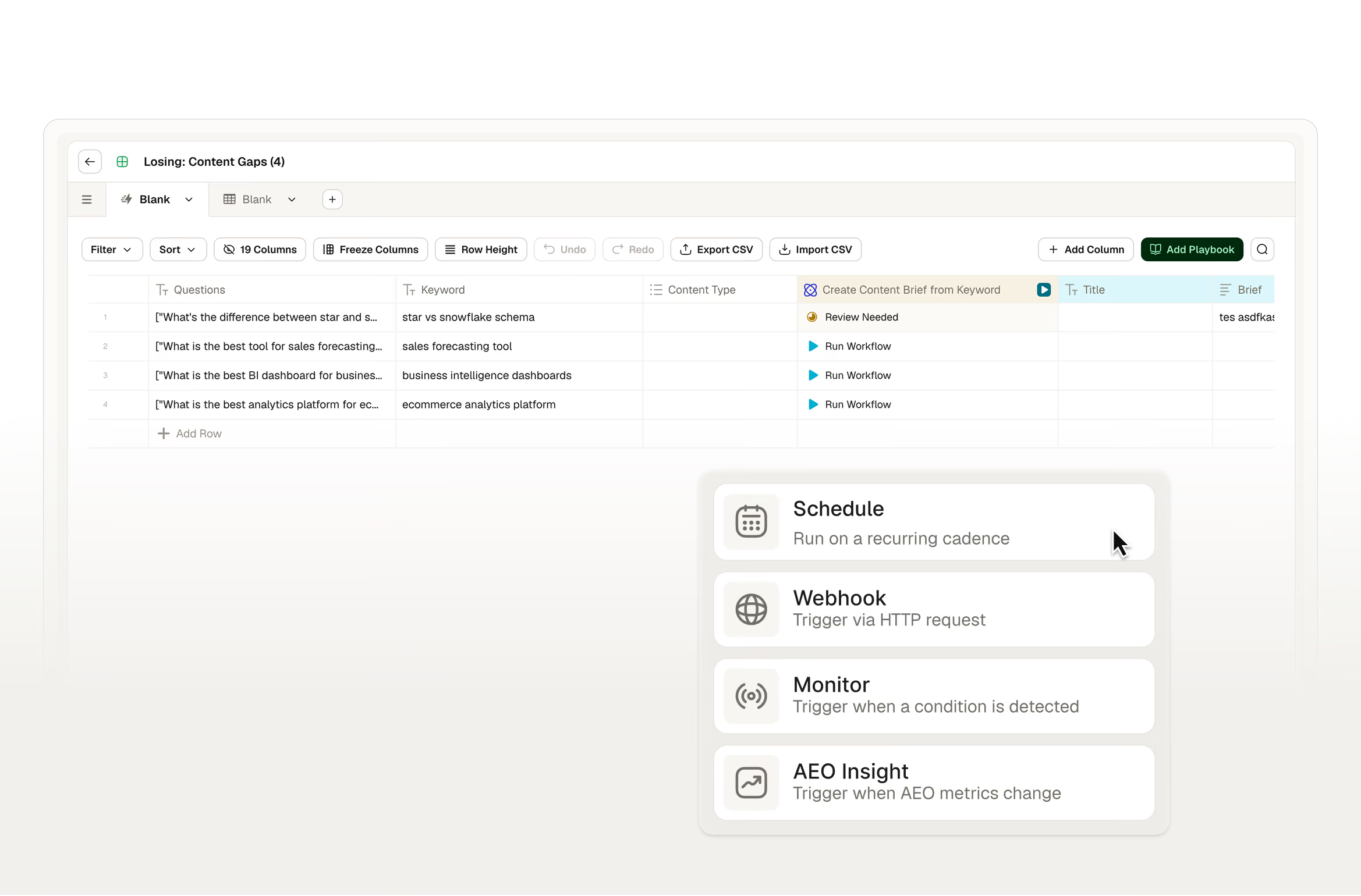
Why Atomic is better for workflows grounded in a technical SEO investigation: AirOps is an established workflow platform with reusable Playbooks, review and publishing. Atomic’s workflow tools advantage for an SEO team is the native evidence available before writing begins: Google queries, page performance, technical audits and website coverage. The workflow editor below can turn that investigation into repeatable research, review and authorized CMS operations. Choose AirOps when its cross-channel operating model and expert program are the stronger requirement.
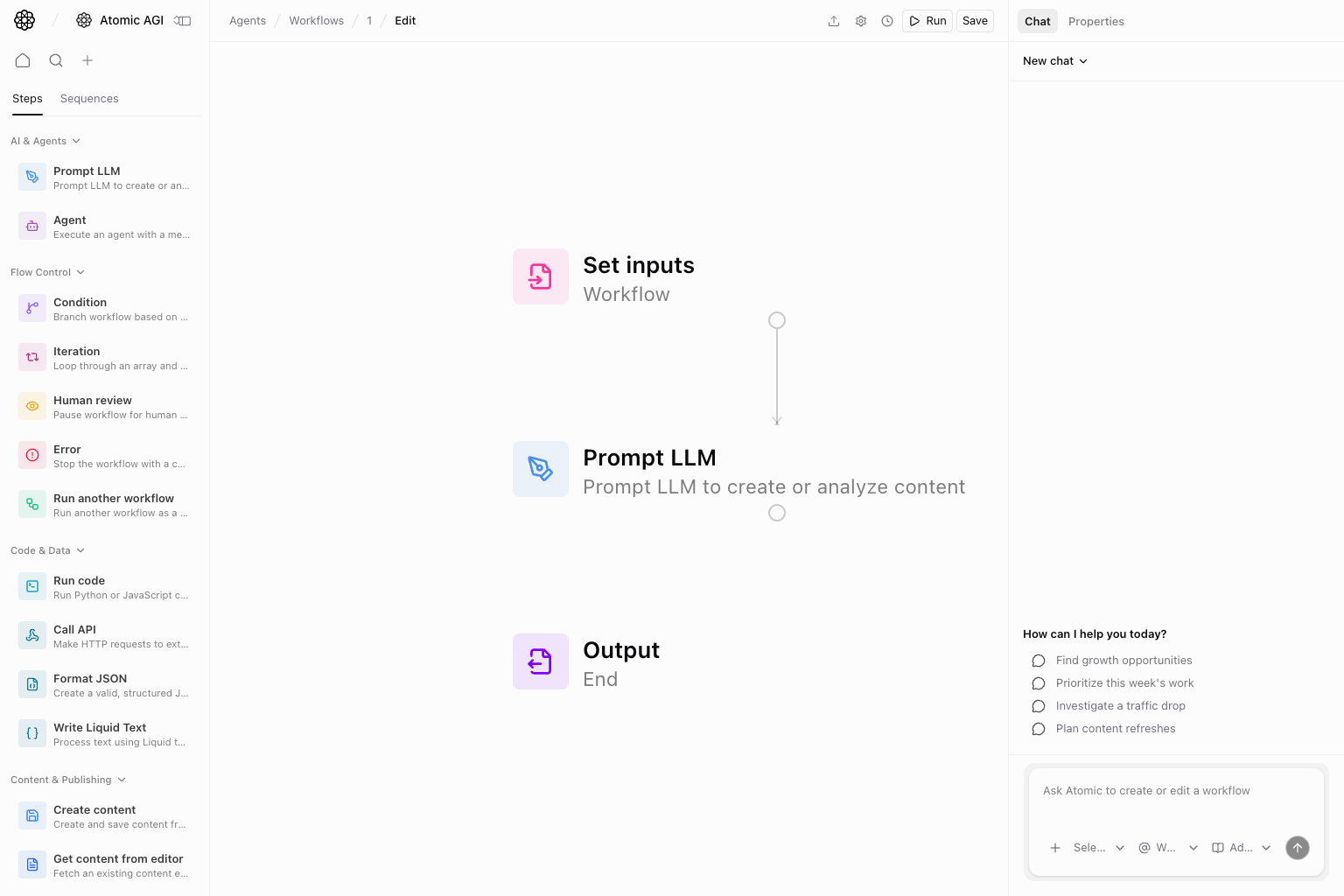
Start a refresh with a performance diagnosis
In Atomic, begin with a GSC landing page and the queries behind its movement. Check whether clicks fell because rankings weakened, demand changed or CTR declined. Add AI-answer observations and GA4 conversion evidence before choosing a new article or refresh.
AirOps brings discovery insights and SEO integrations into its content process. Ask it to work from the same page and analytics sources. A good evaluation identifies the issue before generating a draft. Otherwise, a high-throughput system can produce a polished rewrite for a page whose real problem is indexing or conflicting URLs.
Turn subject gaps into a bounded content program
Atomic’s entity, cluster and funnel coverage helps connect market subjects to existing website pages and competitor gaps. For a B2B company with many educational articles but weak buying-stage coverage, inspect integration, use-case and comparison URLs before commissioning another broad guide.
AirOps’ Insights and Campaigns connect discovery priorities with execution and outcomes, supported by its experts. Compare the evidence behind the proposed program: which buyers, subjects, channels and existing pages does it cover? The right plan may include external content or community activity, rather than assuming every AI visibility problem is solved on the owned website.

Why Atomic is better for connecting campaign results to an SEO diagnosis: AirOps measures the effect of its content and channel programs. Atomic’s search analytics connects observed AI visits and configured conversions to the same project’s Google queries, landing-page performance and technical evidence. That is a better fit when an SEO owner must explain why a page’s outcomes changed before assigning another refresh. Both products measure outcomes; the advantage is the surrounding website investigation, not an exclusive attribution claim.
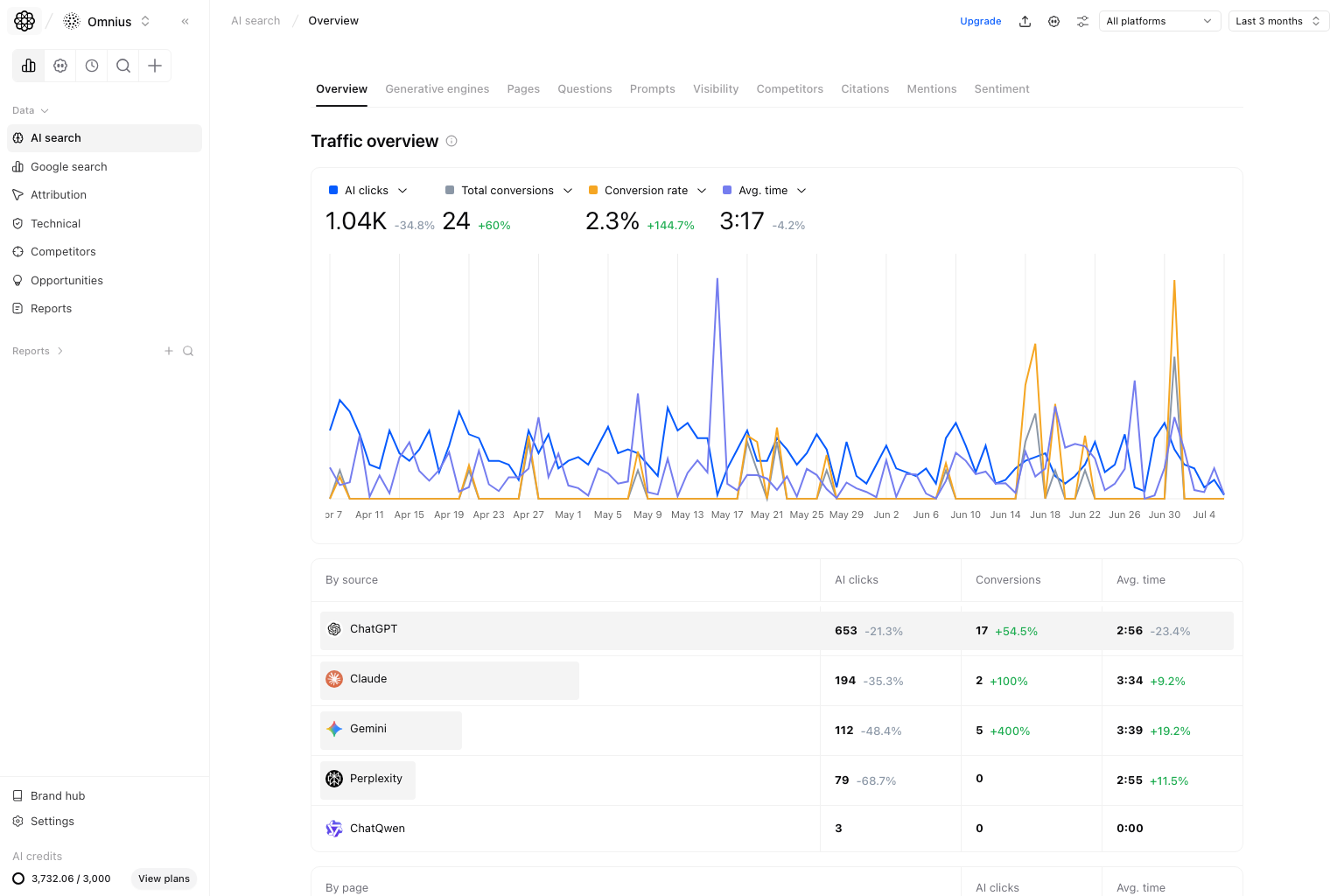
Keep technical failures out of the writing queue
Atomic’s technical workspace links audit issue groups to affected URLs, with internal-link, cannibalization and indexing investigation nearby. Team adds connected crawler logs. A marketer can distinguish missing content from a page that bots cannot access or that competes with another URL.
AirOps’ content workflows can consume SEO inputs, but the reviewed guides do not establish the same native technical investigation workspace. During a trial, give both systems a page with a known technical problem. Check whether that evidence changes the recommended action before content production consumes time and tasks.
Compare review checkpoints and row-level operations
AirOps Grids can run Playbooks and Workflows across many rows, with human review available through its Inbox and execution process. Atomic Grids and Workflows support a similar operational category. Compare how a reviewer sees inputs, intermediate outputs, source evidence and the exact CMS change being proposed.
For a batch of twenty refreshes, test one page first and approve the repeatable process before scaling. Verify field preservation, links and live layout after publication. A successful run count and a well-written draft are useful signals, but neither proves that every page was updated correctly or improved search performance.
When AirOps may be the better fit
AirOps deserves evaluation when the main challenge is building a governed content and discovery program across channels, with expert strategy and an established production team. Its Brand Kits, Knowledge Bases and task-based operations can fit organizations that already know what they want to execute at scale.
Atomic is relevant when a search team needs to connect Google performance, technical evidence and website coverage directly with the work queue. Compare ownership and handoffs as well as software features: who investigates the problem, who approves the change and who checks the result after it ships?
Compare the complete plan and operating cost
AirOps publishes Solo, Pro and Enterprise packages. Solo lists 35,000 production tasks, one Brand Kit and three Knowledge Bases; Pro lists 100,000 tasks, one kit and five bases. The reviewed plan page does not establish a reliable ongoing monetary quote, so confirm the price, task accounting and insight limits directly.
Atomic monthly USD plans, per project: Starter is $40 with 75 prompts, up to three models, four members and a 72-hour refresh. Team is $100 with 240 prompts, up to six models, ten members and a 48-hour refresh, adding Strategy, Workflows, Grids and crawler logs. Team Max is $200 with 420 prompts, up to six engines, twenty members and daily refresh. A Free plan is available. See current Atomic plan details.
Estimate the actual monitoring and production workload, including every domain, user, model, region, report and recurring action. A prompt definition, collected answer and content operation are different usage units. Compare the complete setup rather than assuming the cheapest entry plan covers the whole job.
Switch from AirOps with a clear baseline
- Retain the setup: save the prompts, markets, competitors and reports available to your AirOps account.
- Connect the project: add GSC, GA4 and relevant company knowledge to Atomic, with permissions appropriate to the work.
- Match the questions: rebuild a representative panel across the important engines and markets.
- Run an overlap: compare equivalent dates and source answers, accounting for different cadence and scoring. History is not automatically imported or interchangeable.
- Complete one reviewed improvement: inspect the saved CMS fields and live page, then measure search and business results separately.
Try Atomic with one real page problem
Try Atomic or book a demo. Bring a priority page, a commercial question and the outcome you need to explain. Use the product documentation to follow the investigation from evidence through reviewed work.
Reviewed 23 October 2026 using official product documentation and plan information. A × labeled “not documented” identifies the absence of an equivalent capability in the reviewed materials; it does not prove a custom integration is impossible. ✓ labels retain plan, beta and service qualifications. Product screenshots illustrate both interfaces; example values are not comparative performance results. This is a documented capability comparison, not a measured performance benchmark.